Wellness
 Rewards
 Recognitions


 Get free monthly wellness content to elevate
your wellness program
Get free monthly wellness content to elevate
your wellness program






Short on time? Here are the key takeaways:
- Mindfulness is a practical, evidence-based tool that supports employee focus, stress management, and emotional resilience.
- Techniques like mindful breathing, intentional breaks, and focused work blocks can be seamlessly incorporated into the workday to improve productivity and strengthen employee engagement.
- Embedding mindfulness into workplace culture—through leadership modeling, routines, and digital tools—makes it more sustainable and accessible.
- Organizations that offer flexible resources, create mindful environments, and adapt based on feedback build stronger, healthier teams.
With burnout now recognized by the World Health Organization as an occupational phenomenon and nearly 77% of employees experiencing job-related stress, workplaces are in urgent need of solutions that support well-being and performance. Mindfulness offers flexible, evidence-backed techniques that support mental clarity, emotional regulation, and better communication, all of which are essential for healthy, high-performing individuals and businesses.
Mindfulness is the practice of paying attention to the present moment without judgment. It involves noticing thoughts, emotions, and physical sensations as they arise, helping people respond thoughtfully rather than react automatically. While it is often associated with meditation, mindfulness can also be practiced informally throughout the day, making it a practical tool for sustaining focus, clarity, and emotional balance.
Benefits of Mindfulness at Work
Mindfulness supports core skills and behaviors that influence how effectively someone shows up and performs at work.
- Reduces stress and prevents burnout: Focused attention regulates the nervous system by calming the body’s stress response, making it easier to navigate challenges without becoming overwhelmed. Research shows that people who engage in mindfulness-based practices show a significant reduction in burnout symptoms, helping them stay more engaged and emotionally resilient over time.
- Enhances team collaboration: Presence fosters emotional awareness and intentional listening, helping team members respond with empathy rather than reactivity. Mindful employees strengthen trust and psychological safety, leading to better team communication, emotional support, and collaboration under stress.
- Improves focus and decision making: Mindfulness declutters the mind and anchors attention, helping employees stay present and think more clearly. Research shows that minds tend to drift toward unrelated thoughts nearly half the time—mindfulness counters this by supporting sharper focus and more thoughtful decisions.
Simple Techniques to Practice Mindfulness at Work
Mindfulness may start as an organizational initiative, but it benefits everyone. Whether you’re leading a team through back-to-back meetings or juggling tasks and deadlines, these simple techniques help you reset, refocus, and show up more intentionally throughout the workday.
1. Practice Mindful Breathing Exercises
One of the simplest ways to reset during a busy workday is through mindful breathing. Focus on your breath—inhale slowly through the nose, exhale through the mouth, and gently refocus attention each time the mind wanders. This quick practice can be done at your desk, between meetings, or before a big presentation to calm the nervous system and improve focus.
- Box Breathing: Inhale for four seconds, hold for four, exhale for four, and repeat for at least three rounds.
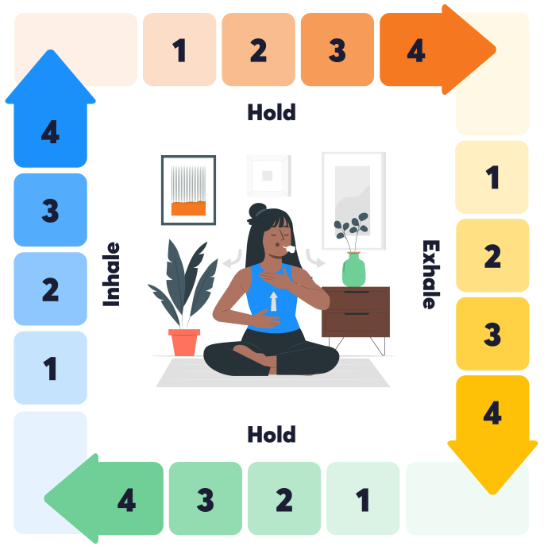
- 2:1 Breathing: Exhale for twice as long as you inhale (e.g., inhale for four seconds, exhale for eight).
- Body Scan Breathing: As you breathe, mentally scan the body from head to toe, noticing sensations without judgment.
- Mantra Breathing: Inhale while silently saying a calming word like “peace,” and exhale while saying “release.”
2. Incorporate Mindfulness Breaks
Short, intentional pauses throughout the day reduce stress and boost mental clarity. Try stepping away from your screen for a few minutes to stretch, take a walk without your phone, or simply sit quietly and observe your surroundings. Brief breaks like these reset focus and prevent fatigue.
3. Mindfully Listen in Meetings
Mindful listening means giving your full attention to the speaker without interrupting, multitasking, or planning your response while they talk. Practice by making eye contact, noticing body language, and pausing before replying to ensure thoughtful responses. This approach fosters clearer communication, builds trust, and helps meetings feel more productive and respectful.
4. Create a Mindful Workspace

A clutter-free, calming environment supports focus and reduces stress throughout the day. If possible, personalize your workspace with elements that promote mindfulness (e.g., plants, soft lighting, calming images) and keep only what you need within reach. Incorporating small cues, like a sticky note reminder to pause and breath, encourages moments of presence and self-care, even during busy stretches.
5. Use Mindfulness Apps
Digital tools make it easy to build mindfulness into your daily routine. Mindfulness apps like Headspace, Calm, Insight Timer, and Wellable’s On-Demand library provide guided meditations, breathing exercises, and quick stress-relief sessions that can be used anytime, anywhere. Whether it’s a midday reset or a wind-down before bed, these resources help reinforce consistent, accessible mindfulness habits.
6. Practice Mindful Eating During Breaks
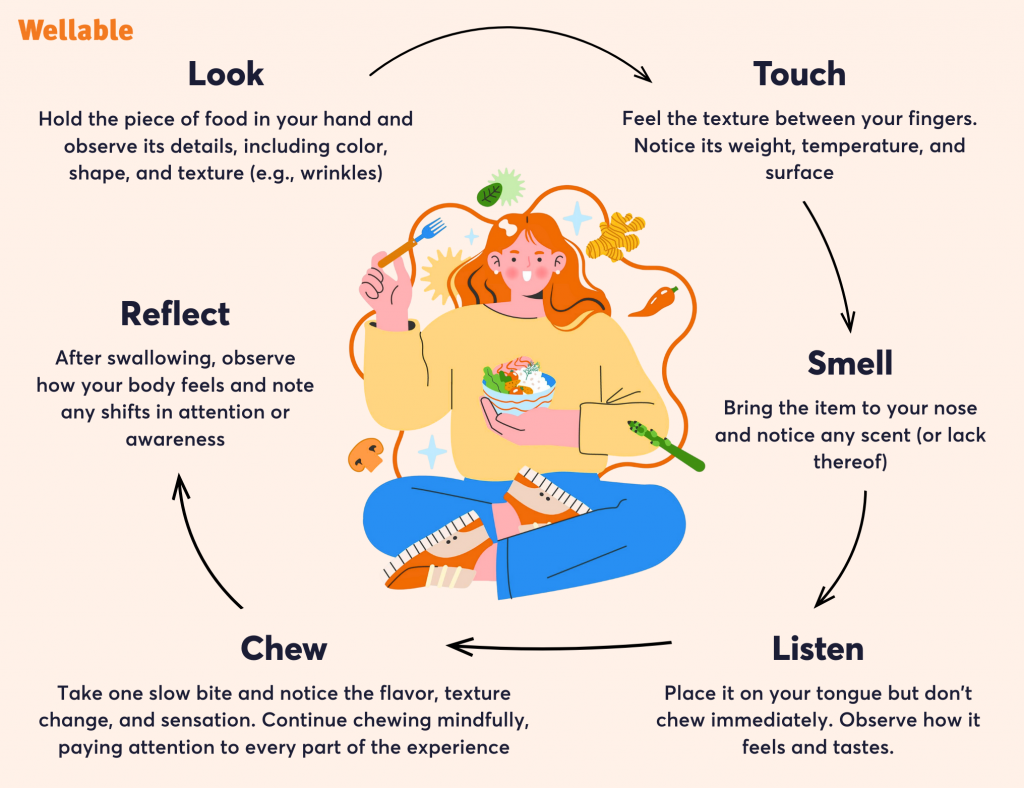
Instead of rushing through meals or snacking while distracted, take a few moments to slow down and fully experience your food. Notice the colors, textures, and flavors with each bite, engaging all five senses when possible. Mindful eating improves digestion, reduces overeating, and turns scheduled breaks into moments of calm and awareness.
To try it out, use any small food item you have nearby (e.g., raisin or nut). Then complete the following steps.
7. Establish a Set Focus Time
Set aside a time block each day to focus on one task without distractions—a practice known as monotasking. Silence notifications, close unnecessary tabs, and use a timer to stay on track. This simple habit boosts productivity, sharpens concentration, and makes it easier to manage complex or high-priority tasks.
How Can Organizations Support Mindfulness at Work?
Organizations that invest in mindfulness encourage a variety of wellness benefits like reduced decision fatigue, improved team agility, and strengthened emotional intelligence across leadership and teams.
Create a Culture That Values Mental Well-Being

To make mindfulness stick, organizations must embed employee wellness into daily work culture. For example, workplaces that normalize breaks, encourage employees to check in with themselves throughout the day, and share accessible mental health resources foster an environment where well-being is prioritized.
Equally important is leadership modeling. Managers who stay present, pause before responding, and take mindful breaks demonstrate that mindfulness is accepted and encouraged. This top-down reinforcement builds psychological safety and signals that supporting mental health is a business priority.
Integrate Mindfulness into Daily Workflows
Rather than adding more to employees’ plates, effective mindfulness initiatives fit seamlessly into existing routines. Embed brief guided mindfulness exercises (e.g., two to five minutes long) at the start or end of team meetings to create natural reset points and reinforce presence. Tools like calendar nudges or Slack reminders can prompt breathing breaks or brief digital detoxes without disrupting workflow.
Offer Live or On-Demand Mindfulness Resources
Giving employees flexible ways to engage with mindfulness increases access and impact. HR leaders can provide virtual platforms or apps that include guided meditations, breathwork, and quick reset tools, which are ideal for anytime support. Weekly live sessions or “mindful moments,” led by trained facilitators, help foster consistency and community, while also modeling what mindfulness looks like in real time.
Create Mindful Spaces (Physical or Virtual)
The work environment plays a key role in employees’ ability to stay focused and grounded. For on-site teams, consider offering quiet zones or recharge rooms where employees can step away for brief moments to reflect or rest.
For remote or hybrid teams, encourage mindful work setups by promoting digital boundaries (e.g., using “Do Not Disturb” modes), ergonomic comfort, and simple cues for mental resets like a sticky note that says “pause” or a calming visual. Whether in the office or at home, incorporating natural light creates a space that promotes clarity, calm, and sustained attention—all key elements of mindfulness.
Evaluate and Evolve the Approach
Effective mindfulness initiatives must be responsive to the needs of your workforce. Use regular surveys and quick pulse checks to gather feedback on whether stress, focus, and/or work-life balance are improving over time. Effective mindfulness programs vary across roles, environments, and cultures, so use input to keep initiatives relevant, inclusive, and effective.
Frequently Asked Questions
-
Share
-

-

-

-