Wellness
 Rewards
 Recognitions


 Learn more about Wellable's all-in-one
employee engagement platform
Learn more about Wellable's all-in-one
employee engagement platform






Pressed for time? Here’re key takeaways…
- Employee benefits surveys provide data for organizations to understand how employees perceive, use, and value their benefits.
- Asking questions across areas like satisfaction, awareness, wellness, financial security, and future needs creates a more complete picture of benefits effectiveness.
- Using a mix of question formats — including ratings, Likert scales, multiple choice, yes/no, and open-ended questions — helps capture measurable trends and detailed feedback.
- Reviewing results, communicating findings, and acting on employee input allows organizations to improve benefits strategies while supporting retention and recruitment goals.
What is an Employee Benefits Survey?
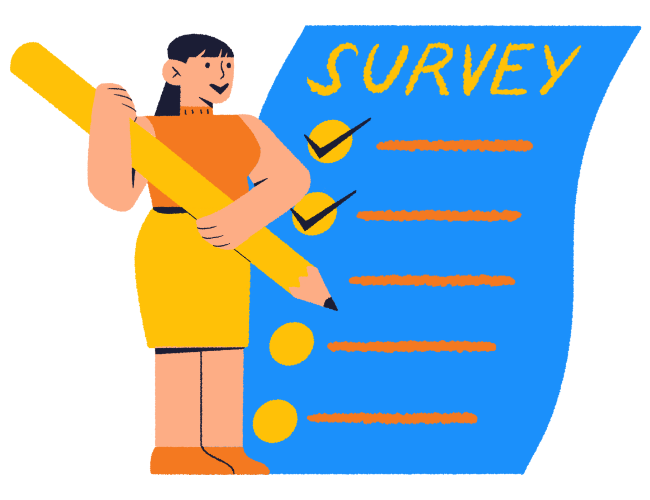
An employee benefits survey is a structured feedback tool that helps organizations understand how employees perceive, use, and value the benefits offered to them, such as healthcare, wellness programs, lifestyle spending accounts, and flexible work options. Unlike general engagement surveys, which asses overall job satisfaction or workplace culture, benefits surveys focus on the effectiveness, accessibility, and relevance of an organization’s total rewards package. They also support the benefits lifecycle by informing program design, strengthening communication, gathering employee feedback, and guiding future adjustments to keep benefits aligned with evolving workforce needs.
Why Employee Benefits Surveys Matter
Employee benefits represent one of the largest investments organizations make in their workforce, yet their impact depends on whether employees understand and value them. A recent survey found that employees who understand and use their benefits are far more likely to feel cared for by their employer. In turn, employees who feel cared for are 60% more likely to say they plan to stay with their organization over the next year.
When benefits miss the mark, the cost can be substantial. Research estimates that replacing an employee costs six to nine months of that employee’s salary, or 50% to 200% of their annual salary, making retention key to a healthy bottom line. Employee benefits surveys help close the gap between what organizations offer and what employees actually value, enabling HR leaders to allocate budgets more strategically, strengthen engagement, and improve recruitment and retention outcomes. Survey insights can also be benchmarked against industry trends to keep benefits competitive in a tight labor market.
What Should an Employee Benefits Survey Include?
An effective employee benefits survey should include a mix of question types and categories to capture measurable data alongside meaningful employee feedback. A thoughtful structure helps organizations evaluate satisfaction, understand usage patterns, and identify opportunities to strengthen their benefits strategy.
| Types | Description | Sample Question | Sample Response |
|---|---|---|---|
| Rating Scale | Asks employees to evaluate benefits using numeric ranges, typically one to five or one to ten. | How satisfied are you with your health insurance benefits? |
1 = Very Dissatisfied 2 = Dissatisfied 3 = Neutral 4 = Satisfied 5 = Very Satisfied |
| Likert Scale | Measures agreement with statements. | The benefits offered by my organization support my overall well-being. |
Strongly Disagree Disagree Neutral Agree Strongly Agree |
| Yes/No | Helps assess awareness or usage of specific benefits. | Are you aware of the company’s Employee Assistance Program? |
Yes No |
| Open-Ended | Enables employees to provide detailed feedback or suggest improvements. | What additional benefits would most improve your well-being? | Benefits catered to family planning, like fertility treatment. |
| Multiple Choice | Allows employees to select from several predefined options, identifying preferences, priorities, or benefits most often used. | Which benefits do you use regularly? (Select all that apply) |
Health insurance Mental health resources Retirement plan Wellness programs Flexible work benefits |
Question categories:
- Awareness: Determines whether employees know which benefits are available.
- Utilization: Identifies which programs employees actively use and which may be underutilized.
- Satisfaction: Measures how well existing offerings meet employee needs and expectations.
- Priorities and preferences: Reveals which benefits employees value most and what additions they would find meaningful.
- Accessibility and experience: Evaluates how easy it is for employees to understand and navigate their benefits.
10 Must-Ask Employee Benefits Survey Questions
Start the survey with demographic questions such as department, tenure, work arrangement (remote, hybrid, or on-site), or career stage to better understand how benefits needs vary across the workforce. These insights can then be used to identify trends and differences across employee groups when reviewing responses to the questions below.
1. Question: Overall, how satisfied are you with your current benefits package?
Response: 1 = Very Dissatisfied, 2 = Dissatisfied, 3 = Neutral, 4 = Satisfied, 5 = Very Satisfied
This question establishes a baseline for how workers perceive the overall value of their benefits package, capturing the combined impact of wellness, financial, and work-life benefits. Tracking satisfaction over time helps organizations evaluate whether benefits investments meet workforce expectations and support retention goals. This insight matters because benefits strongly influence employee loyalty. Seventy-eight percent of employees are more likely to stay with an employer because of their benefits program. If satisfaction scores decline, HR teams can investigate which benefits categories may be falling short to support retention. If scores improve year-over-year, it signals that benefits strategies are aligning more closely with employee needs and strengthening the organization’s ability to attract and retain top talent.

2. Question: Do you feel you have a clear understanding of all the benefits available to you?
Response: Strongly Disagree, Disagree, Neutral, Agree, Strongly Agree
This question helps organizations identify communication gaps that may prevent employees from fully using their benefits. A lack of awareness does not mean benefits are ineffective; it may indicate employees do not understand what is available or how to access it. According to research, 45% of employees report there are elements of their benefits package they do not understand, and 82% note understanding how to use their benefits would give them a greater sense of overall stability. When employees struggle to navigate their benefits, participation and perceived value decline. If survey responses reveal low understanding, HR teams can focus on improving education through clearer onboarding materials, regular benefits reminders, simplified guides, and manager-led conversations. Strengthening communication ensures employees can take full advantage of available programs while increasing the overall return on benefits investments.
3. Question: How satisfied are you with your health insurance coverage, including mental health benefits?
Response: 1 = Very Dissatisfied, 2 = Dissatisfied, 3 = Neutral, 4 = Satisfied, 5 = Very Satisfied
This question assesses how effectively an organization’s health benefits support physical and mental well-being. Though many employers evaluate these areas separately, combining them provides a more holistic view of how employees experience their healthcare coverage. This approach reflects the growing importance of mental health in workplace benefits strategies. For example, 76% of health insurance brokers indicate increasing investments in mental health resources when it comes to employee wellness plans. If satisfaction scores are low, HR teams can examine issues such as coverage affordability, access to providers, availability of mental health services, and employee awareness of existing resources. Addressing these gaps may involve expanding mental health support, improving communication, or enhancing wellness programming to better meet employee needs.
4. Question: To what extent does your retirement plan support your long-term financial goals?
Response: To a great extent, To some extent, To a small extent, Not at all, Unsure
This question assesses whether employees view their retirement plan as supportive of long-term financial security, rather than just a benefit they participate in. This distinction matters because enrollment alone does not show whether employees feel prepared for the future. For example, 53% of employees are concerned that economic uncertainty will affect their long-term retirement savings. If responses are low, HR teams can look at barriers such as weak employer contributions, limited investment education, confusing plan options, or a lack of planning tools. Organizations can use this feedback to strengthen financial wellness resources, improve retirement communications, revisit matching contributions, or expand access to financial guidance.
5. Question: How satisfied are you with your paid time off (PTO) and flexible work options?
Response: 1 = Very Dissatisfied, 2 = Dissatisfied, 3 = Neutral, 4 = Satisfied, 5 = Very Satisfied
This question evaluates how effectively benefits support employees’ ability to maintain a healthy work-life balance. By combining PTO and flexible work options, it captures two benefits that directly influence well-being, stress levels, and job satisfaction. For example, work-related stress remains a widespread challenge, with 77% of workers experiencing it in the past month, often tied to heavy workloads and limited time to disconnect. If satisfaction scores are low, HR teams can assess whether employees feel able to take PTO, workloads discourage time off, and flexible work policies meet employee needs. Organizations can respond by encouraging PTO usage, refining leave policies, expanding flexible scheduling options, or clarifying remote and hybrid work expectations to better support employee well-being.
6. Question: Does the benefits package meet your needs at your current life stage? (e.g., childcare, parental leave, eldercare)
Response: Yes, No, Not applicable to my current life stage
Follow-up question: Which family or life-stage benefits would better support your needs? (Select all that apply)
Follow-up response: Childcare support or subsidies, Expanded parental leave, Eldercare resources, Fertility or family planning benefits, Flexible work arrangements, Caregiving leave, Other (please specify)
This question helps organizations understand whether their benefits package supports employees through different life stages, such as raising children, caring for aging parents, or planning for family leave. Workforce needs vary widely depending on age, family responsibilities, and career stage, so a one-size-fits-all benefits strategy may leave important gaps. Family-focused benefits have become increasingly influential in employee retention; 73% of workers report they would consider leaving their employer for a job with better family benefits. If survey responses indicate unmet needs, HR teams can examine whether current offerings address caregiving responsibilities and family-related challenges. Organizations can use this feedback to expand parental leave policies, introduce childcare or eldercare support, provide caregiving resources, or offer more flexible benefits options that adapt to different life stages. Aligning benefits with evolving employee needs helps organizations improve retention, strengthen employee satisfaction, and remain competitive in attracting talent.
7. Question: Do you participate in our wellness programs?
Response: Yes, No
Follow-up question: If not, what prevents you? (Select all that apply)
Follow-up response: I am not aware of the programs available, I do not have enough time, Programs do not match my interests, I am unsure how to participate, Incentives are not motivating, Other (please specify)
This question helps organizations understand whether employees engage with wellness programs and what barriers may limit participation. Even well-designed initiatives can fall short if employees lack awareness, time, or interest. Wellness programs often include themed challenges, mental health resources, stress management workshops, financial wellness tools, nutrition guidance, and preventive health screenings. When employees participate, organizations may see well-being, engagement, and productivity improve, along with stress, burnout, and absenteeism reduce. If participation is low, HR teams can evaluate barriers such as awareness, accessibility, scheduling, or program relevance and adjust program design or communication to better align with employee needs.
8. Question: How do our benefits compare to what you’ve seen or heard about at other companies?
Response: 1 = Much worse, 2 = Slightly worse, 3 = About the same, 4 = Slightly better, 5 = Much better
This question helps organizations benchmark their benefits package from the employee’s perspective. While HR teams often evaluate competitiveness using industry reports or compensation data, employees frequently form their own comparisons through job offers, professional networks, and experiences at other companies. These perceptions influence retention and recruitment decisions, with 60% of employees reporting benefits are extremely or very important when deciding whether to stay with their current employer. If responses indicate employees believe competitors offer stronger benefits, organizations can review market benchmarks, identify gaps in areas such as healthcare coverage, flexibility, financial wellness, or family support, and prioritize improvements that align with employee priorities. Understanding how workers perceive benefits relative to other organizations helps employers refine their total rewards strategy and remain competitive in attracting and retaining talent.
9. Question: Are there benefits we don’t currently offer that would meaningfully improve your work life?
Response: Yes, No
Follow-up question: If yes, which benefits would you like to see added? (Specify below)
Follow-up response: Commuter or transportation benefits, fertility planning, pet insurance, student loan repayment
This question helps organizations identify benefits employees want but do not currently have access to. While satisfaction scores reveal how employees feel about existing offerings, open-ended responses surface emerging priorities such as student loan assistance, caregiving support, or expanded mental health resources. According to research, employees who believe their employer cares about their well-being are three times more likely to be engaged at work and 71% less likely to experience burnout. HR teams can review responses for recurring themes and group similar suggestions to identify high-demand opportunities. If certain benefits appear frequently, organizations can evaluate feasibility and prioritize offerings that improve employee well-being while strengthening engagement and retention.
10. Question: How likely are you to recommend working here to someone else, based on our benefits package?
Response: 0 = Not at all likely, 1 = Extremely unlikely, 2 = Very unlikely, 3 = Unlikely, 4 = Slightly unlikely, 5 = Neutral, 6 = Slightly likely, 7 = Somewhat likely, 8 = Likely, 9 = Very likely, 10 = Extremely likely
This question measures how strongly employees associate the organization’s benefits with their willingness to recommend the company as a place to work. Like a Net Promoter Score (NPS), it captures whether benefits inspire employee advocacy, which can directly influence employer branding and recruitment. For example, employees who believe their employer cares about their overall well-being are five times more likely to strongly advocate for their company as a place to work and to trust leadership. If scores are low, HR teams can examine which benefits employees perceive as lacking or outdated and identify opportunities to strengthen offerings that support well-being, flexibility, and financial security. These insights can help organizations refine their benefits strategy while strengthening their employer brand and ability to attract talent.
Additional Employee Benefits Survey Questions by Category

Employee Health Benefits
- How confident are you that your health benefits would adequately support you during a major medical event?
- How easy is it to estimate out-of-pocket healthcare costs before receiving care?
- How satisfied are you with the digital tools or resources available to help you manage your health benefits?
- How well do your health benefits support preventive care, such as annual checkups, screenings, and wellness visits?
Retirement and Financial Wellness
- How confident do you feel about your ability to retire comfortably with the resources currently available to you?
- How helpful are the financial planning tools or educational resources provided by your employer?
- How easy is it to understand the investment options within your retirement plan?
- Which financial wellness resources would most help reduce financial stress?
PTO and Flexible Work
- How manageable is your workload when you take time off?
- Do you feel comfortable using your PTO without a negative impact on your responsibilities or career growth?
- How clearly are flexible work policies communicated and applied across teams?
- What type of flexibility would most improve your work-life balance (e.g., flexible hours, compressed workweeks, additional leave)?
Professional Development
- How well do current learning opportunities support your long-term career goals?
- How accessible are professional development resources such as training, mentorship, or certifications?
- What types of skills would you most like support in developing over the next year?
- How effectively does your employer communicate available professional development opportunities?
Wellness Program
- Which types of wellness initiatives would you be most interested in participating in?
- How convenient are the times and formats in which wellness programs are offered?
- Do wellness initiatives feel inclusive and relevant to your personal health goals?
- What types of incentives would motivate you to participate more regularly in wellness programs?
Stipends, Perks, and Additional Benefits
- Which stipends or lifestyle benefits would most improve your day-to-day work experience?
- How valuable are the non-traditional benefits offered by the organization (e.g., wellness stipends, learning allowances, commuting support)?
- How flexible are the perks offered in allowing you to choose benefits that match your needs?
- What new perk or stipend would make the biggest difference in your overall work experience?
How to Customize Survey Questions for Your Workforce
- Tailor questions by demographics: Consider segmenting results by factors such as age, life stage, role, and tenure. Employees at different career stages often prioritize different benefits, so demographic insights can help HR teams identify which programs matter most to specific groups.
- Account for remote vs. in-office employees: Work arrangements influence how employees use and value benefits. Remote employees may prioritize home office stipends, virtual wellness resources, or flexible schedules, while in-office employees may value commuting benefits, on-site amenities, or flexible start times.
- Use pulse surveys between annual surveys: Short pulse surveys throughout the year can capture timely feedback on benefits changes or emerging needs. This approach helps organizations respond faster rather than waiting for the next annual survey cycle or open enrollment.
- Update questions as benefits evolve: Survey questions should reflect current offerings and organizational priorities. When new programs are introduced or existing benefits change, HR teams should add relevant questions and retire outdated ones to keep survey insights meaningful and actionable.
How to Analyze Employee Benefits Survey Results
Analyzing employee benefits survey results requires looking beyond overall averages to uncover meaningful patterns.
Segment responses by employee groups (e.g., department, tenure, work arrangement, life stage) to identify where satisfaction or gaps differ across the workforce.
Use data visualization to make insights easier to interpret—bar charts work well for comparing satisfaction ratings across benefits categories, while stacked charts can highlight differences between demographic groups.
Once patterns emerge, distinguish between quick wins and long-term improvements. For example, communication gaps or low awareness may be addressed quickly through better benefits education, while structural changes such as expanding healthcare coverage or retirement contributions may require longer-term planning.
Benchmark results against previous survey cycles to track progress over time. Comparing year-over-year data helps HR teams determine whether benefits investments are improving employee perceptions and where additional adjustments may be needed.
What to Do After the Survey: Closing the Feedback Loop
After collecting survey responses, organizations should share key findings with employees to demonstrate that their feedback is valued and taken seriously. Communicating results transparently helps build trust and keeps employees informed about how their input will shape future benefits decisions. HR teams can then prioritize changes based on impact and feasibility, focusing first on improvements that address the most common concerns while remaining practical to implement. Establishing a clear timeline for action ensures employees know when to expect updates or changes. Closing the feedback loop is critical because when employees see their feedback leads to meaningful action, they are more likely to participate in future surveys and continue providing honest, constructive input.
Best Practices for Conducting Employee Benefits Surveys
- Keep it concise: Aim for a survey that takes under 15 minutes to complete, typically around 20 to 30 questions. Shorter surveys improve completion rates and reduce survey fatigue while still providing enough data to generate meaningful insights.
- Ensure anonymity and communicate it clearly: Explain how responses will remain anonymous and confidential to build trust, and encourage employees to provide honest, candid feedback.
- Time surveys strategically: Distribute surveys when employees have recent experience with their benefits, such as after open enrollment or mid-year when employees have had time to use their benefits to capture more informed feedback.
- Use the right survey platform: Choose tools that make surveys easy to distribute, complete, and analyze. Common platforms include Qualtrics, SurveyMonkey, Culture Amp, Glint, and Google Forms, which offer features such as anonymous responses, analytics dashboards, and automated reporting.
- Offer incentives to boost participation: Provide small incentives, such as gift cards, wellness points, raffles, or team rewards, to increase response rates.
- Consult stakeholders during the design: Collaborate with HR leaders, benefits administrators, managers, and employee representatives when designing the survey. Their input can help ensure questions address key organizational priorities and employees’ concerns.
Looking to help employees better understand and use their benefits? Wellable’s Benefits Navigation feature connects employees with personalized guidance and expert support to make confident healthcare and benefits decisions. By simplifying complex benefits information, organizations can increase utilization, reduce confusion, and help employees get more value from the benefits they already offer.
Frequently Asked Questions
A benefits survey should take 10 to 15 minutes to complete, typically including 20 to 30 questions, to gather useful insights without causing survey fatigue.
Most organizations run benefits surveys annually, with shorter pulse surveys throughout the year to capture feedback on recent changes or emerging needs.
Increase participation by keeping surveys short, ensuring anonymity, communicating the purpose clearly, and offering small incentives such as raffles or gift cards.
An employee benefits survey focuses specifically on benefits satisfaction, usage, and preferences, while an employee engagement survey measures broader factors such as workplace culture, leadership, and job satisfaction.
Yes, anonymous surveys encourage more honest feedback, helping organizations gather more accurate insights into employee needs and concerns.
-
Share
-

-

-

-