Wellness
 Rewards
 Recognitions


 Learn more about Wellable's all-in-one
employee engagement platform
Learn more about Wellable's all-in-one
employee engagement platform







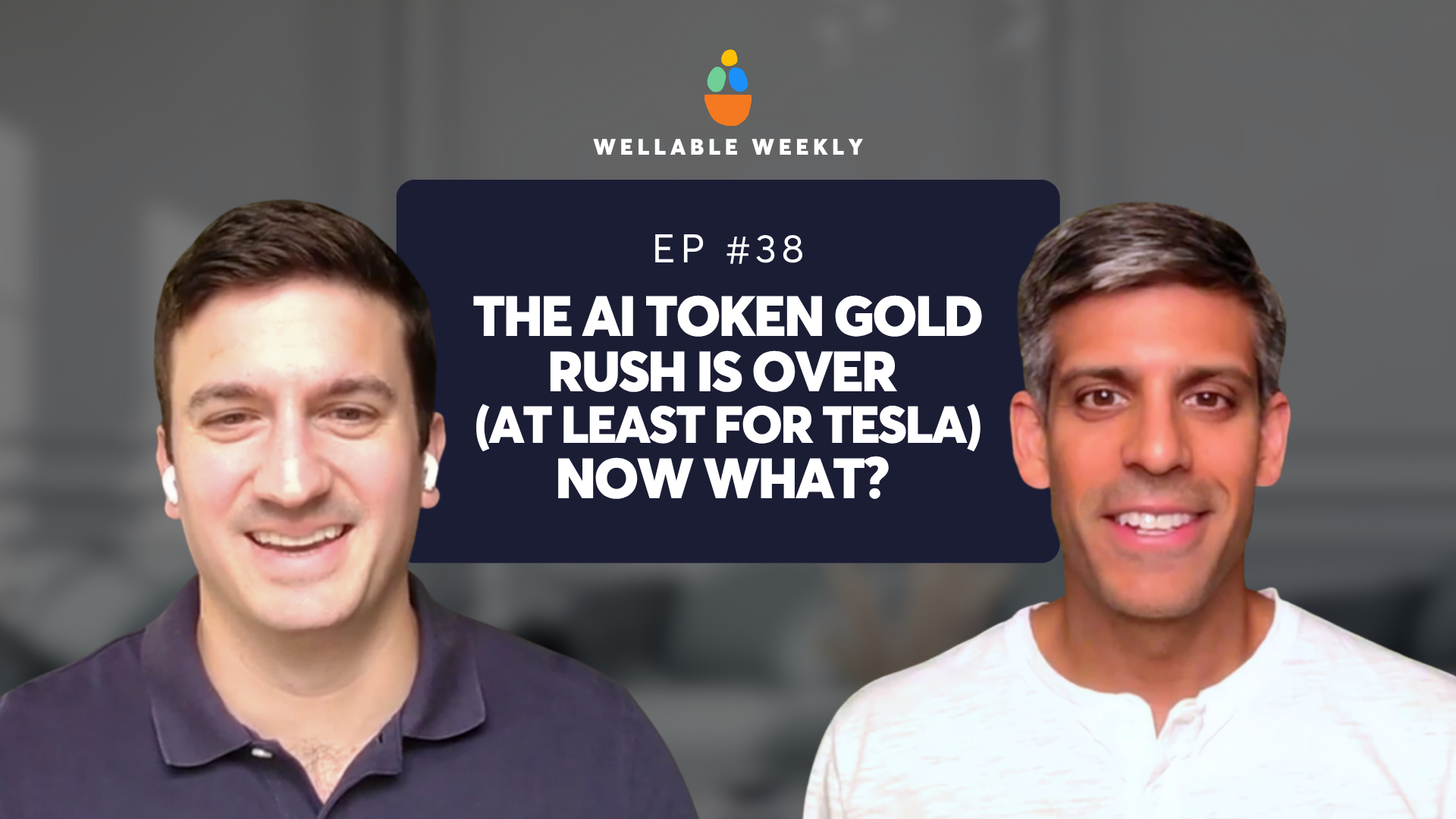
In this episode of Wellable Weekly, Nick and Geoff cover two stories making waves at the intersection of technology, health, and the modern workplace. First, Google and Fitbit unveiled the Fitbit Air—a screenless, subscription-free wearable that has the internet declaring the end of Whoop’s reign. Then, a Bloomberg report revealed that Amazon employees are “tokenmaxxing”—artificially inflating their AI usage to look productive—raising a pointed question for HR leaders: when you make a metric the target, does it stop measuring what matters?


Short on time? Here are the key takeaways:
- The Fitbit Air is a screenless wearable from Google/Fitbit that mirrors Whoop’s form factor but drops the subscription model, offering a one-time purchase with an optional $10/month Google Gemini-powered health coaching upgrade
- Whoop’s key remaining advantage is battery life—14 days versus the Fitbit Air’s 7—but the price point and Google ecosystem backing could make the Fitbit Air a genuine market disruptor
- The Fitbit Air’s minimalist design and affordable bulk pricing make it a compelling candidate for employer-sponsored wellness program device programs, potentially following in the footsteps of Apple Watch bulk purchases
- AI-powered personal health coaching embedded in consumer devices could eventually challenge the traditional employer wellness program model, though Nick and Geoff view a full displacement scenario as unlikely in the near term
- “Tokenmaxxing”—employees artificially inflating AI usage to signal productivity—has emerged at Amazon and reflects a broader workplace risk when AI utilization becomes a performance metric
- Goodhart’s Law applies directly to AI adoption: when token usage becomes the target, it ceases to be a useful measure of actual productivity or outcomes
- HR leaders have an opportunity to get ahead of this by anchoring AI performance expectations to outcomes rather than raw usage metrics
Episode Summary
Fitbit Air vs. Whoop: A New Challenger Enters the Screenless Wearable Market
Whoop defined a category: screenless, subscription-based, athlete-endorsed wearables, and it built a loyal following among performance-focused users. That model is now being stress-tested by the Fitbit Air.
Google’s new device matches Whoop’s core feature set: continuous heart rate monitoring, SpO2 tracking, and sleep analysis in a slim, screenless band. The critical difference is pricing. Where Whoop charges a device fee plus an annual subscription running into the hundreds of dollars, the Fitbit Air is a one-time purchase. Users who want more can opt into a $10/month Google Gemini-powered health coaching tier including food logging via photo analysis (something Whoop doesn’t offer) with the first three months free.
Nick and Geoff credit Whoop for pioneering the category, but both see the Fitbit Air’s price accessibility, Google’s AI infrastructure, and minimalist design as genuinely competitive. Geoff notes the screenless form factor may appeal beyond performance athletes to casual fitness enthusiasts looking for health data without smartwatch notification overload, a digital detox angle that could broaden the market considerably. The Steph Curry pre-launch campaign, which had NBA fans speculating for weeks about the mystery band on his wrist, gave the product cultural momentum before it even hit shelves.
What This Means for Employer Wellness Programs
Nick raises the question every HR professional should ask when a consumer health product blows up: does it eventually become part of the employee wellness conversation? Historically, yes. Wearable devices were once a consumer novelty; they’re now a wellness program staple.
The Fitbit Air has specific characteristics that make bulk employer purchasing more feasible than prior devices—consistent minimalist design, a lower price point, and no subscription burden. Geoff notes it could follow the Apple Watch bulk-purchase playbook but at a far more accessible price. The more speculative scenario Nick raises is whether AI-powered personal coaching at the individual level (every employee with their own Gemini-tuned program) could eventually fragment the traditional wellness platform model. Both hosts see this as a thought experiment rather than a near-term threat, since the administrative and reporting layers structured programs provide aren’t easily replicated by a consumer app.
Tokenmaxxing and the Goodhart’s Law Problem in AI Adoption
A Bloomberg report revealed that Amazon employees are deliberately over-using the company’s internal AI tools, not because tasks require it, but to signal heavy AI adoption to managers. The behavior has a name: tokenmaxxing.
Amazon has stated AI usage won’t factor into performance reviews, but Nick and Geoff note that employees don’t quite believe it. With Meta and others explicitly tying AI utilization to bonuses, the industry-wide message is clear: low AI usage could hurt you. Nick connects this directly to Goodhart’s Law, coined by economist Charles Goodhart in 1975: “When a measure becomes a target, it ceases to be a good measure.” If token usage becomes the proxy for productivity, employees optimize for tokens, not outcomes. The result is ballooning AI costs with no corresponding improvement in work quality.
Geoff frames the HR opportunity plainly: organizations designing AI performance frameworks now have the chance to anchor them to outcomes rather than usage. A top performer who produces excellent work without heavy AI use should be recognized for those results. HR leaders who build that framework from the start protect their organizations from the Goodhart trap, and likely get better returns on AI investment in the process.
Frequently Asked Questions
The Fitbit Air is a screenless fitness wearable from Google and Fitbit that tracks heart rate, sleep, and blood oxygen levels around the clock, similar to Whoop. The key differences are pricing and business model. Whoop requires an upfront device fee plus an annual subscription; the Fitbit Air is a one-time purchase with no required subscription. An optional $10/month Google Gemini-powered health coaching tier is available, with three free months included. Whoop’s main remaining advantage is battery life, at 14 days versus 7 for the Fitbit Air.
It’s plausible. Wearables have followed a consistent pattern from consumer adoption into employer wellness programs, and the Fitbit Air has characteristics that make bulk employer purchasing more attractive than prior devices (consistent minimalist design, a lower price point, and no ongoing subscription burden for the employer). The more speculative question is whether AI health coaching embedded in consumer devices could eventually challenge the traditional wellness platform model, though the administrative and reporting functions of structured programs aren’t easily replaced by an app.
Tokenmaxxing refers to employees artificially inflating their usage of AI tools—running unnecessary queries, processing tasks through AI that don’t require it—in order to generate high usage metrics that signal AI adoption to managers. The behavior emerged visibly at Amazon, where employees reportedly used internal AI tools for non-essential tasks primarily to demonstrate engagement with the technology.
Goodhart’s Law, coined by British economist Charles Goodhart in 1975, states that when a measure becomes a target, it ceases to be a good measure. In the context of AI at work, if token usage or AI query volume becomes the metric by which employees are evaluated, people will optimize for those numbers rather than for actual outcomes. The result is higher AI spending without corresponding productivity gains, exactly what companies hoping to benefit from AI investment don’t want.
Employees who produce excellent work, regardless of how much AI they use to get there, should be recognized for that. AI adoption can be encouraged and tracked as context, but making raw usage the primary metric creates incentives to inflate numbers without improving results. HR leaders involved in designing compensation and performance systems have the opportunity to build frameworks that avoid this trap from the start.
When bonuses are explicitly tied to AI usage, as some organizations including Meta have done, employees rationally optimize for the metric rather than for the underlying goal. This can lead to tokenmaxxing behavior, inflated AI infrastructure costs, and a measurement system that no longer reflects actual performance. The deeper risk is that high performers who don’t rely heavily on AI may be penalized in ways that have nothing to do with the quality of their work.
Full Episode Transcript
Nick: Welcome to the Wellable Weekly Podcast, where we talk about key topics and trends at the intersection of wellbeing, technology, and HR. I’m Nick, here with my good friend and colleague, Geoff. Geoff, how’s it going?
Geoff: It’s going well, Nick. Happy Monday.
Nick: Monday. Two interesting articles. One a little bit like kind of left field for what we talk about. It’s more of a consumer play but I think it’s certainly just around the general ecosystem that we operate in. Fitbit launched a new device called the Fitbit Air. Everyone online, the buzz is like this is the Whoop killer. So I think, for those who don’t know, Whoop is a wearable device, typically associated with athletes. You see a ton of golfers on the PGA wearing it and things. What’s kind of unique about Whoop is that it’s a screenless device. It’s literally just a band, there’s no visual or screen that you can utilize. Fitbit Air kind of copied that as well. In short, it’s very similar to a Whoop device. You have 24/7 heart rate tracking, SPO2 tracking, like oxygen saturation, all these core features that exist in Whoop exist in the Fitbit Air. I think the only big difference where Whoop seems to be materially better is battery life. It’s 14 days versus 7 days for Fitbit Air. Fitbit Air did look a little bit smaller, so that could explain it. Also, not sure if the seven-day or 14-day makes a big difference in terms of people deciding which device they want. The other thing that I think just from the economics of it, where people feel like this is going to be the Whoop killer, is Whoop’s current model: you pay an upfront fee, I think it’s currently $50 for the device, and then you have an ongoing subscription, and that subscription for the year is in the hundreds of dollars depending on what tier you get. So it’s pretty expensive and more importantly it’s an ongoing cost, where most wearable devices you have an upfront cost and then no ongoing cost. The Fitbit Air does not require a subscription, so you can just buy the Fitbit Air, have all the technology, use the app to track all these things, and you’re good to go. If you decide that you do want a higher tier of service, there’s a Google Gemini-powered health coach available for $10 a month. You do get that upgrade premium for the first three months for free, so you can test it out, see if you like it, if it’s worth it. And if you do decide to do that, it’s cheaper than the Whoop subscription. And in theory, the way Google’s positioning it is that it could be better—obviously they own their own AI model, so that creates a lot of opportunity—and it does things like food analysis, where you take a photo of your meal, things that Whoop just doesn’t touch today.
Geoff: Yeah, I mean, it’s so interesting. Credit to Whoop for effectively defining a new category. That’s what is so interesting about where things are today with this faceless device category, Whoop is really the first ones to do that. Over time they built up enough of a customer base and following and even just brand presence. They had several really substantial marketing efforts to tap into the pro athlete market. Whether it’s athletes in the NBA like LeBron or making a lot of waves in the golf world too, that certainly helped establish Whoop as this athlete-performance-forward device. And I think over time they established that there is a clear market for a wearable device on your wrist that doesn’t have any sort of face to tell the time or receive messages or give any sort of real-time on-device insights. The fact that you have, I mean Fitbit’s not the first to try to enter this new subset of the market. I think Polar came out with their own version of this. I think Whoop actually sued them for copyright infringement. And I think there’s another one like Macefit. But Fitbit coming in with the backing of Google is just testament to the fact that there is conviction that in this whole wearable device market there’s enough interest in something without a face on it for Fitbit to make a really big play for it here. I was even thinking, there’s so much saturation in this consumer device market, so many different watches you can get to be so highly connected. Maybe with this idea of a little bit more digital detoxing that folks are gravitating toward—we’re seeing the re-emergence of old school flip phones and the anti-tech movement—I could see someone who is even more of a casual fitness enthusiast, not necessarily a performance athlete, being interested in this to be able to get that health data without feeling as connected, without just another device where you have notifications popping up. So I think that combination of being really competitive, affordable entry-level price point, one-time purchase without an ongoing subscription fee, the fact that it’s simple and minimalist and not overly tech-forward—that could have huge consumer appeal. And then you pair that with the ubiquity of Google and all the great insights you’re probably going to get from an app powered by Google versus something like Whoop. It could be pretty popular.
Nick: Yeah, I mean, Google just did a great job marketing it. I have not bought a new wearable device in a very long time, and right when I saw the Google commercial, I encourage you to watch it, it’s mostly visual so it’s not great for a podcast, otherwise we’d play it right here, we’ll throw the link in the show notes, but it was a great ad. If you didn’t know anything about Whoop and you just saw this band in this commercial, you’d go, wow, this is pretty compelling and really interesting. And then you have this added layer of the AI technology that can come in as a digital coach. It just seems really interesting. And then, I’m a big NBA fan, what they did in the lead up to this release was Steph Curry was wearing this band in a lot of the games at the end of the season. Tons of rumors: what is this band? Everyone could take a photo of it. It wasn’t a Whoop. Everyone was asking what it was. He wouldn’t disclose what it was, he was just testing out this band. Turns out it’s a Fitbit Air. They released it and now you also have the Steph Curry edition Fitbit Air that has like an extra $20 on it or something. So it just had a ton of buzz. Near the end before the actual release, somehow everyone knew it was Fitbit, so everyone was talking about Steph Curry and Fitbit. Tons of good buzz, tons of popularity. Whoop is obviously doing very well, so it’s interesting how that momentum may just try to transfer over to Google. So if you’re an employer, I’m always asking: when something is really buzzy in the consumer market, especially around health and wellbeing, it will, for better or worse, become part of at least the narrative and discussion of an employee wellness program. If there’s a fad diet, it somehow creeps in. A good steward of an employee wellbeing program creates barriers to make sure everything that’s hot and new just doesn’t come in, it’s more curated. But eventually things get really popular. Wearable devices were not part of employee wellness programs, they blew up in the consumer market, and eventually they became staples of the employee wellbeing experience. I do wonder—thinking selfishly, we’re an employee wellness company, what does this mean for us? We often get the question as a software company: what happens when everyone just vibe codes your product away? Is your company going to zero? And I wouldn’t say there’s zero chance that happens—it’s a very real chance. But I really struggle to see how the average HR person is just going to vibe code the decades of work that we put into our product in a way that really replaces us. That said, I’m always more concerned about the consumer market doing that in a material way. You could see a version of the Fitbit Air being cheap enough and interesting enough for an employer to become interested, and then this Gemini-powered personal health coach is so personalized and so unique to each individual that you’re not really having a wellness program, you’re having a thousand wellness programs. Each individual employee has their own. And all Fitbit or Google would need to build is some administrative layer: how do you get analytics, how do you perhaps give some rewards, reporting things of that nature. That strikes me as probably less likely than not, I don’t think it’s a likely situation. But I do think a vision of that world happening and disrupting employee wellbeing programs, where they say we don’t need a coordinator to create programming, we’re going to use AI to power unique individual programs for every single person and have a layer that gives us all that data to help measure that program, it’s not really organized programming as we think about it today.
Geoff: Yeah, a combination of the price point, the minimalist design, the fact that it’s powered by Google—there are a lot of attractive components for bulk orders for employers. If they decided we really want to commit to a wellness program but we’d like to make sure that everybody has a device to get it off the ground and have the highest success of enrollment and people actually engaging in the program and getting meaningful data from that—giving everyone a Fitbit Air. We’ve seen that in the past with bulk purchases of Apple Watches, but this is going to be a much more compelling price point. There’s probably less variability in someone’s preferences on the design because it’s so simple, and the fact that it’s not a watch or something that you may already have. I could definitely see some organizations looking to make an investment in their people through some bulk orders of these to kickstart their wellness programs.
Nick: Yeah, I’m sure Google will be the first company to potentially do that. Speaking of large tech companies—have you heard of this term called tokenmaxxing?
Geoff: Yeah. A lot of maxing out there. I feel like that could be the word of the year for 2026.
Nick: Yeah, exactly. Maxing appended to every word is a version of taking things to the extreme. So Amazon is in the news today, a report came out, I think it was Bloomberg who first reported it, but a bunch of news sources picked it up, that Amazon employees are effectively using their internal AI tool, the one Amazon built for themselves, to automate a bunch of non-essential tasks, things that don’t really need to go through AI and maybe from a cost perspective are inefficient to do through AI, just to show their managers that they’re using AI frequently and across all aspects of their work. Now, in all fairness, Amazon has said that AI token usage and stats will not be used in performance evaluations, which are eventually used for bonuses and things like that. But you get the sense from some quotes in the article that a lot of employees are really skeptical about that. The general sense is: if I’m an engineer and I’m not using AI a ton, that is going to show up in my performance review, whether my actual performance is good or bad.
Geoff: Yeah, I mean, it’s one of those things, this concept of measuring output in the form of use of credits or tokens or effectively how much you’re doing in AI. It could feel a little foreign to some folks who are listening if product in particular is not your domain. But it is indicative of what a lot of companies, particularly those in the product world, are striving for, to really commit to trying to use AI in all situations for automation and to increase output. Right now, in this early era of AI, efficiency is not the most important thing. It’s commitment to that effort to put it front and center in all the things that you’re doing. If you think about how this could impact your average person in HR—those classic employee performance metrics that help define compensation structures and bonuses—token utilization could certainly become one that more HR folks start to see. Particularly for those in the product functional domain. And the reality is that other companies are already doing this. We’ve heard about Meta tying it to bonuses. Not to say that’s the blueprint per se. I think the best organizations out there are those being thoughtful about AI spend and focused on outcomes versus the means to get there. That’s where your savvy HR leaders can have input into the conversation around how token usage or AI usage in general should factor into overall comp plans, really leading with outcomes first.
Nick: Exactly. This whole tokenmaxxing thing reminded me of Goodhart’s Law. It’s an economics principle coined by British economist Charles Goodhart in 1975 that highlights how human behavior shifts when specific metrics dictate your incentive, your bonus, your penalties, your performance evaluations. The minute you set a metric, and I think the exact line is: “When a measure becomes a target, it ceases to be a good measure.” That goes exactly to what you’re saying. If you make the measure your token usage—and I know Amazon is very explicitly saying that is not the measure, but perception is reality—and it seems like a lot of these employees at Amazon feel like that is the perception. And there are companies like Meta that are explicitly tying AI usage to bonuses and evaluations. If that’s the metric, people will optimize token usage. They’re not optimizing outcomes. At the end of the day, whether you’re an engineer or a salesperson, you can probably benefit from having at least some AI in your day-to-day workflow. But if somehow you’re the Paul Bunyan of sales or engineering and you don’t use any AI and you just powered through and you’re the top performer, your outcomes speak for themselves. You should be compensated accordingly. Your performance evaluations should say that you’re the best in that specific domain because you are, whether you use AI or not. At some point, your manager probably comes up to you and says, hey, you’re crushing it without AI, imagine what you could do with it. But the metric you don’t want to make everyone optimize for is strictly usage, because you’re going to see costs skyrocket. A lot of public companies are already saying they’ve blown through their token budget in the first quarter. Often that’s just not good spend because people are using AI just to get the credit of having used it.
Geoff: Yeah, absolutely. It’ll always revert back to what the incentive is or what the net impact on the individual employee is. So it’ll certainly be something to watch as that becomes more ubiquitous across different types of companies. That seems like a good place to wrap up for today’s pod. Thanks as always to those who listen. Feel free to subscribe on Apple Podcasts or wherever you get your podcasts. Be sure to also subscribe to Wellable Weekly for all our latest insights. Thank you.
-
Share
-

-

-

-