Wellness
 Rewards
 Recognitions


 Learn more about Wellable's all-in-one
employee engagement platform
Learn more about Wellable's all-in-one
employee engagement platform






In this week’s episode, Geoff sits down with Greg Hawks, keynote speaker, corporate culture expert, and bestselling author of Act Like an Owner. Drawing on 25 years of leadership experience and a framework born from running a nonprofit and managing rental properties simultaneously, Greg shares why most engagement strategies target the wrong employees, what it actually takes to build culture that sticks, and how leaders can maintain trust through layoffs and AI uncertainty.


Short on time? Here are the key takeaways:
- Greg’s owner-renter-vandal framework identifies three archetypes in every organization: (i) owners who take genuine initiative, (ii) renters who do their job transactionally, and (iii) vandals whose active disengagement undermines everyone around them
- Most engagement strategies focus on converting disengaged employees to engaged, but the real leverage is in addressing the actively disengaged—when vandals are dealt with, the disengaged re-engage on their own
- Vandals persist for four predictable reasons: they (i) generate significant revenue, (ii) have long tenure, (ii) benefit from nepotism, or (iv) they’re in a position of power (e.g., the founder of the company)
- Culture is built through consistent leadership habits, not values recitations—Greg’s most effective tool is leaders sharing weekly personal challenges they faced in living out company values, which creates the thick trust that makes honest communication possible
- Transparent, proactive communication is the only mechanism that preserves trust through layoffs
- AI should be treated as a partner to experiment with openly rather than a threat to stay quiet about
Episode Summary
The Owner-Renter-Vandal Framework
Greg Hawks did not set out to build a leadership philosophy. He stumbled into it through two parallel experiences happening simultaneously: running a nonprofit summer camp with hundreds of volunteers and staff, and managing rental properties in Edmond, Oklahoma. What he noticed was that the people he was not paying, his volunteers, were often more invested and more effective than the people he was. And the people living in his properties were either treating them like their own homes or vandalizing them.
The pattern that emerged became the foundation of his book and his speaking career: owner, renter, vandal. Owners take initiative, think beyond their job description, and act as if the outcomes are personally theirs to claim. Renters do their job adequately but no more. They are transactional. Vandals, whether literal tenants who damaged his properties or employees who spread gossip and undermine team cohesion, actively detract from the environment around them.
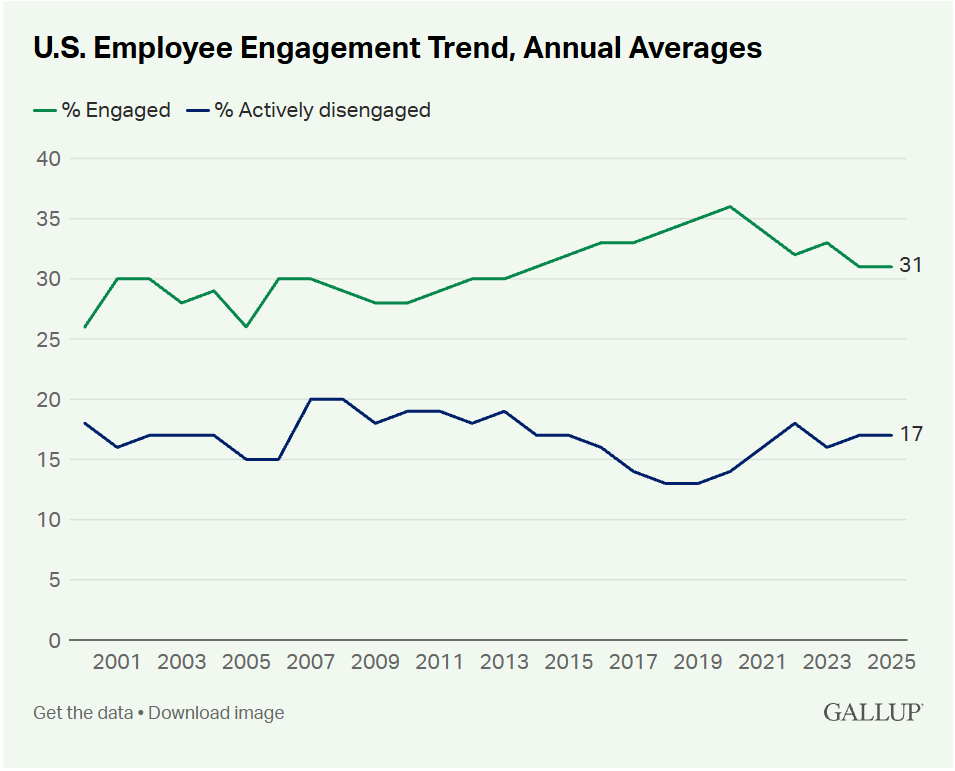
The insight that Greg brings to Gallup’s 25-year engagement data is a helpful reframe in the conversation. Most organizations look at that data and see a problem with the disengaged middle. Greg’s read is different: the disengaged are not the problem. They are the symptom. The actively disengaged, his vandals, are the cause. When you remove or address the vandals, the disengaged tend to re-engage on their own. When you leave vandals in place and try to motivate the disengaged past them, you get, at most, a one or two point bump. The disengaged are watching. If leadership tolerates destructive behavior, it signals to the broader workforce that the culture is not serious about its own values.
Why Vandals Are Hard to Evict
The obvious question is why organizations do not simply remove people who are actively harmful to the culture. Greg’s answer is that vandals are not usually easy to identify or easy to act on. He has found four common reasons they persist. First, they are often the highest revenue generators in the organization, the kind of salesperson or producer who can credibly say they are funding the people complaining about them. Second, they have been there for decades, and long tenure creates its own kind of insulation. Third, nepotism protects them, whether in a family business or through informal organizational alliances. Fourth, and perhaps most surprising, the vandal is sometimes the founder or owner of the company, whose own behavior, divisive language, dismissiveness toward team norms, has become normalized over time without anyone being positioned to address it.
Dealing with vandals is therefore a test of leadership conviction. It requires believing that removing one productive but corrosive individual will yield more from the broader team than that individual was contributing. Greg’s experience is that it does, but the benefit is not immediate and the risk is real. That is why, as he notes, nearly one in five employees in the average organization is actively disengaged. They are there because removing them is hard, not because leadership is unaware of the problem.
Building Culture Through Consistent Habits
Greg is emphatic that culture cannot be sustained through checklists or values recitations. The organizations he has seen build genuinely strong cultures do it through repeated, small leadership behaviors that make the values real. His most actionable suggestion is also his simplest: leaders should start meetings not by reading a list of company values but by sharing a specific personal challenge they faced that week in living one of those values. Rather than just a morality story, they reveal a real moment of friction, a situation where the easy path conflicted with the stated principle and they had to choose.
That practice does three things simultaneously. It models that values are not aspirational wall art but operational commitments. It creates psychological permission for others to talk about their own struggles with alignment. And it builds what Greg calls thick trust, a culture where enough trust exists to absorb honesty without punishing it.
The connection to Geoff’s layoff discussion is direct. Transparent, proactive communication during a reduction in force works precisely when trust has already been built through consistent behavior over time. A leader who has spent two years modeling honesty about hard situations has credibility when they have to deliver genuinely bad news. A leader who has projected relentless optimism through a thick varnish of corporate language does not, and employees know the difference.
AI as Partner, Not Replacement

Greg’s view on AI is straightforward and grounded in historical perspective. He was in the workforce when the internet arrived, when there was similar fear about what it would eliminate. In his view, the internet ultimately created more opportunity than it displaced, and AI is likely to follow the same trajectory, with the key difference that the pace of change is faster and the capability of the technology is broader.
His advice to leaders is to lean into transparency and experimentation rather than either panic or silence. Many organizations are still in the pilot program phase with AI, and acknowledging that openly, discussing quarterly what has been tested, what worked, and what did not, is meaningfully better than letting employees speculate about what AI means for their roles in the absence of information. Silence creates fear. Honest uncertainty creates engagement.
On the question of what skills will matter in an AI-partnered workplace, Greg’s answer is not technical: curiosity, creativity, and the willingness to experiment. People who can ask good questions, synthesize outputs, and bring genuine human judgment to AI-assisted work will have more opportunity, not less. And Greg draws some encouragement from the Gen Z resistance to artificiality, the same generation using AI tools who are also booing AI-centric commencement speeches and showing a growing appetite for authenticity over optimization. If that resistance holds, human creativity and genuine engagement will remain irreplaceable assets.
Frequently Asked Questions
Developed by Greg Hawks through his parallel experience leading a nonprofit and managing rental properties, the framework identifies three employee archetypes present in every organization. Owners take initiative, act beyond their job description, and treat outcomes as personally theirs. Renters do their jobs adequately but transactionally, neither growing nor detracting. Vandals, the actively disengaged, actively undermine the environment through divisive behavior, negativity, or refusal to participate in team culture.
Greg’s analysis of 25 years of Gallup engagement data shows that organizations get more engagement lift from addressing actively disengaged employees than from trying to convert disengaged employees to engaged. The reason is that the disengaged are watching. If leadership tolerates vandal behavior, it signals that the culture is not serious, and the disengaged stay put or drift further. When vandals are addressed, the disengaged tend to re-engage on their own, because the signal has changed.
Greg identifies four common reasons: they are high revenue generators and their productivity creates protection, they have long tenure and the awkwardness of addressing that is avoided, they benefit from nepotism or informal alliances, or they are the company founder or owner whose behavior has never been formally contested. In each case, the friction of removal feels higher than the friction of tolerance, which is why the actively disengaged population in most organizations has remained stubbornly consistent at around 17% for decades.
Greg’s core recommendation is for leaders to open meetings by sharing a specific, personal challenge they faced that week in living out a company value. Not a generic principle, but a real situation with real friction. That practice makes values operational rather than aspirational, creates psychological safety for others to discuss their own alignment challenges, and builds the thick trust that makes honest communication possible, including during difficult moments like layoffs.
Greg’s position, drawn from direct client experience, is that transparent, proactive communication is the only mechanism that preserves trust when the news is bad. Leaders do not need to have all the answers, but they need to be honest about what they know, why decisions are being made, and what they are trying to do to move the organization forward. Leaders who have built thick trust through consistent honesty over time have credibility in those moments. Leaders who have projected only optimism do not.
Greg recommends treating AI as a partner and being transparent about the experimentation process. Most mid-size and smaller organizations are still in the pilot phase with AI, and acknowledging that openly, discussing what is being tested and what the results have been, is more effective than silence. He argues that the skills that will matter most in an AI-partnered workplace are human ones: curiosity, creativity, and the willingness to experiment. Technical proficiency matters less than the ability to work alongside AI tools with genuine judgment and intentionality.
Full Episode Transcript
Geoff: Welcome to the Wellable Weekly Podcast, where we cover the key topics and trends at the intersection of well-being, technology, and HR. I’m Geoff, and today we have a very special guest. Greg Hawks is a keynote speaker, corporate culture expert, and bestselling author of Act Like an Owner. Greg has over 25 years of leadership experience across real estate, nonprofits, and entrepreneurship. Greg gives leaders the frameworks and language to build trust, elevate accountability, and create cultures where people take real ownership of results. Greg, welcome to the show.
Greg: So good. It’s a great time to be here, Geoff. Thank you so much.
Geoff: Twenty-five years across real estate, nonprofits, entrepreneurship. Tell me about the through line.
Greg: The through line is definitely a leadership philosophy. In 2000, I took over as executive director of a nonprofit working with young people. We ran summer camps, sleeping 800 kids a week, thousands through the summer. I did that for a decade, running a lot of volunteers, doing a lot of leadership development. And in that same time, since I was in nonprofit and trying to generate revenue beyond what the nonprofit paid, I started buying single family homes in Edmond, Oklahoma. No experience at all. My entire real estate strategy was: buy nice houses, put nice people in them. And it honestly paid off.
So I had these parallel things happening. And you could see the mindset crossing over. I had people living in my homes who took better care of them than I did, because they acted like they owned it. Just renters in financial terms, but the way they thought about it and cared for it was special. And contrasting that with people I was paying who weren’t bringing their heart or their head. I also had some college students who vandalized a property and set me way back. You could see the same dynamic in the workplace: how one person can be so detrimental through what they say and do, spreading negativity and gossip. Those became the vandals in my world, literally and figuratively.
Geoff: The recent engagement data, Gallup in particular, is pretty sobering. Decade lows, return-to-office mandates, companies trying to figure out the right mix of human capital and technology. How do you think about acting like an owner when the average employee is dealing with significant turbulence?
Greg: If you look at 25 years of Gallup data, that middle line, the disengaged, bumps one or two points in either direction. It’s a plus or minus two over the whole span. The disengaged aren’t as bad as people make them out to be. In my terminology, those are renters, and what you need for renters are lease-purchase options: help them buy back in. But people focus on converting the disengaged to engaged, and that’s the wrong strategy. Where the magic is is in the actively disengaged. When you deal with that group, the numbers for engaged go up. You don’t get more engaged people by dealing with the disengaged. You get more engaged people by dealing with the actively disengaged, because the disengaged are watching. If you tolerate the vandal behavior, they ask themselves: why should I give more? Why should I care? When you deal with the lower group, the disengaged jump up. A lot of people ops strategies focused on the disengaged are wasting time and money. They’ll get a one or two point bump, and that’s it.
Geoff: You compared the actively disengaged to vandals. In real estate, you evict vandals. Do you see organizations taking a harder line?
Greg: That’s what makes it such a friction point. There are four categories that explain why vandals exist. Number one: they’re revenue generators. Highly productive, generating real money, just don’t want to participate in culture or team. They can credibly say they’re practically paying for everyone else. Number two: they’ve been there a long time, ten, twenty, thirty years, and it’s awkward to address at this point. You’re hoping they don’t say something that creates a lawsuit. Number three: nepotism. It’s real, especially in family businesses. And number four, which you might find interesting: sometimes the vandal is the owner of the company. Someone who started the business who says and does things that are divisive and doesn’t realize how destructive their words can be, because they feel like they can do it without you anyway. So it’s not easy. Dealing with the vandals requires believing the rest of the team will step up when you do. It’s a risk. And it doesn’t happen overnight.
Geoff: Most leaders I talk to say the gap is in execution, not knowledge. They know what good culture looks like. They just struggle to commit to it consistently.
Greg: Totally. Culture can’t be sustained through checklists. You’ve got to have leaders with built-in consistent habits. And what I always encourage leaders to do instead of reading the values at the start of a meeting is share one situation from the past week where they personally faced a challenge with one of those values. Not a morality tale. A real moment: here’s where our value of integrity came up for me this week, here’s where the easier path conflicted with what we say we believe, and here’s what I did. When leaders share those challenges openly, it does a few things. It makes the values operational, not aspirational. It creates permission for others to speak about their own struggles. And it builds what I call thick trust, a culture where you can expose a weakness without being punished for it.
Geoff: We’ve seen massive layoffs across tech and healthcare over the past couple of years, with companies still posting strong earnings. How do leaders rebuild trust after that?
Greg: I have a client that has done a ten percent reduction in force two years in a row. And while doing it, they also started hiring internationally because the price-to-output ratio made so much more sense. So not only did people watch colleagues get let go, they watched the company add headcount from another country at the same cost. That’s a tough reality. What I appreciate about this client is that they’re at least upfront about it. They’re talking about it while it’s happening. Transparent, proactive communication is the only thing that keeps trust intact when the decisions are hard. It’s not that anyone is happy about it. But the people who remain, who know you’ve been upfront throughout the process, who know it’s not because senior leadership got big bonuses while everyone else suffered, that foundation of honesty is the only real option. Because when the numbers aren’t working and you have to make those choices, transparent communication is what keeps trust alive, even when the consequences are painful.
Geoff: AI is reshaping pretty much every job. For organizations that don’t yet have a firm plan for how to incorporate it, should they be communicating about that, or staying quiet in the absence of good information?
Greg: I don’t think staying quiet is an option. I’m also not proposing leaders share everything, because there is a strategic element to how things roll out. But with AI specifically, I think the transparency of experimentation matters. At this moment, it’s still really experimentation for a majority of mid-size and smaller organizations, even large ones. Talking openly about what’s being piloted, what’s being tested, imagining how AI can be utilized alongside your people rather than instead of them, that’s the communication that reduces fear. Leaders who let employees speculate in a vacuum are making a mistake.
On the bigger question of what AI means for work: I was around when the internet arrived and everyone thought it would eliminate everything. In my view, the internet ultimately created more opportunity than it displaced. AI is different, but I think the same principle holds if we approach it the right way. The skills that will matter are not technical. They’re human: curiosity, creativity, the willingness to experiment. People who can work with AI intelligently, who can ask good questions and apply judgment to what comes back, will have more opportunity, not less. And honestly, the growing resistance to artificiality among younger generations, the same generation that grew up with AI and is now pushing back against AI-generated content, gives me some hope that human creativity and authenticity will hold lasting value.
Geoff: Where can listeners find you and your work?
Greg: The easiest place is greghawks.com. Everything’s there. And I’m very active on LinkedIn — just search Greg Hawks. I spend a lot of time with people in the HR and people business, so LinkedIn’s a great place to connect.
Geoff: Greg, thank you so much for joining the podcast. And for everyone listening to Wellable Weekly, you can find us on Apple Podcasts, Spotify, or wherever you get your podcasts. Thank you.
-
Share
-

-

-

-