Wellness
 Rewards
 Recognitions


 Learn more about Wellable's all-in-one
employee engagement platform
Learn more about Wellable's all-in-one
employee engagement platform





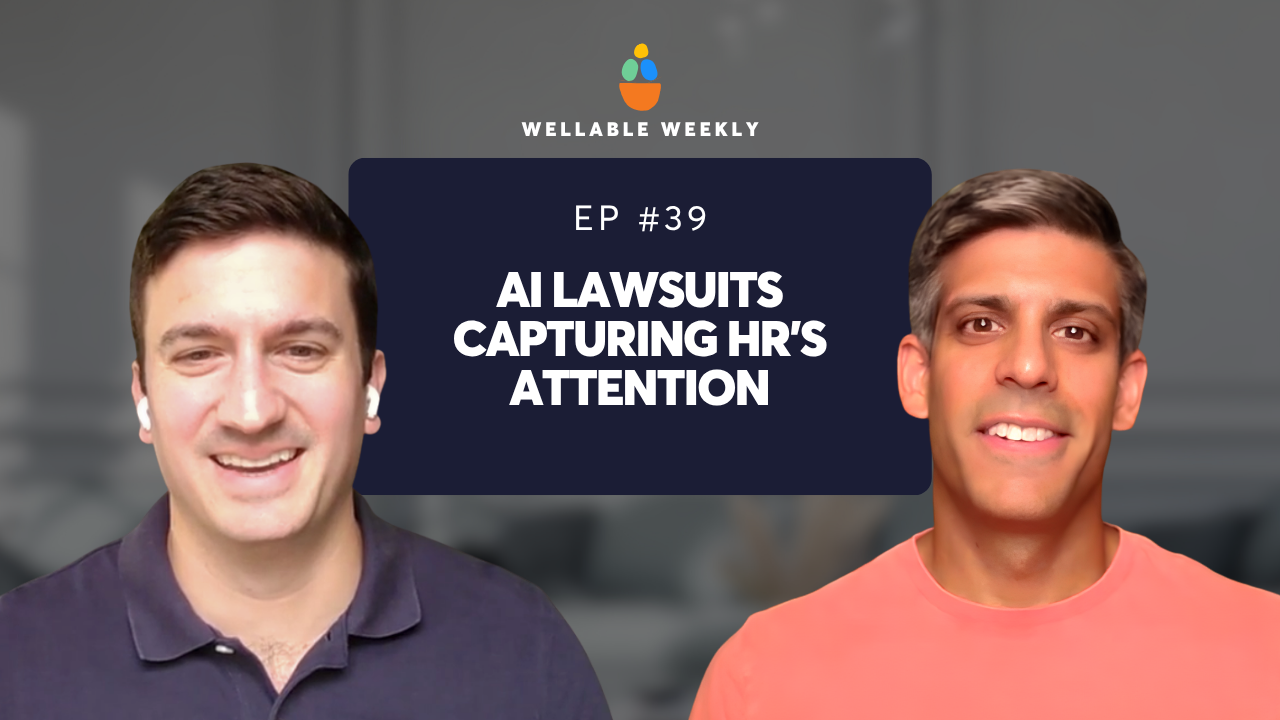
In this week’s episode, Nick and Geoff dig into two studies that challenge the dominant narratives around remote work and Gen Z in the workplace. New research shows remote work has plateaued at 26% of paid full-time days, while a survey of 18,000 US adults reveals that one in four Gen Z workers are depressed and quietly self-managing rather than seeking formal treatment.


Short on time? Here are the key takeaways:
- Remote work has plateaued at roughly 26% of paid full-time days, down only marginally from 27% two years ago and far above the pre-COVID baseline of 7%, suggesting most employers have settled into hybrid arrangements and are staying there
- Stanford economist Nicholas Bloom predicts hybrid work will increase as younger, more flexible CEOs replace older executives, while JP Morgan’s Jamie Dimon argues one recession would be enough to push on-site requirements significantly higher
- Approximately 25% of Gen Z workers are experiencing depression, and many have quietly abandoned formal treatment after financially draining and unsuccessful experiences with antidepressants
- Half of depressed Gen Z workers are using marijuana as a coping mechanism and 70% of Gen Z CBD users are using it specifically for mental wellness, though similar patterns exist among millennials
- Manager training focused on mental health awareness is the most actionable employer response, and in-person work gives managers meaningfully better visibility into employees who may be quietly struggling
Episode Summary
Remote Work Has Plateaued, But the Direction Is Contested
Nick is recording this episode from Greece, which he notes makes him a living example of the very trend under discussion. New research shows that remote work has stabilized at around 26% of paid full-time days as of May, barely changed from 27% two years ago. The pre-COVID baseline was 7%. What that means in practical terms is that the return-to-office wave that has dominated business headlines has not moved the aggregate number in any meaningful way. Most employers settled into hybrid arrangements and stayed there.
Geoff connects this to Wellable’s own experience. The company has required two anchor days in the office, Wednesdays and Thursdays, for the better part of five years, and that policy has not changed.
The more interesting question is whether 26% is actually a stable equilibrium or just a pause before another shift. Stanford economist Nicholas Bloom’s prediction is that the number will rise over time as younger CEOs, who are statistically more likely to support hybrid work, replace older executives who prefer on-site arrangements. JP Morgan’s Jamie Dimon has the opposite view: the current hybrid normal is a product of a tight labor market where employers have had to compete for talent, and one significant recession would shift the power dynamic enough to push on-site requirements materially higher. Nick’s read is that both could be right, depending on which macroeconomic scenario plays out first. The 26% plateau may be less stable than it looks.
Quiet Coping: What Gen Z’s Mental Health Crisis Means for Employers

The second study comes from Prosper Insights Analytics, a private research firm that surveyed 18,000 US adults on how different generations are handling mental health challenges. The finding that anchors the discussion is that roughly one in four Gen Z workers, about 25%, are experiencing depression. That number is likely higher than most employers would estimate and higher than most employers would have good visibility into, especially in hybrid or remote environments.
What distinguishes the Gen Z pattern is not just the prevalence of depression but the response to it. These workers have largely lost confidence in the formal healthcare system. Nick walks through why: young workers often lack the financial resources to navigate a trial-and-error antidepressant process where the first prescription frequently does not work, requiring multiple attempts at real cost and emotional toll. Dropping out after the first failed round is a rational response to a system that expects iteration but does not account for the financial and emotional burden that iteration places on someone already struggling. The result is a generation that is coping quietly on its own.
The coping mechanisms vary in how healthy they are. The survey found that half of depressed Gen Z respondents are using marijuana and that 70% of Gen Z CBD users are using it specifically for mental wellness. Nick is careful to note that when you look at the full data, millennials are not far behind: 48% of depressed millennials report marijuana use, and 62% use CBD for mental wellness. The gap exists but is narrower than the Gen Z framing of the article implies. Geoff notes that Gen Z is also turning to more constructive outlets: crafting, reading, exercise, and analog hobbies. The picture is not uniformly bleak. But the pattern of quiet self-management rather than formal treatment is a signal that employers should take seriously.
What Employers Should Actually Do with This Information
Geoff’s framing of the employer response is direct: lean into the wholesome, holistic health resources that Gen Z is already drawn to, and invest in manager training that equips people leaders to notice when someone is struggling. The criticism that Gen Z has an attitude problem, which became a common narrative in some management circles, looks increasingly like a misdiagnosis. The data suggests what some managers read as attitude may have had more to do with untreated mental health than with workplace entitlement.
Nick connects the two articles. In-person work is not just a productivity or collaboration story. It is also a visibility story. A manager who physically sees their team has a fundamentally different ability to notice when someone has gone quiet, seems withdrawn, or is not engaging in the way they normally would. Remote and asynchronous environments strip out those signals. An employee dealing with depression in a fully remote setting can become nearly invisible to the people who might otherwise help.
Frequently Asked Questions
No, at least not in the aggregate data. New research shows that remote work stabilized at approximately 26% of paid full-time days as of May, down only marginally from 27% two years ago. Despite high-profile return-to-office mandates from companies like Amazon and JP Morgan, most employers have not shifted significantly. The pre-COVID baseline was 7%, so the current level still represents a dramatic and durable change in how work is structured.
It depends on who you ask. Nicholas Bloom predicts that hybrid work will expand as younger, more hybrid-friendly CEOs replace older executives who favor on-site arrangements. JP Morgan’s Jamie Dimon argues that the current hybrid equilibrium is a product of a tight labor market, and a recession would shift employer leverage enough to drive on-site requirements higher. Both scenarios are plausible, and the direction will likely depend on which macroeconomic conditions materialize first.
Quiet coping refers to the pattern of managing mental health challenges privately, without formal treatment, often through self-medication or lifestyle adjustments. It is increasingly common among Gen Z workers, approximately 25% of whom are experiencing depression.
Half of depressed Gen Z respondents in the Prosper Insights Analytics survey reported using marijuana as a coping mechanism, and 70% of Gen Z CBD users are using it specifically for mental wellness. Nick cautions against treating this as uniquely a Gen Z story: millennials are not far behind, with 48% of depressed millennials reporting marijuana use and 62% using CBD for mental wellness. The trend reflects broader skepticism toward the formal healthcare system and a preference for accessible, self-directed coping tools.
Geoff identifies two practical responses: leaning into wholesome, holistic health resources that Gen Z employees are already drawn to, such as exercise programs, creative outlets, and analog wellness activities, and investing in manager training focused on mental health awareness. The narrative that Gen Z has an attitude problem may have reflected untreated mental health rather than workplace entitlement, and managers equipped with the right training are better positioned to notice and respond to early signs of struggle.
Nick argues that in-person work gives managers meaningfully better visibility into how their team members are doing. An employee dealing with depression in a remote environment may become nearly invisible to the people who might otherwise notice and help. The case for some amount of in-person work is therefore not just about productivity or collaboration but about the human infrastructure that makes early intervention in mental health challenges possible.
Full Episode Transcript
Nick: Welcome to the Wellable Weekly Podcast, where we talk about key topics and trends at the intersection of wellbeing, technology, and HR. I’m Nick, along with my good friend and co-host Geoff. Geoff, how’s it going?
Geoff: It’s going well, Nick. I like the shirt — repping the Greek gear.
Nick: It’s a new edition. For those who don’t know, I’m actually recording this podcast from Greece. I’m here for a few weeks, and we didn’t want to skip a week, so Geoff and I are meeting across time zones. It’s my late afternoon, his morning. Glad the internet is working. We had some issues early on, but we can hop right into it. It’s actually a timely topic.
There’s a really good study we talked about in Wellable Weekly related to remote work. Obviously, what I’m doing right now in Greece is remote work. The gist of the article is that it’s a true study from a couple of economists, one of whom we’ve talked about before, Nicholas Bloom from Stanford, continuing to provide ongoing data on remote work.
There’s a belief, if you just follow the news, that more and more companies like Amazon and JP Morgan are doing return-to-office mandates. In some cases it’s five days, some cases four. It’s a significant push to get people into the office. If you just watch the news, you’d think we’re moving steadily toward more on-site work. But the study shows we’ve effectively plateaued.
In May, 26% of paid full-time days were work from home. About a quarter. Two years ago, that number was 27%. If you look at that chart month by month over the last four years, you see a big post-COVID spike that slowly declined as people returned to something resembling normal. But the new normal is not the pre-COVID normal. Pre-COVID, about 7% of days were remote. So it’s drastically higher than before, but it seems to have plateaued at about one in four days remote.
Geoff: The big company story gets a lot of attention. Jamie Dimon at JP Morgan has long been a real advocate for full return to office, encouraging and in some cases mandating that JP Morgan associates come back five days a week. And others have made similar headlines. But that’s a legitimate strategic choice for their culture and business model. Large companies like JP Morgan can afford to lose some people who won’t come in. Most employers simply can’t make that same bet and have come to terms with this new normal.
Looking at this data, with the true leveling out and plateauing, it feels like we have a pretty good sense of what the average employer is going to ask of their staff when it comes to working arrangements. At Wellable personally, we’ve had two required anchor days, Wednesdays and Thursdays, for the better part of five years. I don’t really see that changing anytime soon for us.
Nick: I feel pretty good about our policy when you think about remote work as a benefit for attracting talent. We’re two days a week in office, but there are about five fully remote weeks per year, plus six flex days everyone can choose to work remotely. When you add that up with PTO, employees are probably in the office closer to 25% or 30% of actual working time, not 40%. We’ve effectively flipped the equation: rather than being one-fourth remote, we’re one-fourth in office.
The Jamie Dimon thing is interesting in relation to the study because the study includes a prediction. Two big takeaways: one, we’ve plateaued at 26%, and two, the economists, including Bloom, believe the direction of travel will shift. Bloom points out that younger CEOs, those under 40, are significantly more likely to encourage hybrid work, while older CEOs are more likely to favor on-site. So as older CEOs retire and younger ones take their roles, that should push the 26% number up toward 30% or 40% over time.
But there’s a flip side. For most of the last five years, it’s been an employee-friendly market. That’s slowly shifted over the past six to twelve months toward being more employer-friendly, especially with AI job loss conversations. Jamie Dimon, the same person pushing everyone back to the office, also says we’re one big recession away from everyone being on-site. He thinks the talent wars have led employers to accept more remote work than they personally prefer, and once that power dynamic shifts sufficiently toward employers, as it would in a recession, on-site requirements will dial up.
I don’t know who’s right, whether it’s the academic or the practitioner. But there’s a strong argument that the 26% number is not stable and could go in either direction.
Geoff: It’s plateauing in a relatively stable time, but all it would take is one market shock, as Dimon suggests, to upend things. Although at the same time, depending on when that shock comes, there’s some truth to the generational view. The cycle of older executives retiring and younger CEOs becoming established matters. And there’s also the question of US job growth, which historically comes from smaller companies that grow over time. JP Morgan may be setting norms for certain industries, but most of the market is moving differently.
The other point we’ve talked about a lot is the cost of remote work specifically on younger workers. There’s pretty convincing evidence that proximity to senior colleagues during your twenties matters a lot for skill development, and that skill gaps formed early can persist into your thirties. That’s a legitimate employer concern, and hopefully an employee concern too, not just a CEO preference. And it brings us naturally to our next article: how younger generations are dealing with the challenges they experience both personally and professionally, with remote work being a meaningful component.
Nick: Exactly. The other article in Wellable Weekly introduced this concept of quiet coping. In the HR world we’ve had a run of “quiet” terms: quiet quitting, where employees choose not to do their job but stay on payroll; quiet vacationing, where employees take time off without formally requesting PTO. This new concept, quiet coping, has a sad angle to it.
The research behind it is a sophisticated survey rather than academic research in the strict sense. It’s the Self-Medication Generation study, conducted by a private research firm called Prosper Insights Analytics, which surveyed 18,000 US adults. About one in four respondents were Gen Z. The study is focused on Gen Z and specifically on depression in Gen Z. Roughly 25% of Gen Zers are depressed. If you asked most employers to estimate that number in their own workforce, they’d probably guess much lower, and they’d have limited visibility into what the real number is.
When someone is going through depression or mental health challenges, they’re typically encouraged to seek treatment, whether pharmaceutical, therapy, or something else. What’s happening with this group is that they’ve largely lost faith in the healthcare system. Partly they’re very young and don’t have the financial resources. When you go on antidepressants, the first prescription often doesn’t work. You go through multiple drugs before finding something effective. For someone without a lot of income, failed attempts that are financially challenging, while they’re already not feeling well and not seeing results, create a real barrier. They often drop out after the first round. The pharmaceutical and treatment industry expects iteration, but that expectation is not reasonable for someone trying to get through a difficult period without a financial cushion.
Picture a 24-year-old employee earning less than their peers, with a few failed prescriptions and the setbacks those created. What they do instead is quiet cope: deal with it on their own. Sometimes that looks like healthy coping, like a creative outlet. But what’s increasingly showing up in the data is the use of cannabis and CBD as a frontline tool to address mental health challenges.
Geoff: Some of the stats that jumped out: half of depressed Gen Zers are using marijuana, and 70% of Gen Z CBD users are using it specifically for mental wellness. Regardless of your position on that, Gen Z is also turning to some genuinely constructive outlets: crafting, reading, exercise, analog hobbies. These are resourceful workarounds. Every generation copes in some way. For boomers, it might be coming home after a hard day and having a glass of wine. Gen X might just be checking out. Gen Z seems to be trying to be more intentional about optimizing their mental health through a range of self-preservation techniques.
The employer question is: what do you do with this information? I think there’s clearly an element of leaning into holistic health resources that Gen Z seems to be drawn to. And the other is manager training. For years, managers were told that Gen Z has an attitude problem. The data suggests that may have been a misguided frame. If you’re only solving for attitude, you’re solving for the wrong thing. Being aware of this and investing in manager training, whether mental health first aid or programs that empower managers to have more productive conversations and spot signals where someone may need extra support, is where you can actually make a real impact.
Nick: The manager training point connects back to the previous article. A well-trained manager still needs inputs and visibility to identify someone who isn’t coping. That is much easier in person. If you’re fully remote and don’t even require video on calls, you’re often just doing phone calls with a group of people. An employee who’s depressed may not be chiming in, may be pulling back, and that’s nearly impossible to detect when you can’t see them. So if you’re thinking about manager training as a response to quiet coping, there’s an argument that some amount of in-person work, even minimal, is probably beneficial.
One thing I’ll push back on with the article is the framing of this as exclusively a Gen Z story. When you look at the full data, millennials are not far behind. Fifty percent of depressed Gen Zers use marijuana; forty-eight percent of depressed millennials do. Gen Z is at 70% for CBD mental wellness use; millennials are at 62%. Some of the other metrics flip entirely, with millennials higher. The gaps are real but not dramatic. I think this is more than just a Gen Z story. The article’s focus on Gen Z may reflect where the trend is most visible, but the underlying dynamic cuts across generations.
And if you get a chance to look at the remote work study directly, I’d encourage it. It’s effectively a data presentation with chart after chart. One I found particularly interesting shows employee desire for remote days versus employer offerings at each level. There’s a mismatch: nearly 30% of employees want fully remote, but very few employers offer that. And there are only 28% of employees who want five days a week in the office. The employer and employee are in different places on this, and the full data is worth exploring.
Geoff: It’s hard to find the Goldilocks model, but the gap between employer policy and employee desire is probably tightest in that two-to-three days range. That seems like a good place to wrap up today’s podcast. Thanks as always for those who tune in. You can listen to Wellable Weekly on Spotify, Apple Podcasts, or wherever you get your podcasts. Be sure to subscribe to the Wellable Weekly newsletter for all the latest insights. Thank you.
-
Share
-

-

-

-