Wellness
 Rewards
 Recognitions


 Learn more about Wellable's all-in-one
employee engagement platform
Learn more about Wellable's all-in-one
employee engagement platform





In this week’s episode, Geoff sits down with Chase Sterling, founder and executive director of Wellbeing Think Tank, to explore what it truly takes to build a healthy workplace in today’s environment. Chase brings over 20 years of workplace wellness expertise to a candid conversation about how organizations can build a healthy, resilient workplace even in uncertain times.


Short on time? Here are the key takeaways:
- Wellbeing Think Tank started as a side passion project to break down silos in workplace wellness and has grown into a full-time nonprofit organization offering free events, evidence-based resources, memberships, and trainings
- AI adoption is creating more mental load, not less, when it is forced on employees without proper training, context, or support — and the workforce is pushing back harder than most corporate leaders realize
- The most resilient organizations are not the ones chasing trends; they are the ones that kept investing in fundamentally human practices — belonging, recognition, autonomy, and psychological safety — before any crisis hit
- “Survey fatigue” is a myth: what organizations actually create is action fatigue, and employees will keep answering questions as long as they see that their answers produce change
- Chase predicts a coming reckoning on wages, driven by the fact that productivity has continued to rise while compensation has not kept pace with the cost of living — and younger workers, unlike previous generations, are not going to absorb that quietly
- Employee-owned models and ESOPs (Employee Stock Ownership Plan) may offer a structural path forward for organizations that want genuine workforce buy-in rather than superficial engagement
Episode Summary
The Workforce Has Passed Its Breaking Point
Chase Sterling does not sugarcoat the state of workplace well-being. When Geoff asks whether we have hit peak burnout, her answer is direct: we are past peak. Mental health challenges, chronic stress, and burnout are all continuing to climb, and she sees leaders genuinely confused about why—which is, itself, part of the problem.
Her explanation cuts to a core tension in most well-being conversations: the language of productivity has been pointed at the wrong audience. Chase reserves the word for boardrooms and budget meetings, not the people doing the work: “As a worker, stop telling me about productivity” she says. The workforce, she argues, has been more productive than at any point in history. What has not kept pace is compensation and what has not been honored is the human cost of that output.
In Chase’s framing, the relationship between employer and employee is fundamentally symbiotic—and right now it is badly out of balance. She acknowledges that most employers genuinely want to do right by their people, but good intentions collide with the complexity of managing human beings who are, in her phrase, “a bunch of trauma bags” showing up to work every day. The gap between wanting to support people and designing systems that do not harm them is where most organizations fall short.
She is also clear-eyed about generational dynamics. Younger workers have stronger boundaries and lower tolerance for being asked to absorb the cost of organizational dysfunction. The companies that are not paying attention to that shift are heading toward a reckoning.
AI at Work: Tool or Threat to Well-Being?
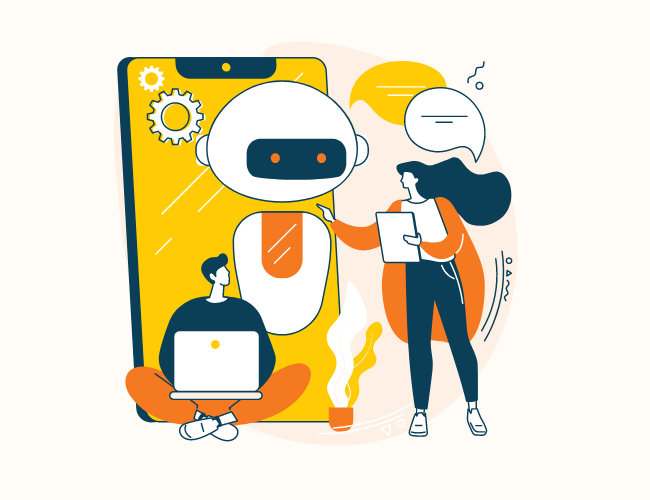
The conversation on AI is one of the richest in the episode. Chase is neither categorically opposed to AI tools nor optimistic about how most organizations are currently deploying them. Her diagnosis is familiar to anyone who has watched corporate trend cycles play out: When something becomes a dominant trend, organizations feel pressure to adopt it, vendors rush to embed it in every product, and employers end up implementing AI not because it is a strategic move but because they are afraid of being left behind.
The result is that AI is being forced on employees without training, without context, and without any honest accounting of whether it reduces or adds to mental load. In theory, automating tasks should give people time and cognitive space back. In practice, when workers are handed a new tool with a “figure it out” mandate, it generates more cognitive burden, not less.
Consumers, too, are increasingly skeptical of AI-generated content and AI-driven interactions. The companies that read this signal carefully, rather than dismissing it as resistance to change, will be better positioned for what comes after the current AI bubble deflates.
Geoff adds a dimension that Chase builds on: AI adoption done well should be a collaborative, coworking activity rather than an isolated one. Solving complex problems with AI tools in a group setting preserves the human interaction and shared discovery that keeps work from becoming alienating—a small but meaningful design choice that has real implications for employee experience.
What the Best Employers Do Differently
Chase has seen some organizations emerge from the pandemic with their culture and their people’s mental health fully intact: The common thread is not a sophisticated wellness program or a cutting-edge benefits stack. It is the decision, made long before any crisis hit, to treat well-being as a function of how the organization operates rather than as a program layered on top of operations.
The fundamentals are almost deceptively simple: Do employees feel seen, heard, and valued? Is there a genuine sense of belonging, or do people come to work feeling like outsiders in their own organization? Are recognition, autonomy, and sense of purpose part of the day-to-day experience, or are they reserved for annual reviews and all-hands talks?
She is equally direct about what organizations need to stop doing. The pattern she sees most often is employers deciding that their people are stressed and then going to market for a solution—a resiliency training, a wellness app, a speaker—without first asking what is actually causing the stress. Buying solutions to problems you have not accurately diagnosed is expensive and ineffective, and it signals to employees that leadership would rather invest in managing symptoms than address root causes.
Her framing is clean: an employer’s job is not to fix their workforce. It is to create an environment that does not cause harm. Policies, leadership behaviors, the physical and social environment of work, benefits design—these are within organizational control. The question is whether leadership is willing to look in that mirror honestly.
She also points to mission, vision, and values as either a genuine organizational compass or a set of words on a wall. The worst behavior a company tolerates is its culture, regardless of what the values statement says. And it only takes one toxic person, left unaddressed, to corrupt a workplace.
Employee Listening That Actually Works
A significant portion of the conversation is devoted to the mechanics of employee listening—a practice that Chase says most organizations are not doing well, despite nearly all of them doing it.
Her first observation reframes the most common complaint about surveys. There is no such thing as survey fatigue, she argues. What exists is inaction fatigue—the exhaustion that comes from sharing opinions and seeing nothing happen. Employees who watch feedback disappear into a void stop answering. Employees who see their input shape real decisions keep answering, and response rates climb over time.
Her practical guidance is specific. Use a third party where possible; employees do not trust surveys from their own employer, and there is a meaningful difference between confidential and truly anonymous that most HR teams paper over. Do not ask questions you cannot act on—if wages are off the table, do not ask about wages. When you collect feedback, always respond, even if the answer is “not now” or “we heard you and here is why this will not change.” And when you do make a change based on what you heard, say so explicitly: closing the loop is what earns you the credibility to ask again.
On the question of segmentation, she recommends thinking carefully about what problem you are trying to solve before deciding what demographic cuts matter. Location, supervisory role, and tenure are often more useful than identity categories. And anonymity should be the default: organizations almost always want to know more than they need to know, and the desire to identify respondents is frequently what kills psychological safety.
Chase’s Prediction: It Gets Worse Before It Gets Better
When Geoff asks Chase for a forward-looking prediction, she pauses before giving an answer she calls regretful: things are going to get worse before they get better, and we have not yet hit bottom.
Her reasoning is structural. Productivity has continued to rise while wages have not. The cost of living has increased dramatically. Younger workers entering the workforce are doing the math and seeing that the equation does not work—and unlike previous generations, they are saying so out loud. Chase speaks with genuine empathy about what it would mean to be starting out in the current labor market, having grown up without family financial support herself.
She believes the current dynamic—where organizations extract maximum productivity without proportional compensation—is not sustainable, and that the workforce will eventually force a reckoning.
But she ends on a note that feels genuinely earned rather than reflexively optimistic. She recently began an internship program with high school students, all of them sharp, thoughtful, and clear-eyed about what they want from work: to be seen, heard, and valued, and to contribute somewhere that does not cost them their health. One of them had planned to pursue finance, until he started talking to people who had already been through it. What he heard was a pattern of divorce, stress, and heart attacks. He decided to look for a different path.
Chase’s closing thought: if we could build workplaces where people left feeling good at the end of the day—genuinely good—that would carry over into communities, into how people treat each other, into the texture of daily life. The work to get there is hard and structural and will require effort from many different directions. But she thinks it is possible. And based on the interns she just met, she thinks the generation coming up is ready to demand it.
Frequently Asked Questions
Chase draws a distinction between productivity as a business metric and productivity as a demand placed on human beings. Her argument is that workers have continuously produced more, but wages have not kept pace with either productivity or the cost of living. The result is a workforce that is being asked to sustain output levels that are not compatible with long-term health — and the rising rates of burnout, stress, and mental health challenges are the predictable consequence.
According to Chase, it depends entirely on how AI is introduced and supported. When AI tools are forced on employees without training, resources, or a clear explanation of how they reduce rather than add to workload, they create more cognitive burden, not less. The workforce is also pushing back culturally against the relentless AI push, both as workers and as consumers. The organizations that will get the most from AI are the ones that deploy it thoughtfully, collaboratively, and with a genuine commitment to supporting their people through the transition.
Chase consistently returns to a core set of practices: employees feel seen (through real listening and responsiveness), heard (through psychological safety and genuine feedback mechanisms), and valued (through recognition, autonomy, and purpose). The healthiest organizations she has worked with made investments in those fundamentals before any crisis hit, which is what made them resilient when crises came. The programs and benefits matter, but they cannot substitute for an organizational culture that does not cause harm in the first place.
Chase argues that “survey fatigue” is a misdiagnosis. People do not get tired of sharing their opinions. What they get tired of is sharing opinions that produce no visible result. When employees answer questions and see nothing change and hear nothing back, they stop answering. When they see their input reflected in actual decisions — and hear explicit acknowledgment that the change was made because of their feedback — response rates go up over time.
Chase expects conditions to get worse before they improve, driven primarily by the structural gap between productivity and wages, and the compounding cost of living pressures on workers. Her longer-term optimism centers on structural change: more employee-owned organizations, more ESOPs, and models that give workers genuine participation in organizational value. She also draws hope from the next generation entering the workforce, who she describes as clear-eyed, altruistic, and unwilling to accept the trade-offs their predecessors absorbed.
Chase’s rule is: if you cannot act on the feedback, do not ask the question. But when action is constrained — by budget, by timing, by decisions outside HR’s control — the obligation is still to respond. Acknowledge what was heard, explain what is and is not possible, commit to a timeline for revisiting, and follow through. The goal is never to promise what you cannot deliver; it is to ensure employees know their input was received and taken seriously, even when the answer is “not yet.”
Full Episode Transcript
Geoff: Welcome to the Wellable Weekly podcast, where we talk about the key topics and trends at the intersection of wellbeing, technology, and HR. I’m Geoff, and I’d like to welcome a very special guest to the show today, Chase Sterling. She’s the founder and executive director of Wellbeing Think Tank, has over 20 years of workplace wellness experience across Cigna, Google, many others. An Army veteran, she has her master’s in IO psychology, and has also spoken at a number of different events including SHRM, IFBB, NASA, Harvard, and is now a featured guest on Wellable Weekly. So, Chase, welcome to the show.
Chase: Yeah, thanks so much. I’m glad to be here, Geoff.
Geoff: You know, Chase, I feel like we have been a kind of passenger to all of the things that you have done over the years to lift up the broader well-being community. Wellbeing Think Tank is a great example of that. So would love to just kind of hear what’s the latest with Wellbeing Think Tank. Maybe you could just share a little bit about that for our listeners.
Chase: Sure. Wellbeing Think Tank started as a side of desk passion project while I was consulting full time. I saw a lot of gaps in the industry. So I like to say when it comes to well-being at work, all you need to do is everything. And we tend to silo these issues. So when I think about the business problems, usually organizations are trying to solve two major problems: the problem of healthcare costs and then the problem of attrition. And of course, productivity has always moved in there — that gross word that no one likes — and everything is impacting our well-being at work. It’s leadership, it’s policies, it’s the environment, it is benefits, it is programs. But I wanted to try to break down silos and how we look at workplace well-being and really be able to take a step back and think about it strategically. And then it started to get bigger and bigger. So it has been my full-time job now since about Q4 of 2023. I now sit in the executive director role and we’re continuing to grow. We are a 501(c)(3) charity. So we do a lot of free work for the community. We put out a ton of evidence-based resources. We also host free events every single month. And we’ve launched a lot of cool new things this year — memberships providing more resources and convening of conversations. We held our summit this year and announced our awards, which go into place at next year’s summit. So we’ll be handing out awards for the first time. And we have more trainings and workshops and lots of really great stuff coming out to support anyone who is working on creating a culture of wellbeing in the workplace.
Geoff: Awesome. Sounds like exciting things and even more to come down the road. I mean, you mentioned that ugly word productivity, right? Which I think forever in our world has always been something that has been an aspiration of organizations and those in HR. And to some extent, a relentless pursuit of businesses and workers alike. But it seems like now more than ever, productivity is being tested and the limits of what truly healthy productivity can look like in this world of rapid technology adoption and change, particularly with the likes of AI. Do you notice that as well? And in the conversations that occur in those different channels and forums that Wellbeing Think Tank touches, do you feel as if that’s just popping up more and more?
Chase: Yeah, I appreciate you asking about productivity because I always tell people productivity is a word I only use with organizations — with the C-suite, with stakeholders doing this thing. As a worker, stop telling me about productivity. Our workers have been more productive than ever in the history of time. And things like wages haven’t kept up with productivity. So I think for our workforce, we should focus on other things like fulfillment and accomplishment.
But yeah, we are past testing the limits. We’re past limits. I think we’re seeing that as mental health issues continue to rise, stress continues to rise, burnout continues to rise. And I see leaders getting really confused as to why people are struggling so much when people are not machines. And AI is never going to be able to replace the human experience. And humans are starved for it. A lot of what I study is how the intergenerational workforce talks about work on social media. And while corporate is really pushing a lot of AI, I will tell you the workforce is pushing back against it. They are tired of it. They hate seeing it. There’s a lot of trending topics right now — one of the themes is, if you’re using AI in your marketing, I’m not going to buy from you. So I think consumers also are exhausted of AI.
Nothing can replace human connection and nothing can really replace our human workforce. I’m not completely anti-AI — even though from a wellbeing perspective, you can get into all the politics and the environmental issues. But AI is never going to be able to replace critical thinking and actual brain power and human innovation. But for doing something like maybe automating task work — I will say I am not an organized person, and using it to help me format a document, that’s something that’s good. But yeah, we have past tested the limits. Our workforce is exhausted. You cannot squeeze any more productivity out of them, even though I think corporate is trying really hard. And we’re seeing this backlash. We are constantly going from an employer job market to an employee job market. And this is not sustainable. So I think we are really coming to a reckoning.
Geoff: The visual you described of the labor market and the employer and employee pendulum — I think it’s definitely fair. One of the things we’ve been trying to reckon with here at Wellable, but also as we get exposure to so many different types of companies trying to build a culture of well-being, is that balance of how do you incorporate whether it’s some form of AI or just new technologies, ways of working to help with efficiency or productivity — but not at the expense of that new form of burnout. Do you feel like we’re just kind of in one of those stages where this is new, companies are over-rotating into it, employees maybe aren’t as accustomed to some of the new ways of working, and we’ll eventually find a healthy balance?
Chase: Absolutely, yes. We’re in — gosh, where to even start with this. Employers tend to focus on trends a lot, and a lot of employers tend to be reactionary instead of strategic. So when something like AI comes along and it becomes this big trend, you see a lot of new companies pop up selling AI. Then everyone feels pressure to embed AI into whatever product they’re selling. And then employers are like, my gosh, we’re behind, we must be doing AI. And trends are never always the answer. So it’s good to pay attention to trends, but you always have to take that step back and think: is this right for my organization? Is it right for my business? Is it right for my people? And if you decide as an organization you’re going to implement a tool like AI, as with any tool, are you thinking about it strategically? How are we going to teach our workforce how to use it? How are we going to educate them? How are we going to empower them? Are we going to spend the time and resources to truly train supervisors and workers?
What I’ve heard a lot is that this has been forced upon employees with no training, no resources — just, “use this.” And it’s not really helpful. It just creates more work and mental load. If you’re going to use a tool like AI, hopefully it would be reducing mental load, not contributing to it. And instead I think it’s contributing to it. And then when we think about innovation, we can’t lose that human critical thinking ability and that ability to be creative. If we just start to rely on AI instead of using it as a tool, I think that’s a really scary place to be. But I think we’re in the trend cycle. We’re in the AI bubble. The AI bubble is going to burst. And hopefully it won’t be as shoved down everyone’s throats the way it is right now.
Geoff: And it can be isolating. If you go down these rabbit holes of trying to learn about a new piece of technology and feel like it’s on you to do that in a silo — you lose the ability or the natural inclination to seek out support for a particular task or project. One thing that we’ve found works well internally is forcing the co-working nature of it. If you are going to work on some complex problem using AI, do that in a group work setting — because it avoids some of those feelings of isolation and overwhelm that can occur when you’re doing this entirely on your own without any human guidance or interaction. The core tenets of what I hear from you consistently are around thinking about the best strategies to help employees avoid burnout and set up organizations built for the long term. So, absent of some of these trends we’re seeing in the technology space, what are some other things you’re seeing employers really either lean into to help employees — or conversely, stay away from right now?
Chase: I think the most progressive and healthiest employers are continuing to do — or they’re leaning into — what we know works. I think a lot of times we overcomplicate this idea of workplace well-being and we’re always looking for the next best thing. And it’s just hard, messy human work. It really is. We know at our core, we all have some of the same needs: to be seen, heard, and valued. So it’s how do we create environments like that?
There’s no such thing as survey fatigue — it’s action fatigue. We don’t get tired of giving our opinion. We love to give opinions. We love to complain. We all have a little negativity bias in our brains. But when we’re sharing our opinion and then our organization doesn’t actually make a change or put something into place, that’s when we see tension occur. And have we created a space where people feel like they belong? You know, do you walk into work every day and you don’t feel like you belong there? You feel ostracized? You don’t feel like you’re a part of the organization — and that takes a toll on your mental health and then, of course, your physical health. And then, you know, being valued. We know so many things are important: recognition and autonomy and feelings of purpose. Work doesn’t need to be your purpose, but work can be something that provides for you so you can live in your purpose.
It’s a lot of leadership stuff. It’s a lot of soft skills. It’s a lot of business 101 too. Like, what is your organization’s mission, vision, values? And do you truly let those core values guide your decision-making? Are they embedded into your policies? Are they embedded into your practices? The worst behavior you tolerate is your culture. It only takes one toxic person to infect a whole workplace. I think most employers want to do the right thing. They want to take care of their workforce, but it’s really overwhelming work because it’s humans, and humans are a huge variable factor. I like to say we’re all a bunch of trauma bags in the workplace. And so we’re coming to work with that every day. So it’s how do we just get back to getting along, being civil, finding out ways to work together? We’ve labored since the beginning of time. Labor is not the issue. But the way in which we work really needs a reckoning. And I think some organizations have always done great and they continue to be progressive, and other organizations are really trailing behind. And it’s not sustainable.
Geoff: The inaction piece that you mentioned — from surveying and asking employees and trying to listen — that stuck with me. The cost of inaction. Or the reason for inaction for an employer — maybe there is a very clear decision to be made. They hear employee feedback but they’re not prepared to act on it. Do you feel like the gap, for those organizations who aren’t doing enough, is that in the face of inaction, they’re not always providing a clear communication as to why a certain policy exists or why it won’t be changed, to at least address all those voices and make them know they’re heard — even if something won’t change, here’s a clear reason why?
Chase: Yes. I think a lot of organizations aren’t following just basic best practices when it comes to employee listening. I always think you should use a third party. I don’t want to fill out any survey my employer sends me. There’s also a difference between anonymous and confidential. So if you send me an email and it says, hey, please take the survey, and then I get another email saying, hey, you haven’t taken the survey yet, but don’t worry, you can’t be identified — confidential and anonymous are two different things.
What you just asked — if you can’t do anything with the information, you’re not ready to ask the question. So if you don’t have money for wages, don’t ask about wages. If you don’t have money to change benefits, don’t ask about benefits. Focus on what is within your control as an organization. And when you get feedback, you always have to respond to it. Even if it’s a no, or a not now, or a not yet, or a we’re not sure — you always have to respond. You have to let your workforce know: hey, we did hear you. Here’s what you said. You can give a summary. And if it’s a problem you want to address but you’re just not sure — like if you’re short-staffed: “Hey, we know we’re short-staffed. We know everyone’s stretched thin right now. We don’t know how to solve this yet. But at our next all-hands, we will bring this up.” And then you have to bring it back up. And when you do take in information and make changes, you want to remind your workforce: “Based on your feedback last year, this is the change we made. We hope you appreciated that. Please give us your feedback this year so we can continue to improve.” So eventually you should get to a place of more homeostasis where you’re always trending a little bit up, a little bit down, but it should be really small data points — not these big things we need to fix. That’s an ideal workplace setting.
And survey design is an art and science. Don’t just Google some survey questions. There’s a right way to do survey design. You don’t need to reinvent the wheel — there are validated indexes that have been developed by professionals, many of them free. Work with someone who’s trained in that. But if you do write your own, make sure you’re working with someone trained in how to develop qualitative and quantitative survey data.
Geoff: Right. And there’s probably a right way to do that design to inform your overall strategy. What’s so common is that companies are so busy trying to put a variety of different plans into action, and they put out a survey, maybe get some feedback that points toward resiliency being an area of need — and the knee-jerk reaction might be: okay, let’s bring in a resilience speaker. Check. Done. How do you see that kind of manifesting? And how do the best ones rise above it and allow data to inform a bigger-picture, ongoing strategy?
Chase: I love the example you gave because if we did some employee listening and people did say they want specific training, then that’s a great decision to maybe invest in a specific kind of training. But what I see often happen is organizations deciding that people are stressed, so we need to buy something. People need to bounce back better, so we’re going to focus on resiliency. But they’re not actually uncovering what’s causing the issue in the first place. They’re not peeling that onion back.
And organizations tend to focus on: here, fix yourself. We’re going to invest in all these things. I bought you all these things — I want you to fix yourself. And your job as an employer is not to fix your workforce. You do want to be there for them. You do want to support them. But you have to look in the mirror. Your job is to create an environment that does not cause harm. That’s within your control. As an organization, we can control our policies, how we train our leaders, what the environment is like. But a lot of employers invest so much money in good ideas that their workforce doesn’t actually value. That’s a huge gap — where employers get frustrated because they’ve spent money on these amazing programs or benefits or resources, but it’s not what the actual needs are of their workforce.
Don’t be afraid to ask more questions, so that you can make an investment that really benefits your people and your organization. And I’ve had experience with employers where maybe we didn’t get a lot of responses from a pulse survey, but we got some and we took action. We communicated it. And then when people saw, “Gosh, they did do something,” when the next opportunity for asking questions came, they answered. So we kept seeing response rates increase over time because they were like, they are doing something now. So maybe I will actually answer this question. If we’re in a not-so-great place in our workplace, we’ve got to start somewhere. We’ve got to start to make improvements somewhere. And over time, hopefully, you just get that continuous improvement.
Geoff: So you can see it’s pretty simple. You brought up a couple of different mechanisms for listening and capturing feedback — whether it’s through a pulse survey, manager-to-direct-report conversations, and there are ways to influence best practices at all levels. What are some other general best practices that would be good for the audience to know when it comes to how to get beyond the employee listening 101 and really take it to the next level to truly hear employees and position yourselves as a company to take action?
Chase: I think we’ve shared a lot of it. I would consider partnering with someone who does this work exclusively. It’s really hard to do it homegrown. But if you have to do it homegrown because of budget constraints or resources, look for indexes out there that you can use that are free. There are a lot of indexes and surveys developed by professionals, and a lot of times they even include: here’s how you score this. So you don’t need to make up your own thing. You don’t need to reinvent the wheel.
That’s one of the reasons why I started Wellbeing Think Tank — to help people find accessible, evidence-based resources. The anonymity piece — I would lean into again. Do you really need to know, or do you want to know? Maybe that’s the last point I’ll drive home: there’s a big difference between need and want.
Some segmentation depends on what problem you’re trying to solve. A lot of the segmentation I’ll use is potentially location — if we’re dealing with a large organization with multiple locations. I like to ask, are you a people supervisor or a people leader? I’ll have a logic-based question: are you a supervisor, yes or no? If yes, I know how to access and use all the tools and resources and benefits provided to me by my employer so I can support my team. If no: I feel like my supervisor provides me with the information on everything that my organization provides to support my health and wellbeing, job growth, et cetera. I like the supervisor segmentation. I usually like location. Sometimes, depending on specific issues, we might look at length of employment.
But you probably don’t need to know who they are. You want to know who they are, but you really don’t need to, and that’s not going to help really fix anything. So be honest with yourself: what is the most important data, and what are you trying to get from asking these questions? Just last week, I was talking to a client who said, do you have any benefits survey questions? And I said, yes, I have like a whole index — what are you trying to solve for? What are you trying to decide? She wasn’t really sure. I’m like: here are all these different ways you, as an organization, might be able to address the issue. How would we want to shape this survey to get the type of data we need? So just being intentional and strategic: what’s the problem we’re trying to solve for, what questions do we need to be asking, and what are we prepared to do with the data we hear? Be a little bit more thoughtful. Life is so busy. Work is so busy. We tend to be very reactionary. How can we stop being reactionary and start to be more strategic? Communications is such a core piece of workplace well-being and workplace culture. Communications can make or break an organization’s culture.
Geoff: Yeah, that’s well said. And definitely valuable for the folks listening. Chase, one thing we love to do with any guests of the podcast is to ask you for one prediction for the future. Something you feel like there’s enough momentum behind, or we’re just on the precipice of some kind of new development. Obviously there’s a lot in the headlines now, some maybe a little bit more on the negative front. So leave it up to you if it’s going to be a positive development or a negative trend to be on the lookout for. Would love to hear one of your Chase predictions.
Chase: I feel regretful that I have to say I think things are going to continue to get worse before they get better. Yeah. We’re not at the bottom of the barrel yet, which I really hate to say. I’ve been really lucky the last few weeks — I’ve keynoted with a couple of different organizations and gotten to some really intense, esoteric conversations, which I love. And I do think it’s going to get worse. Unfortunately, I think things are going to continue to get worse.
But it doesn’t have to be your organization. I’ve been so lucky in my career. I’ve worked with organizations that were so healthy pre-pandemic that they thrived during the pandemic. I have examples of organizations where their mental health did not get worse. We were still focusing on basic stuff because they had such a healthy, thriving culture. And that’s what creates resiliency in organizations. So you can continue to be a successful company and drive revenue — and of course your workers need to share in that revenue.
I do think we’re going to have a reckoning with wages. It’s something I learned very early in my career. I remember my first corporate job and I got my raise and it was like 3%, and they were like, no, Chase, that’s really good. And I was like, but wait, our health insurance went up this month. My rent just increased by 10%. Like, I’m losing. How am I in this losing game here? There’s so much data — productivity and wages are not equal. Productivity up, wages down. And the cost of living is extreme. I really get upset when we disparage our younger generation. I’m a Gen Xer, I’m almost 50. But I’m also a person who grew up in children’s services and got emancipated, didn’t have any family support. If I was a young worker in this world right now, I don’t know how I would survive. So I really have a lot of empathy and sympathy for them. I think we need to think differently about how we organize our work. I’d love to see more employee-owned organizations. I think we’re going to start to see hopefully more ESOPs and employee ownership. I think that’s how you can get more buy-in from your workforce.
People don’t not want to work. They want to contribute. They just want to be in a place that they feel genuinely values their health and well-being. And I know this is really long, but I was so surprised — I just entered an internship with four high schoolers. We were a part of an organization. It was our first time doing it. I interviewed all these high schoolers and, one, they were brilliant. Like when I was 16, I was not a good kid. I was so impressed with them. But I asked — none of them wanted to go into workplace well-being. They had different aspirations. But they were very interested in working and interning at Wellbeing Think Tank and I asked why. And one young man, he said he was going to go into financial services, very into the financial sector. He said, “Yeah, I used to think I wanted to work on Wall Street, start my career there. And of course the first couple of years would be really hard, but then hopefully as I got more experience, it would level out.” And he said, “As I’ve started researching and talking to people — man, a lot of people are divorced and they’re stressed and they have heart attacks. And that sounds horrible. So I’m really thinking about what I’m going to do differently.” And all of them said they want to work. They’re all so altruistic. They want to change the world. But they want to be somewhere where they feel like they’re seen, heard, and valued. It’s really that basic. It’s hard, messy human work. But I really think we can get there. I’m a very altruistic optimist. I think we can change the workplace, and I think if we change workplaces, we can change the world.
Because I always say: imagine a world where we all left work and we felt good. Like how that carries over into our communities and society. Less road rage. Less anger. Nicer interactions. I think we can get there. But it’s going to take a lot of structural change on the backs of a lot of different people — not just workplaces, not just individuals. It’s going to take a lot of work from a lot of people. But I think we can get there.
Geoff: Love that. Totally. And if the Wellbeing Think Tank interns are any indication, I’d say the future is bright for those who are up and coming in the workforce. Chase, thank you so much for joining today. This was great. Where should folks go to learn more about you and Wellbeing Think Tank?
Chase: Yes, please come visit our website. It’s wellbeingthinktank.org. It is always changing — I, to be very honest, built our website, so I’m always kind of changing it and figuring out what I need to do differently. I’m very active on LinkedIn — you can always connect with me at Chase Sterling. I’m just chase@wellbeingthinktank.org. Feel free to reach out to me. I spend a lot of my time leading the organization, and then I still do some advising and a lot of speaking and helping organizations. So yeah, if I can be of service to anyone, whether it’s through Think Tank or my own work, happy to connect — always happy to share ideas and evidence-based insights on what we know truly can move the needle for people and workplaces and our society. We can make it better.
Geoff: Well, thanks again, Chase. And thanks to our audience as always for tuning in. A reminder — you can listen to Wellable Weekly on Spotify, Apple Podcasts, wherever you get your podcasts, watch us on YouTube, and definitely subscribe to the Wellable Weekly newsletter for all of our latest insights. Thank you.
-
Share
-

-

-

-