Wellness
 Rewards
 Recognitions


 Learn more about Wellable's all-in-one
employee engagement platform
Learn more about Wellable's all-in-one
employee engagement platform




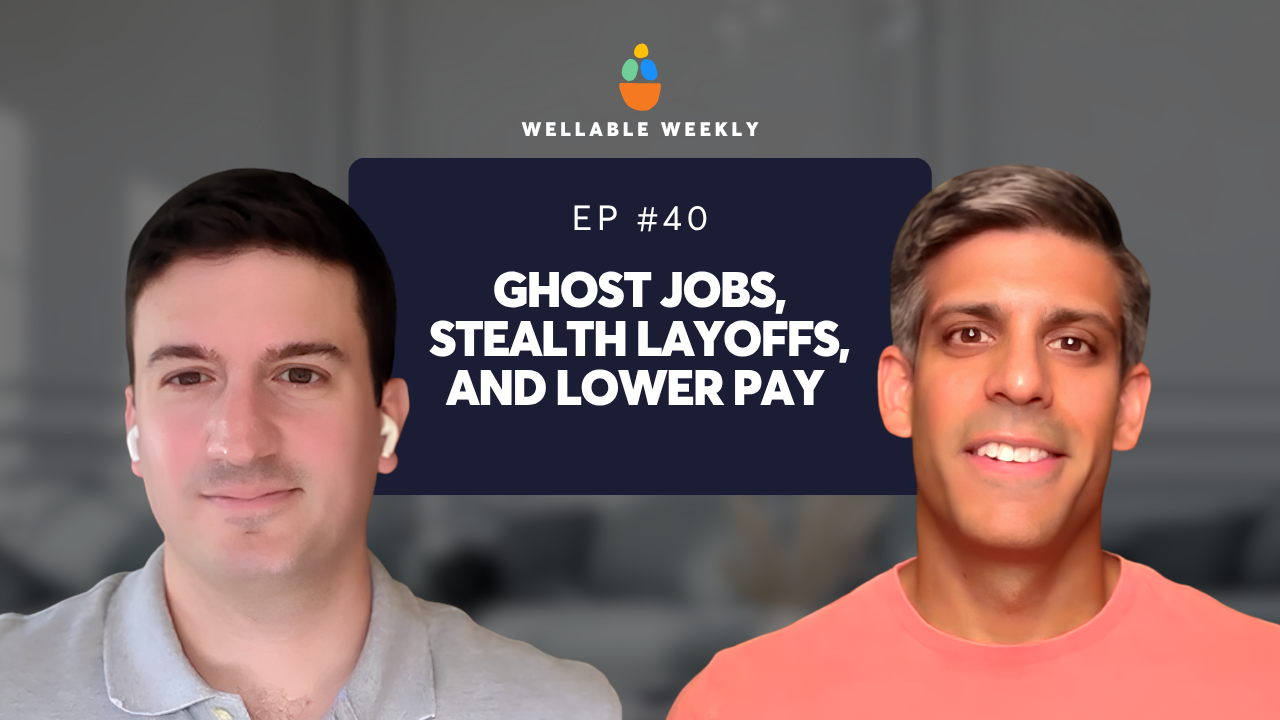
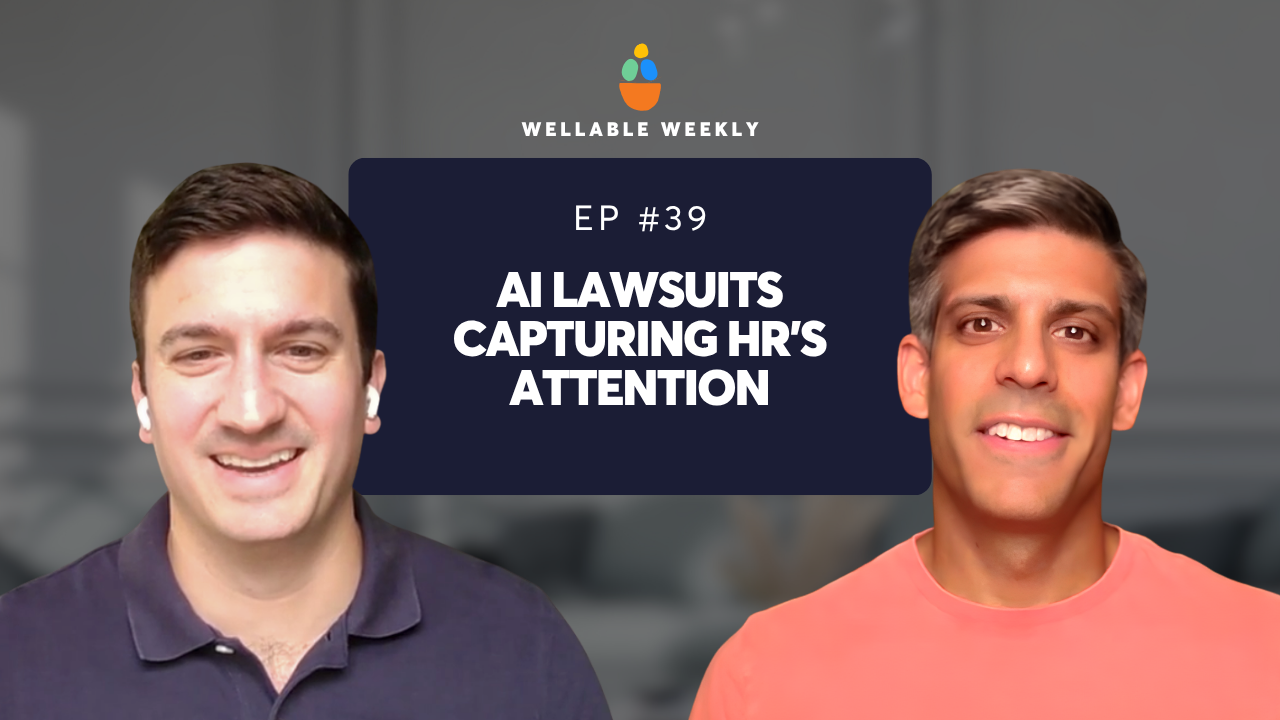
In this week’s episode, Nick and Geoff discuss a recent study that finds AI dramatically improves students’ homework scores and speed but meaningfully hurts exam performance, creating strong lessons for how employers think about talent development. They also examine new research which links the four-day work week directly to lower obesity rates and discuss what employers who cannot yet make that shift can do to capture similar benefits.


Short on time? Here are the key takeaways:
- A study of tens of thousands of students found that AI users saw homework scores improve by 18% but exam scores decline by 20%, signaling that AI is helping students complete work without actually learning the underlying material
- Findings from the study translate directly to talent development risks in the workplace
- Zynga founder Mark Pincus recently spoke on the issue’s core risk: AI can get you to a B+, but it will not get you to an A, and if you have never done the foundational work, you cannot even recognize what an A looks like
- According to the Financial Times, an investment bank made fewer return offers to its 2025 intern class after senior financiers found that interns’ initially impressive work seemed shallow once probed further
- Research across 33 OECD countries found a 1% reduction in annual working hours correlates with a 0.16% decrease in obesity rates
- A four-day work week represents roughly a 20% reduction in hours, suggesting meaningful population-level health effects
- Employers who cannot implement a four-day work week can pursue similar benefits by stacking smaller interventions: stress management programs, healthy food access, structured breaks, and flexible scheduling all address the same underlying mechanisms without changing the work arrangement itself
Episode Summary
AI in Education: The Homework-Exam Paradox
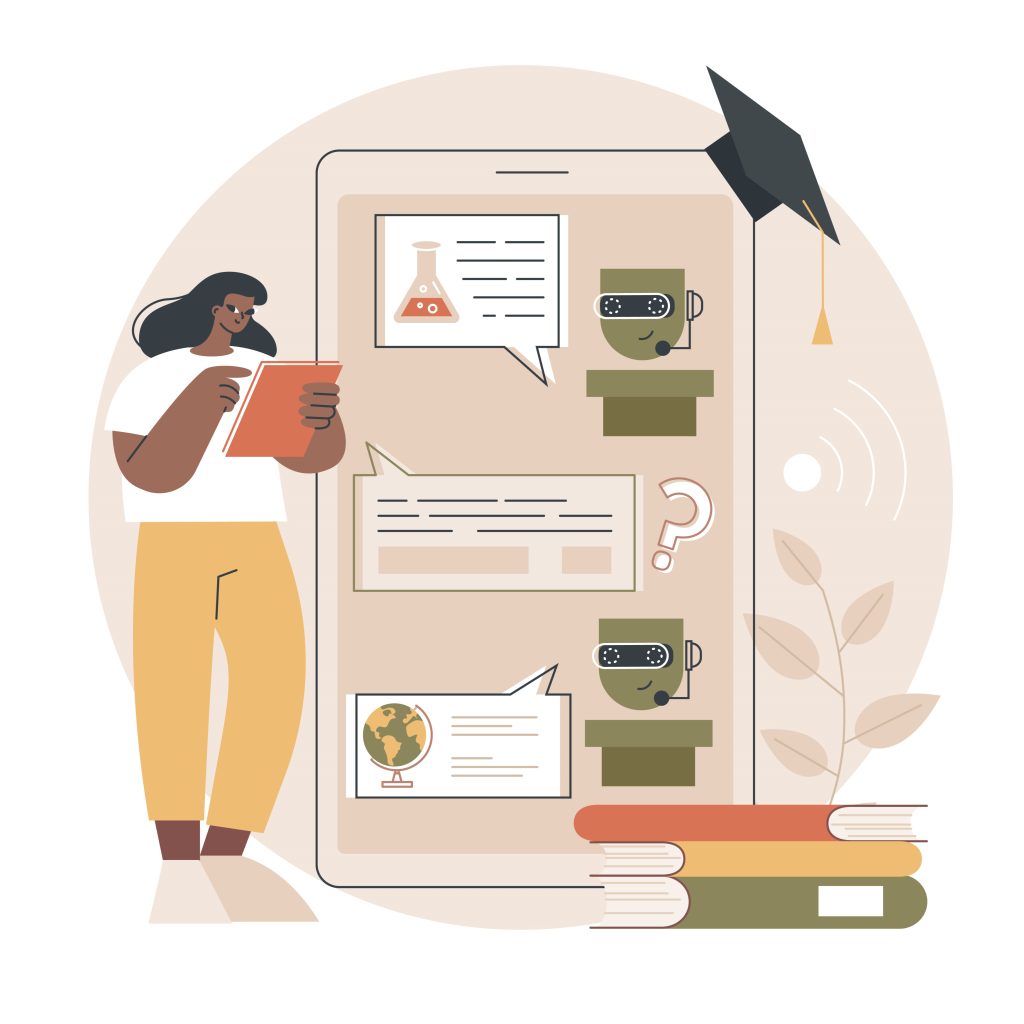
A study covered in The Economist examined tens of thousands of students across industrialized countries, where 80% of undergraduates now use AI in their education. It found that students who used AI saw their homework scores improve by 18% and their exam scores decline by 20%. The same tool that made the homework better made actual learning and information retention worse in many cases.
Essentially, AI is helping students complete assignments without actually processing and retaining the material those assignments were designed to teach. Homework is not the point. Homework is the mechanism through which learning happens. When AI does the homework, the learning gets skipped, and the exam, which tests the learning rather than the completion, exposes the gap.
Nick draws a calculator comparison. At some point, everyone was required to learn arithmetic without a calculator. That foundational work is what makes calculator use functional rather than dangerous. If you never learned the underlying math, you cannot tell when a calculator is giving you a wrong answer. The same logic applies to any skill: AI can accelerate and augment what you already know, but it cannot substitute for the foundational development that makes you capable of evaluating its outputs.
Geoff’s cites Zynga founder Mark Pincus: AI gets you to a B+, but it will not get you to an A, and if you have never done the work to understand what an A looks like, you will not know you are settling for less. That is the compounding risk for employers who hand AI tools to early-career employees without building in the developmental guardrails that produce judgment over time.
The Talent Development Problem Nobody Has Solved Yet
Nick’s honest admission is that no one in HR or leadership has articulated a workable solution yet. Companies are broadly pushing AI adoption for everyone, and no CEO or HR leader Nick is aware of has publicly described a policy that accounts for the different risks AI poses at different career stages.
Geoff’s practical prescription mirrors what he and Nick have discussed in prior episodes: the co-working model. Rather than individual employees using AI in isolation, building a culture where AI is used in group settings, where more experienced employees can model evaluation and judgment alongside less experienced ones, creates the developmental context that solo AI use strips away.
The Four-Day Work Week and What Employers Can Do Right Now
New research reported on in Employee Benefit News, drawing on data across 33 OECD countries, found a clear correlation between reduced annual working hours and lower obesity rates: a 1% reduction in hours is associated with a 0.16% decrease in obesity rates. A four-day work week represents roughly a 20% reduction in working hours, implying a population-level health impact that is meaningfully larger than most individual wellness interventions.
Fewer working hours mean less chronic stress, which is a significant driver of weight gain. More time available during the week means more opportunity for physical activity, better meal preparation, and less reliance on processed foods grabbed between meetings. Geoff notes that on summer Fridays or long weekends, the first things people tend to do are what they cannot fit into a compressed work week (like going for an extra walk or grocery shopping), things that directly feed the health behaviors employers are otherwise trying to promote through wellness programs.
Nick is clear-eyed about the gap between the research and the reality: most employers, especially in the US, are not close to implementing a four-day work week at scale. His framing is more actionable: look at what a four-day work week actually delivers and ask what interventions can approximate those benefits within a five-day structure.
Stress management programs and mental health support address the chronic stress dimension. Healthy food access in the office addresses the processed food substitution problem. Structured breaks during the day address some of the physical activity gap. Flexible scheduling, particularly around pickup times, school commitments, and personal errands, addresses the life admin compression that makes the current five-day structure feel unsustainable for many employees. None of these individually replicates the full effect, but stacked together they can close a meaningful portion of the gap.
Nick also flags an emerging irony: AI, which was supposed to create space by doing more work in less time, has in many organizations produced the opposite result. The always-on culture enabled by AI agents running overnight and the expectation that employees should produce more because the tools make them more capable has left workers more stretched than before, not less. The four-day work week research is a reminder that time, not just tools, is a fundamental input into health.
Frequently Asked Questions
A study of tens of thousands of students found that 80% used AI for homework. That group saw homework scores improve by 18% but exam scores decline by 20%. The finding suggests that AI is helping students complete assignments without engaging with the underlying material those assignments are designed to teach. Because exams test what has been learned rather than whether work was completed, the gap between homework performance and genuine comprehension becomes visible.
The core risk is that early-career employees using AI to complete tasks before they have developed foundational skills will produce work that looks correct but cannot be defended, audited, or improved upon. The investment bank example illustrates this directly: polished deliverables from an intern class, paired with an inability to explain or discuss the content, led to a significant drop in return offer rates. Employers who hand AI tools to junior employees without building in developmental guardrails are likely to face a similar gap between output quality and actual capability.
Zynga founder Mark Pincus stated that AI can get you to a B+ but will not get you to an A. Nick and Geoff extend the point: if an employee has never done the foundational work required to recognize what an A looks like in their domain, they will not know they are settling for less. The implication for talent development is that AI fluency without underlying domain expertise produces a ceiling that is invisible until someone examines the work closely.
Research across 33 OECD countries found a correlation between reduced annual working hours and lower obesity rates. A 1% reduction in hours is associated with a 0.16% decrease in obesity rates. A four-day work week represents roughly a 20% reduction in working hours, suggesting meaningful population-level health benefits beyond the individual productivity effects more commonly cited in four-day work week research.
Nick identifies several interventions that can approximate the benefits of a four-day work week within a five-day structure: stress management and mental health programs, healthy food access in the office, structured break time during the work day, and flexible scheduling that allows employees to address life administration without compressing everything into evenings and weekends. None of these individually replicates the full effect, but stacked together they can close a meaningful portion of the gap.
Nick raises the emerging pattern where the availability of AI agents has raised expectations rather than reducing them. Because AI can run tasks overnight and produce work at speed, the implied expectation has shifted: employees are expected to produce more, not work less. The result is a more stretched workforce, not a more rested one, which is directly relevant to the stress and obesity mechanisms that make the four-day work week research compelling.
Full Episode Transcript
Nick: Welcome to the Wellable Weekly Podcast, where we talk about key topics and trends at the intersection of wellbeing, technology, and HR. I’m Nick, along with my good friend Geoff. Geoff, how are you doing?
Geoff: Doing great. Very excited about these two topics we have for today.
Nick: Two great articles. The first one is an AI one and it’s one of those where the data from a study confirms what you might expect, but it’s still valuable to see it quantified. Some context: 80% of what they call rich world countries — industrialized countries — have undergraduates using AI. In Britain it’s 94%, in Germany it’s 93%. A new study focused on a younger cohort, sub-18, studied AI use and its impact on test scores and homework. Tens of thousands of kids were in the study. 80% were using AI, 20% were not. Of the 80% using AI, their homework scores went up by 18%. Good, right? Higher homework scores. But homework is a tool to get you to perform well on exams and demonstrate competency. That same cohort of 80% who saw improvements in homework saw a decline in exam scores of 20%. My guess is AI helped them do the homework so well that they didn’t learn as much as they should have.
Geoff: I was trying to think of how this type of analysis would have been done when we were in grade school. The closest comparison I could come up with was kids who actually read the book in English class versus those who used Cliff Notes or Spark Notes to do the homework, and then came test time, didn’t quite have the full context. This is clearly demonstrating what we’ve probably realized is happening in the workplace — doing tasks with higher efficiency and potentially higher quality in certain situations, but maybe not developing the same critical thinking. The charts from the Economist article are really compelling here. You can see the homework scores sliding roughly 20 percentage points higher for AI users versus non-users, and they’re getting homework done faster — dropping about 21 minutes. But then when you look at exam performance, the non-AI users are performing at a higher rate by about 20%. As a former student and current parent thinking about raising a kid in an AI world, this is the concern: the prep work gets done better, but the real-life application suffers.
Nick: This reminds me of the calculator. At some point you had to learn to add and multiply with pen and paper, and then at some point you got a calculator. Nowadays I’m never trying to divide numbers manually. But that’s okay because at some point I was forced to learn it. The problem with AI is that maybe it has great utility, but we had the benefit of having to write our own papers first. Using AI to augment your writing is fine because you went through the hard work of learning it. My guess is that the skills that showed up on the exams were skills students had not developed because they learned them in the context of AI rather than working through them themselves. How this translates to work: if you hire someone fresh out of college, everything is new to them. AI has made all these tools better, but if you are really concerned about talent development, you have to force people to do things on their own at some stage or they will be underdeveloped. And at some point you cannot review AI work unless you know how to do the work yourself.
Geoff: You have to know what good looks like. You have to go through the work and effort to be able to recognize it. There was a quote from the Zynga founder Mark Pincus: AI can get you to a B+, but it will not get you to an A. And you do not even know what an A looks like if you have never owned the work and taken the time to understand how you get there. The principle probably applies to a whole range of life and work skills that are just not going to develop in the same way for a generation that had to figure a lot of it out on their own.
Nick: So what is the solution practically? If you are a company like Wellable, you hire experienced and less experienced people. Do you tell experienced folks they can use AI and younger folks they cannot? Because many companies out there say to every employee: here is a Claude account, use it. I have never heard a company try to segment that population. Maybe it exists, but I have never seen an HR person or CEO talk about it that way.
Geoff: The simplest answer is what we have talked about before: the co-working concept. Not minimizing AI use but minimizing AI use in a vacuum by individuals working alone. What would have been interesting in this study is if children had been asked to use AI as part of a group project rather than for individual homework and an individual test. Internally at Wellable, the most effective approach has been: do not go down rabbit holes of prompting AI yourself. Try to solve a problem with a coworker or multiple people who bring different perspectives and experience levels. Between those collective experiences, you are more likely to have a sense of what good looks like and get to a better outcome.
Nick: I see increasingly concerning patterns in my own day-to-day. I get things to review where someone runs stuff through AI and sends me four pages. No one has ever sent me four pages of pre-read material before a meeting. And when I read the full thing, there is often no real takeaway — a lot of words, not much substance. I see the same in Excel, where I get models with deeply nested formulas that might technically be correct but are so complicated that they are hard to audit. That raises a flag: it could be wrong, and the only way to verify it is to check manually, which defeats the purpose.
There was a Financial Times article about an investment bank’s 2025 intern class. The work product was polished — great decks, strong-looking deliverables. But when managers dug in, interns could not explain what was in the documents or defend the analysis. The percentage of that class receiving return offers dropped significantly, and the bank is rethinking whether to hire more humanities majors, on the theory that they may have developed stronger foundational skills because their fields have been slower to adopt AI. Six to twelve months ago, “AI native” was a hiring advantage. Now in some contexts it is becoming a yellow flag.
Geoff: The pendulum has swung fast. And as token caps and usage limits kick in at more companies, maybe we will all be forced to be more thoughtful and efficient with AI use rather than churning out prompts indiscriminately.
Nick: That is a good segue into our second article. One of the things I think about with AI is the always-on culture it is creating — especially in San Francisco and the Bay Area, but really globally. Even though AI can do a lot of work for you, people are expected to be more on than ever because they can do more. An agent runs overnight, so I need to check in on it. It is making the problem of overwork worse rather than better. And it connects directly to our second article: the four-day work week and its connection to lower obesity rates.
Not surprising in principle: what contributes to obesity? Stress, lack of physical activity, time pressure that pushes you toward processed food and away from cooking. If you work four days a week, you have more time, less stress, better opportunity to exercise and eat well. The research is across 33 OECD countries and found that a 1% reduction in annual working hours is correlated with a 0.16% decrease in obesity rates. A four-day work week is roughly a 20% reduction in working hours, which scales that number significantly across a large population.
Geoff: I am a big four-day work week believer, more as an aspiration than an immediate policy change. To see an article positioning the four-day work week directly as a physical health intervention was interesting. From personal experience, on summer Fridays or long weekends, the first thing people do is life administration — grocery shopping, a longer walk with the dog, errands — all things that directly feed the health behaviors we are trying to promote through wellness programs. I just do not think we are practically close to a broad shift to four days in most organizations. But until that happens, there is a lot companies can do to move toward the same goals.
Nick: Whether we are there yet or not, the lesson from this article is to look at what a four-day work week actually delivers and ask what you can offer within a five-day structure. Less stress: stress management programs and mental health support. More physical activity: encourage breaks, build movement into the day. Better food: healthy snacks in the office, reduce the incentive to grab processed food in a rush. Flexibility: let people handle personal commitments without treating every absence as a performance issue. Stack those small wins and you can close a meaningful portion of the gap without changing the work schedule.
Geoff: It is about removing barriers to the behaviors we know contribute to better health and wellbeing. Finding small wins across company values, policies, and programs adds up to real changes in how employees feel and, by extension, their physical health. If we went to a four-day work week and gave everybody GLP-1s, we would really be solving most of the world’s problems.
Nick: And before we wrap up — I believe this is your last episode for some time. Is that right?
Geoff: Yeah, we are approaching paternity leave. Baby girl Geredien is arriving sometime next month in September, so we will be battening down the hatches here soon.
Nick: You will be missed. We have some great guests coming and I will do my best to fill some big shoes. Cannot wait to have you back. As always, thanks for tuning in. You can subscribe to the Wellable Weekly Podcast on Spotify, Apple Podcasts, or wherever you get your podcasts, and be sure to subscribe to the Wellable Weekly newsletter for more insights. Thank you.
-
Share
-

-

-

-