Wellness
 Rewards
 Recognitions


 Learn more about Wellable's all-in-one
employee engagement platform
Learn more about Wellable's all-in-one
employee engagement platform





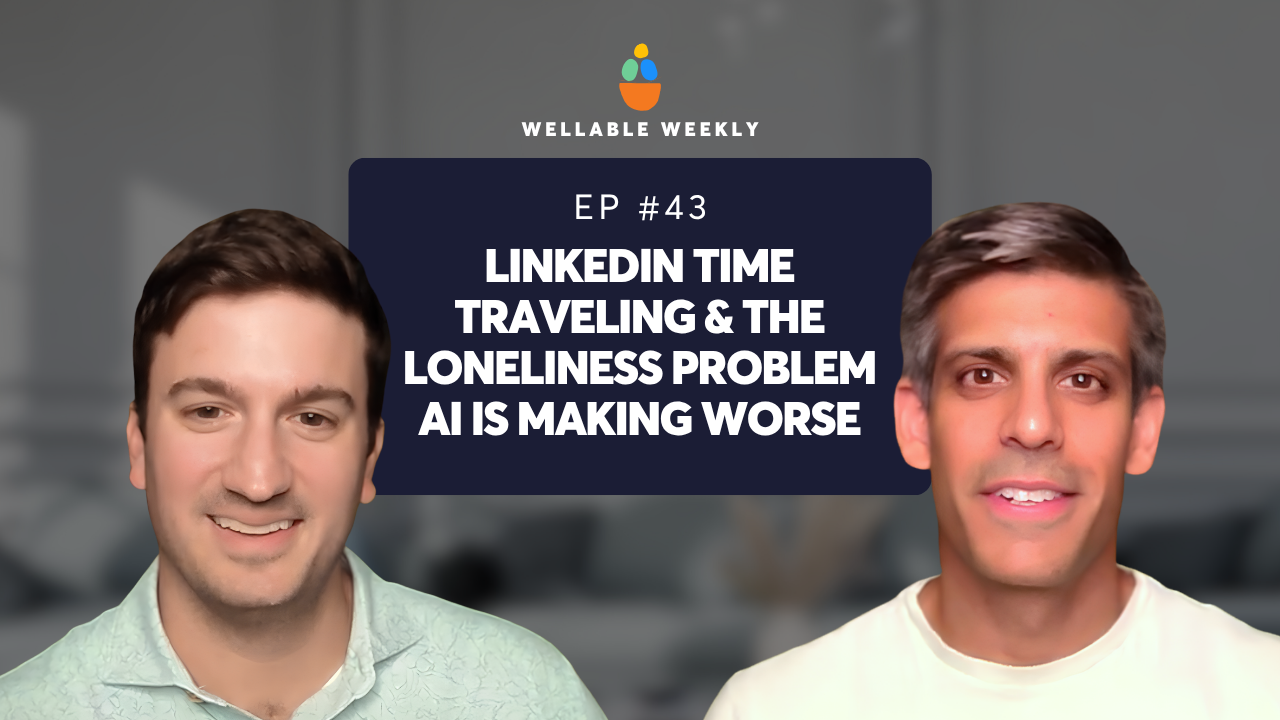
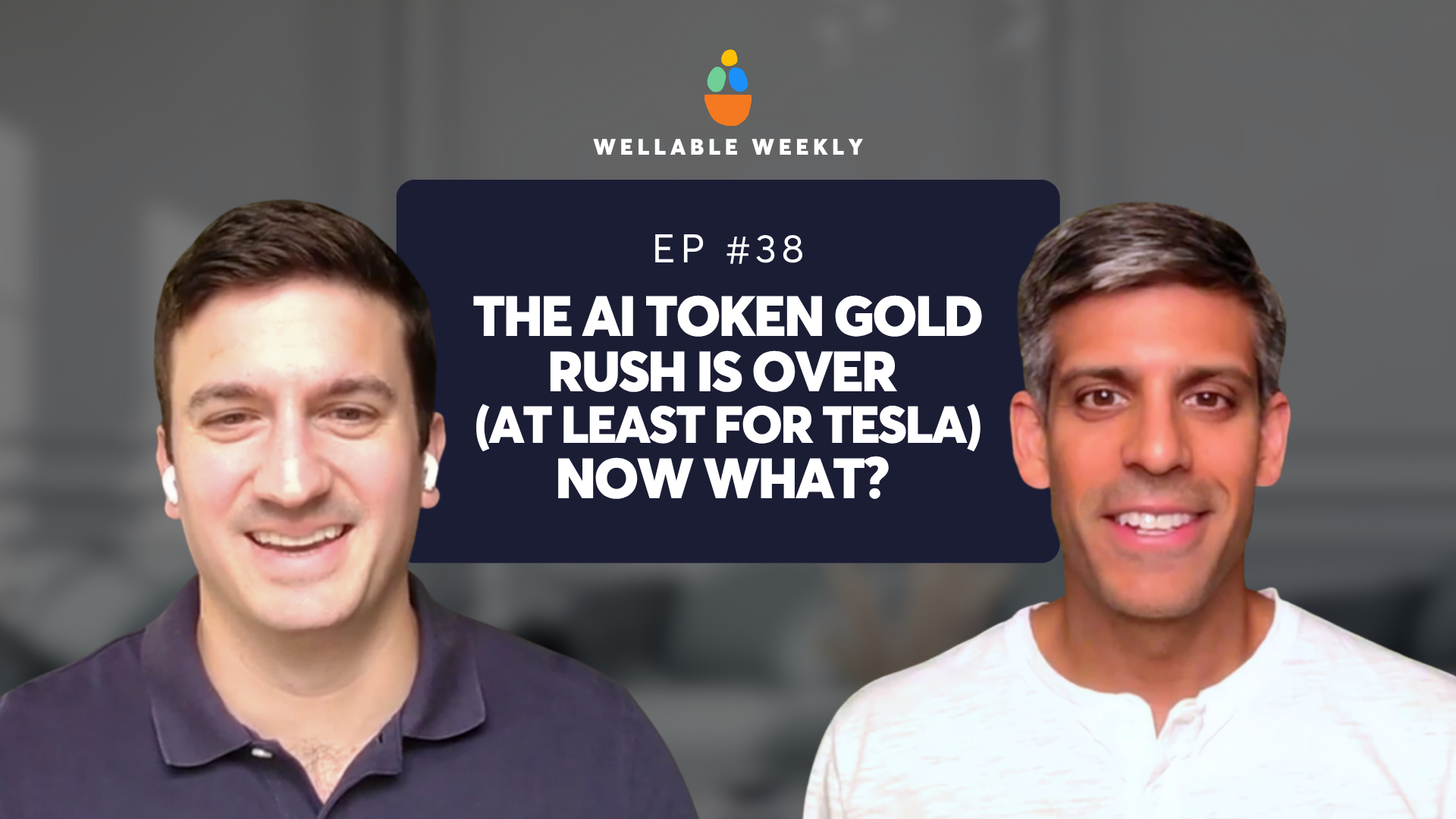
In this week’s episode, Nick and Geoff dig into a Wall Street Journal article about why working in America has become so joyless. They unpack the two forces driving workplace dissatisfaction—shrinking perks and the rise of AI—and explore the “AI engagement paradox,” a concept gaining traction that links AI use to lower social connection at work. They also share a practical example of how collaborative AI use can preserve the social element of work while still delivering the efficiency gains companies are chasing.


Short on time? Here are the key takeaways:
- Shrinking perks and AI-driven changes are combining to make the workplace feel increasingly less enjoyable, according to a new Wall Street Journal report
- CFOs mentioned “efficiency” on over 300 earnings calls in Q1—up 40% year over year and the highest level since 2020—signaling a top-down squeeze employees are feeling daily
- The more employees interact with AI instead of colleagues, the more they are isolated and the lower their overall connection to work, risking burnout
- Collaborative AI use, where teams work together on AI-driven projects rather than solo, can preserve the social element of work while still capturing meaningful efficiency gains
Episode Summary
Why Companies Are Cutting the Small Stuff First
Nick opens with the Wall Street Journal’s reporting on how joyless American office life has become, anchored by an anecdote from a Dell Technologies employee who said the office now feels like a funeral. The context: Dell had offered free daily espresso shots as a small, well-liked perk, then began charging employees every time they used the machine. For Geoff, the detail that stands out isn’t just that the perk disappeared, it’s that the employee also noted the coffee was mediocre to begin with. Coffee, in Geoff’s view, has always felt like one of those untouchable line items that nobody bothers to run an ROI calculation on, since the cost is a rounding error for any large employer.
Nick agrees that coffee is a strange place to start cutting, especially given that most companies are simultaneously pushing return-to-office initiatives. Charging for espresso does little to move the needle on profitability, and it actually works against the goal of getting people into the building. It also creates new friction: someone has to build the infrastructure to charge people in the first place, which is its own cost and hassle. Nick frames coffee as representative of a broader pattern the WSJ piece describes: shrinking perks and wellbeing programs, combined with the rise of AI, are conspiring to make the office feel less fun.
Geoff connects this to the article’s data point that CFOs at large U.S. companies mentioned “efficiency” on more than 300 conference calls in the first quarter of the year, a 40% increase from a year earlier and the highest level since 2020. That kind of language at the top of an organization tends to cascade down into how every department makes decisions, and it can be exhausting for employees trying to keep pace with both cost-cutting and a fast-moving AI rollout at the same time. Geoff points to “brain fry” as a term that keeps surfacing to describe the result: doing more with less, while interacting less with actual people.
The AI Engagement Paradox: More AI, Less Connection
Nick lays out two distinct ways AI is contributing to the joylessness the article describes. The first is general anxiety about job security. Even employees who aren’t experiencing displacement firsthand can find it hard to feel excited about coming into the office if they believe their role could be automated within a couple of years. The second is more behavioral: as employers push staff to use AI more, employees naturally interact with colleagues less. Instead of running an idea by a coworker, they run it by a chatbot instead, and those small, informal interactions that make an office feel social start to disappear.
Nick calls this the “AI engagement paradox”: the more an individual engages with AI tools, the lower their engagement tends to be with their company and coworkers. He draws a parallel to how “efficiency” has become the dominant buzzword in Silicon Valley in recent years, tracing it back to late 2022 and 2023, when Meta’s stock dropped after heavy Metaverse spending, prompting Mark Zuckerberg to declare a “year of efficiency” alongside the company’s first major layoffs. That same period saw Elon Musk’s acquisition of Twitter and a broader push across tech to trim management layers and headcount. Nick observes that “employee engagement,” once a major buzzword focused on health, wellbeing, and social connection at work, has largely fallen out of the conversation as “efficiency” has taken its place, and he suspects that shift in language reflects a real shift in what companies are prioritizing.
A Case Study in Keeping AI Collaborative
Rather than leaving the conversation on a downbeat note, Nick shares how Wellable tries to approach AI differently. The company treats AI partly as a personal productivity tool employees are encouraged to experiment with on their own, but also intentionally builds in collaborative use cases. As an example, Nick describes an internal “AI hackathon” the marketing team ran to build a new website on a separate domain, deliberately kept apart from Wellable’s main site so the team could experiment freely. Team members joined a video call from different locations and worked together in real time: one person used AI to generate a logo, another drafted and edited content, and another figured out site layout, domain activation, and DNS records, much of it work the team didn’t already know how to do.
The result was a fully functional website, built faster than a traditional build-out would have allowed, while the team stayed connected throughout the process. Geoff notes that this kind of structure removes the isolation and “AI dread” that can build up when someone is left to figure out unfamiliar tools entirely on their own. Bringing people together around AI, rather than letting AI replace the interactions between them, is the distinction Nick and Geoff land on as the more sustainable path forward.
Frequently Asked Questions
According to the Wall Street Journal, Dell began charging staff a fee to use office espresso machines that had previously offered free daily shots. The story resonated because coffee is typically viewed as a low-cost, high-goodwill perk that most companies don’t bother to touch, so cutting it read as a signal of a much broader cultural shift toward cost-cutting, one striking enough that an employee described the office as feeling “like a funeral.”
The WSJ article cites data showing CFOs at large U.S. companies referenced “efficiency” on more than 300 earnings calls in the most recent quarter, up 40% year over year and the highest level since 2020. Nick and Geoff argue that when cost discipline becomes a dominant theme at the executive level, it shapes decisions throughout the organization, including cuts to perks and wellbeing programs that employees notice and feel.
It’s Nick’s term for the pattern where increased individual use of AI correlates with decreased engagement with coworkers and the broader organization. As employees turn to AI instead of colleagues to answer questions or work through problems, the frequency of everyday social interaction at work drops, which can erode the sense of connection that makes an office enjoyable.
Not necessarily, according to Nick and Geoff. The concern isn’t AI itself but how it’s implemented. When AI use is siloed and individual, it can reduce collaboration and increase isolation. When it’s built into collaborative work, such as Wellable’s internal AI hackathon to build a new website as a team, it can speed up output while preserving, or even strengthening, social connection among coworkers.
Nick suggests distinguishing between AI as a personal productivity tool and AI as a collaborative tool, and deliberately creating opportunities for the latter. Structured, team-based projects that use AI together, rather than policies that simply push employees to use AI more on their own, can help preserve the informal, social interactions that make work feel engaging.
The episode doesn’t fully resolve this, but Nick notes it’s counterintuitive: the cost savings from something like espresso shots are negligible relative to overall spend, and cutting it can undercut return-to-office efforts by removing one of the small reasons people enjoy coming in. It may reflect a broader mindset shift where no expense, however small or symbolically loaded, is considered untouchable anymore.
Full Episode Transcript
Nick: Welcome to the Wellable Weekly Podcast, where we talk about key topics and trends at the intersection of wellbeing, technology, and HR. I’m Nick, along with my good friend, Geoff. Geoff, how’s your Good Friday going?
Geoff: Yeah, hey Nick, it’s going well. I was looking for the latest news in the stock market today and then realized Good Friday, markets are closed. So probably a nice thing to have a day off from economic turbulence.
Nick: Based on March, I would say it’s a nice thing to maybe take the month of April off if we could. Yeah, why not? So, speaking of not so great news, I guess, in the newsletter, we had a Wall Street Journal article and I think the title sums it up perfectly. The title of the article was “How Working in America Became So Joyless.” And second to that title was my favorite quote, maybe in an article, certainly in recent history, was from a Dell employee. And the quote was, he’s talking about working in the office. “It feels like a funeral in the office right now.” I can’t imagine what that work environment is for that individual, but I’m guessing not so positive.
Geoff: I know, I feel like he kind of encapsulated that AI dread comment that we’ve seen come up in other places, and his specific reaction to the vibe at Dell, I think, was overall where the kind of culture is at. But it was actually in the context of Dell taking away a popular perk. They used to offer free coffee, daily espresso shots. Obviously, any coffee drinkers out there like myself would really appreciate that. Last year they started charging people every time they wanted to come in and use the machine. That sounds like that was the last straw for him. And I also like that he pointed out that the coffee was just okay. So not only is it something that they have to pay for now, but it’s mediocre to begin with. And I mean, when I read that, I always thought of coffee as one of those, you know, untouchable perks that you always just never questioned the ROI of something like that. For companies that are really focused on efficiency, something that obviously comes up in this article a lot, a little extra shot of espresso, when you think about the cost of that, is a drop in the bucket. So for them to pull back on what seemed to be kind of a classic benefit was just really surprising.
Nick: Exactly. I mean, I would say take coffee as a representative example of reduction in perks and benefits, because I just, this is the first company I know that’s taking away coffee. I think it’s one of those things you just don’t touch, like a 401k. And honestly, if you think about the context of the current environment that we’re operating in, companies are still trying to do like a return to office initiative. Most companies, they’re trying to get people into the office more. It strikes me as really odd to dial in on coffee when I just can’t imagine it moves the needle that much from a profitability perspective. And it’s kind of like a staple to get people into the office, right? It’s an odd thing to do. And also, if you want to charge people, again, you have to build the infrastructure. You need to have a mechanism for how you charge people, and that’s not necessarily easy. So, yeah, just an odd place to start.
You know, in that kind of spirit, when they talked about why the office is becoming so joyless, it’s really a combination of shrinking perks, removal of coffee and other things, including things like wellbeing programs, we’re hearing that as well, and the rise of AI. Collectively, these two things are conspiring to make the work office less fun. And that’s like the summary of the piece. And you’re asking yourself, why is that the case? What’s going on? If I had to summarize it, obviously the perks is one thing, but I would say the AI has two stories. One is general anxiety, and that may be industry specific or just completely macro for every single white collar worker. If you think your job is going to be replaced by AI, it’s hard to get excited by coming to the office, even if you’re not experiencing that firsthand today. If you’re thinking that you’re going to be replaced, and it could be two years from now, it still makes work really difficult to enjoy.
And the second piece is that employers, especially the ones trying to adopt AI more seriously, are asking employees to do more with AI. And when you do more with AI, it means you’re interacting less with your colleagues, right? So instead of running an idea by your colleague, you may just go to AI. And so your interactions drop, and in some cases drop a lot. And that, I think the social aspect of work is really critical in terms of making it a fun and exciting place to work.
Geoff: 100%, right? And it’s all seemingly in the relentless pursuit of more efficiency. And on the one hand, you would think caffeinated, happier employees would be more efficient. But maybe now the paradigm has completely shifted to, well, we’re spending X amount on coffee, how many AI credits or tokens does that get us, and there’s more efficiency to be had there. But I thought it was interesting, the same article referenced a stat on CFOs at big US companies: they mentioned that term “efficiency” at least once on over 300 conference calls in the last quarter, Q1 of this year, up 40% from a year earlier, the highest level since 2020. So clearly, efficiency is in the crosshairs of the C-suite. That is going to have a trickle-down effect into how decisions are made across an entire organization. And that can be exhausting for employees in any environment, but especially when you are trying to keep pace with a generational new technology suite that seemingly has new updates and new ways to integrate with your existing work tools every day. There’s that term that you keep seeing, “brain fry,” coming up time and time again. I think it’s just that output of so much focus on efficiency, getting more done with less, and only interacting in some cases with your tools and less and less with your colleagues.
Nick: It reminds me, right after, I think it was November of 2022, was either ’22 or ’23, OpenAI came out with this first model, right? It shocked the world. Shortly after that, Facebook stock was in the tank. And it’s because they were not AI forward and they were spending tens and tens of billions of dollars on the metaverse, building up this virtual reality world that we were all supposed to love and want to hang out with and put glasses on and all that stuff. It was that, that was a year when they said, all right, we got to start cutting a ton. And Mark Zuckerberg announced, I think, the first layoff ever in Facebook’s history, certainly the first big layoff. And also he coined the term, I think it was 2023, this was going to be the year of efficiency. And that’s the same time that Musk bought Twitter, made it turn X, fired 80% of the employees. It became this buzz around Silicon Valley to just cut out the middle managers, trim your workforce substantially.
And it feels like that idea of efficiency is having a resurgence. It’s not like a new thing, because not that long ago we were hearing all these tech execs, especially in the software and technology industry, come out with the term “efficiency” as how we’re going to run the business. My big takeaway on the AI side is that there’s this new kind of buzzy term called the “AI engagement paradox.” Effectively, the more you engage with AI, the lower your engagement in your company is. And so not that long ago, the same way efficiency is rising today as a term that’s being thrown out a bunch within companies, the opposite is happening with engagement. Several years ago, employee engagement was like the buzz. It was saying, how do we gauge our employees, not just in the work that they’re doing, but also in things like health and wellbeing or social activities with their colleagues. And I don’t hear that term nearly as much. I don’t think it’s getting searched on Google nearly as much. And it may be that it’s just not a point of focus, it’s just getting deprioritized relative to efficiency. But it’s not something that’s buzzy anymore.
But what’s been shown to be true is that individuals who engage with AI at times are just less engaged, because they’re not talking to their colleagues. And so when I think about what the right approach is to AI, I think about the way we do at Wellable. So we think about AI as a tool you can use by yourself, opportunities and things you should for sure do and experiment on your own. But there are a lot of collaborative work and projects you can do with AI as well. One good example, our marketing team, along with me, we’re like, we’re going to build this new website. And part of it was less about building the website, which I think was important, but we didn’t want to touch our main website, since so much effort and care has gone into that website. We created a new domain and said, let’s just learn, let’s see, can we stand up a website really quickly? So we did like, call it a hackathon, right, an AI hackathon. It was multiple people. We were actually not in the same office, so we were hopping on Teams, but we were all sharing video, collaborating. Like one person’s working on making a logo with AI, one person is trying to draft content and edit that content with AI, another person is trying to say, how do you build this website, can you give me a sample layout and design, can you tell me how to activate the domain and point my DNS records there. Doing all these things, some of which we know how to do, some of them we don’t know, we had to figure out how to do, all through AI. And the final result was great. We actually had an awesome website. We’re probably going to announce it later, so not anything soon, but it’s certainly a functioning website that we think is really interesting. And we did it while collaborating with people. And it strikes me as a really good case study of using AI to do things quicker and better than you could before, or do things you couldn’t even do before, while not losing the collaborative social element that makes work fun.
Geoff: It removes that element of AI dread and fear that you can build up when you’re squirreled away trying to figure all this out on your own and have an element of concern and not getting fulfillment out of the experience. You bring that all together, you have people working on something in a way that feels collaborative still, but is again far more efficient than maybe we could have done six months or a year ago. So I think that’s a great story to wrap up today’s pod. As always, thanks folks for listening. You can subscribe to Wellable Weekly on Apple Podcasts, Spotify, wherever you get your podcasts, and be sure to subscribe to our newsletter as well for more insights there. Thanks as always.
-
Share
-

-

-

-