Wellness
 Rewards
 Recognitions


 Learn more about Wellable's all-in-one
employee engagement platform
Learn more about Wellable's all-in-one
employee engagement platform





Pressed for time? Here’s a quick summary…
- Workplace fitness challenges can support productivity, employee engagement, attendance, and connection among coworkers.
- Effective group fitness challenges match employees’ abilities, schedules, and work arrangements while providing clear goals and simple ways to track progress.
- Fitness challenges can include options for everyday movement, strength training, team sports, activity tracking, and mindful fitness to accommodate different interests and experience levels.
- Shared goals, friendly competition, incentives, and recognition can make physical activity more engaging while encouraging teamwork and accountability.
A little friendly competition might be just what employees need to get moving during the workday. According to research, workplace physical activity initiatives can support productivity and job performance while reducing absenteeism. Bringing employees together around physical activity can amplify the experience by adding a social element. Group fitness challenges give employees a common goal to work toward while creating opportunities for connection, accountability, and healthy competition.
For HR leaders looking for fitness challenge ideas that get employees off their chairs and competing together, this guide covers 40+ options organized by format, duration, and group size. From step competitions and walking challenges to strength, mobility, and team-based activities, this list includes options for every fitness level, schedule, and work environment.
Wellable’s all-in-one platform can support these fitness challenges by giving organizations a central place to track activity, organize team competitions, and keep employees engaged along the way.
What Is a Group Fitness Challenge?
A group fitness challenge is a structured, time-bound activity that motivates employees to work toward individual or shared fitness goals together. Challenges typically focus on measurable activities, such as daily steps, walking distance, workout minutes, strength exercises, or active days, over a set period.
Unlike an individual fitness goal, a group challenge adds a social element through teamwork, friendly competition, accountability, or shared progress. For example, employees might compete to log the most steps in one week or work in teams to collectively walk 1,000 miles in a month.
Group fitness challenges also differ from broader employee wellness programs. While wellness programs can address physical, emotional, financial, social, and other dimensions of well-being, fitness challenges focus specifically on physical activity and movement. This narrower focus gives employees a clear goal and a defined timeframe for reaching it.
Why Run Fitness Challenges at Work?
Fitness challenges can turn physical activity into a shared experience while supporting outcomes that matter to employees and employers. Research highlights several reasons to get teams moving:
- Boost productivity: According to research, employees who meet aerobic and strength-training guidelines have 53% higher odds of reporting greater work productivity than employees who meet neither guideline, highlighting how consistent movement can support performance at work.
- Strengthen team cohesion: Exercising together can help employees build stronger relationships and a greater sense of trust, connection, and cooperation. Research shows that employees who exercise together at work experience significantly greater improvements in within-team social capital, a measure of workplace connection and collaboration, than those who exercise individually.
- Reduce absenteeism: Regular exercise can help employees stay healthier and miss fewer days of work. For example, employees who consistently participate in workplace exercise experience 29% lower absenteeism than those who do not participate.
- Support employee engagement: Research demonstrates that employees who consistently maintain physical activity habits report higher work engagement over time, suggesting that regular movement can support sustained enthusiasm, focus, and connection at work.
- Fuel motivation: Gamification can encourage employees to move more by making fitness goals interactive and social. For instance, participants using gamification and social incentives added 1,661 daily steps from baseline, compared with 636 steps in the control group, highlighting the motivational value of friendly competition. Rewards and prizes can provide an added incentive to participate and work toward fitness goals.
Quick-Pick Table: Best Fitness Challenges by Goal
| Goal | Best Challenge Type | Time Required |
|---|---|---|
| Boost daily steps |
Team Step Sprint
|
2 to 4 weeks |
| Build team cohesion | Office Olympics | 1 day |
| Low effort, high participation | Lunchtime Walk Challenge | 2 to 4 weeks |
| Remote-friendly | Collective Distance Goal | 2 to 4 weeks |
| Engage competitive teams | Sports Tournament | 1 day or multi-week |
| Beginner-friendly | Desk Stretch Challenge | 2 weeks |
| Get employees outdoors | Nature Walk Challenge | 2 to 4 weeks |
| Run a short challenge | Step Relay Challenge | 1 to 2 weeks |
40+ Fitness Challenge Ideas for Groups
Step and Movement Challenges
Step and movement fitness challenges offer an accessible way to get groups moving with minimal equipment. These options turn everyday activities like walking, taking the stairs, and commuting into shared goals, making them a strong fit for teams with varying fitness levels and work arrangements.
1. Team Step Sprint
Duration: 2 to 4 weeks
Group size: Any size
Works for: In-person | Remote | Hybrid
How it works: Divide employees into teams and track cumulative steps throughout the challenge. Rank teams by average steps per participant rather than total steps to account for different team sizes, then recognize the highest-performing group at the finish.
2. Daily Step Streak
Duration: 2 to 4 weeks
Group size: Any size
Works for: In-person | Remote | Hybrid
How it works: Set a daily step target and have each team member earn one point for their team when they reach it. Rank teams by the percentage of members who hit the goal or maintain their streak, rewarding consistency rather than favoring the highest steppers.
3. Walking Meeting Challenge
Duration: 2 weeks
Group size: 5 to 50 people
Works for: In-person | Remote | Hybrid
How it works: Encourage teams to turn suitable one-on-one calls and small meetings into walking meetings. Each participating team member earns one point for their team for every walking meeting they complete. Then, recognize the team that earns the most points or achieves the highest participation rate.
4. Walk the World Challenge
Duration: 3 to 4 weeks
Group size: Any size
Works for: In-person | Remote | Hybrid
How it works: Choose a virtual route between two destinations and assign a step value to the total distance. Combine employees’ steps into team totals and move each team along the route as members contribute, creating a visual race toward the destination.
5. Stair Climbing Challenge
Duration: 2 weeks
Group size: 10+ people
Works for: In-person | Hybrid
How it works: Ask employees to log flights of stairs and combine their results into team totals. Give each team a shared climbing goal, such as reaching the equivalent height of a famous landmark, or rank groups by average flights climbed per participant.
6. Active Commute Challenge
Duration: 2 to 4 weeks
Group size: Any size
Works for: In-person | Hybrid
How it works: Award team points when employees incorporate movement into their commute by walking, cycling, or actively completing part of their journey. Track active commute days rather than distance so employees with shorter routes can contribute equally to their team.
7. Lunchtime Walk Challenge
Duration: 2 to 4 weeks
Group size: Any size
Works for: In-person | Remote | Hybrid
How it works: Set a target number of lunchtime walks each week and have teams compete for the highest participation rate. Encourage on-site employees to walk together while remote employees log their own lunchtime walks toward the same team goal.
8. Step Relay Challenge
Duration: 1 to 2 weeks
Group size: 8+ people
Works for: In-person | Remote | Hybrid
How it works: Divide employees into teams of 4 to 10 people and set a step target for each relay leg, such as 2,500 or 5,000 steps. One teammate completes a leg before passing the virtual baton to the next participant. Teams continue until every member completes a leg, or the group reaches a final step target.
Strength and Workout Challenges
Strength and workout fitness challenges give teams a more structured way to build movement into their routines. Keep participation voluntary and offer modifications or alternative exercises so employees can choose activities that match their fitness levels, abilities, and comfort. For team-based scoring, reward participation and consistency rather than measures like reps, duration, or range of motion.
9. Plank-a-Day Challenge
Duration: 2 weeks
Group size: 5 to 50 people
Works for: In-person | Remote | Hybrid
How it works: Challenge employees to complete one plank session each day, with options including wall, elevated, knee, or standard planks to accommodate different ability levels. Teams can aim to complete a collective number of plank sessions or maintain the longest team streak over the two weeks.
10. Push-Up Challenge
Duration: 2 weeks
Group size: 5 to 50 people
Works for: In-person | Remote | Hybrid
How it works: Set a collective push-up target for each team and have employees contribute repetitions toward it throughout the challenge. Offer options like wall, incline, knee, or standard push-ups so participants can select an appropriate variation.
11. Desk Stretch Challenge
Duration: 2 weeks
Group size: Any size Works for: In-person | Remote | Hybrid
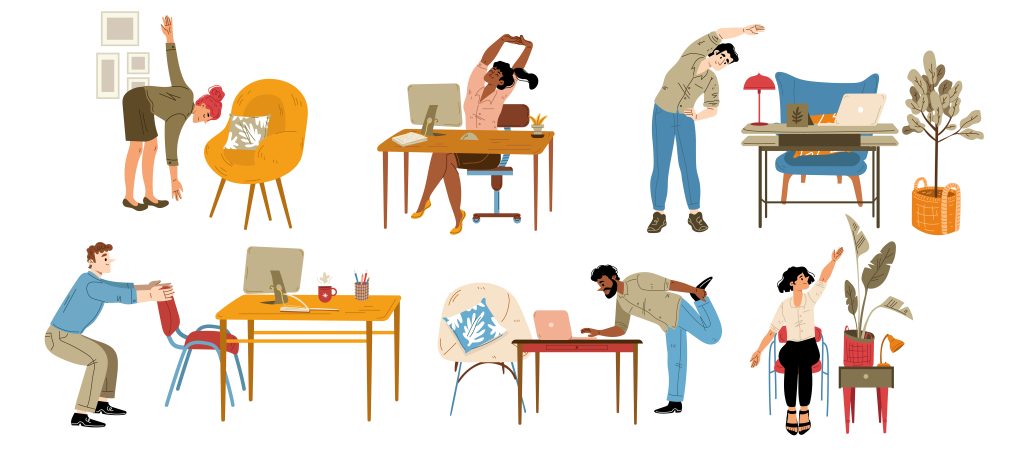
How it works: Provide a short sequence of beginner-friendly stretches employees can complete beside their desks and set a target number of sessions each week. Teams earn points when members complete them, encouraging regular movement breaks without rewarding flexibility or range of motion.
12. 7-Minute Workout Challenge
Duration: 2 to 4 weeks
Group size: Any size
Works for: In-person | Remote | Hybrid
How it works: Provide several optional seven-minute workouts, such as HIIT, Tabata, low-impact cardio, strength, or mobility routines, and challenge employees to complete a set number each week. Then combine completed workouts into team totals.
13. Squat Challenge
Duration: 2 weeks
Group size: 5 to 50 people
Works for: In-person | Remote | Hybrid
How it works: Set a collective squat goal for each team based on the challenge length and team size, such as 1,000 squats over two weeks. Members contribute repetitions toward the total whenever they choose, using options such as chair-assisted or bodyweight squats to match their ability level.
14. Flexibility Challenge
Duration: 3 to 4 weeks
Group size: Any size
Works for: In-person | Remote | Hybrid
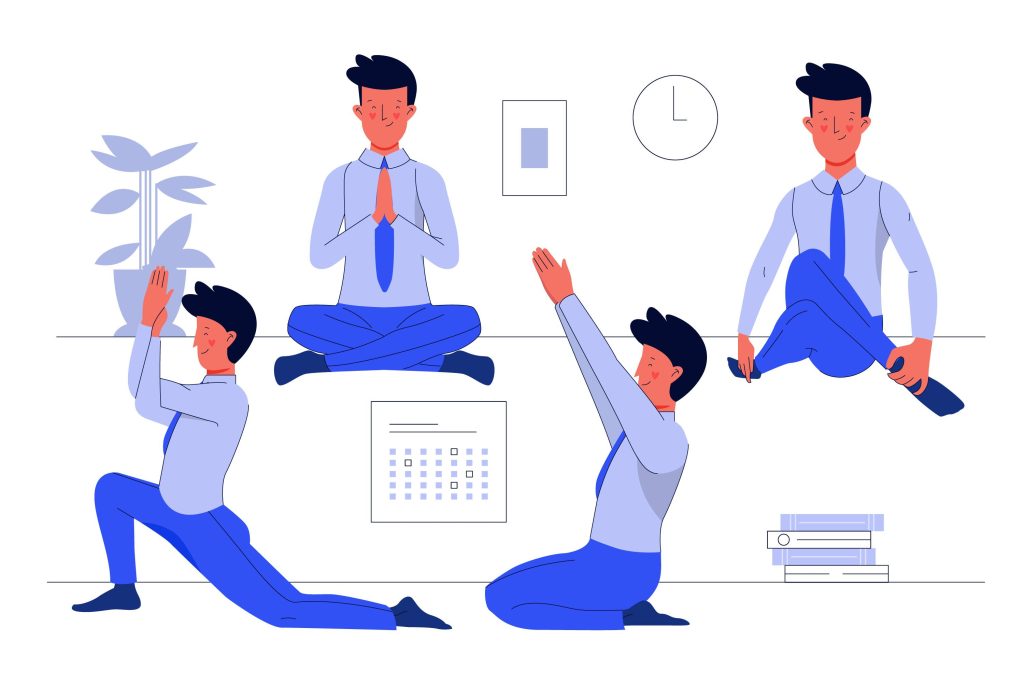
How it works: Focus each week on a different area of the body, such as the upper body, hips, legs, or full body, and provide a short stretching routine for each. Employees complete the scheduled sessions throughout the week, with seated and standing variations to accommodate different mobility levels.
15. Morning Stretch Challenge
Duration: 2 weeks
Group size: Any size
Works for: In-person | Remote | Hybrid
How it works: Create a short stretching routine specifically for the start of the workday, with movements that help employees warm up and transition seamlessly. Teams earn points when members complete the routine each morning, with consecutive days counting toward a team streak.
16. Exercise Bingo Challenge
Duration: 2 to 4 weeks
Group size: Any size
Works for: In-person | Remote | Hybrid
How it works: Create bingo cards featuring varied activities, such as a strength session, mobility routine, walk, or bodyweight workout. The variety encourages employees to incorporate different types of movement into their week rather than focusing on a single activity. Employees complete squares to contribute points to their teams, while bonus points for completed rows or cards add a friendly competitive element.
Team Sport and Recreation Challenges
Team sport and recreation challenges bring employees together for shared, real-time experiences. These ideas work especially well for in-person teams, company gatherings, and office fitness events. Keep participation voluntary, offer activities at different intensity levels, and structure scoring so that employees have multiple ways to contribute to their team rather than letting individual athletic performance determine the outcome.
17. Corporate 5K or Fun Run
Duration: 1 day, with optional 4 to 6 weeks of preparation
Group size: 10+ people
Works for: In-person | Hybrid
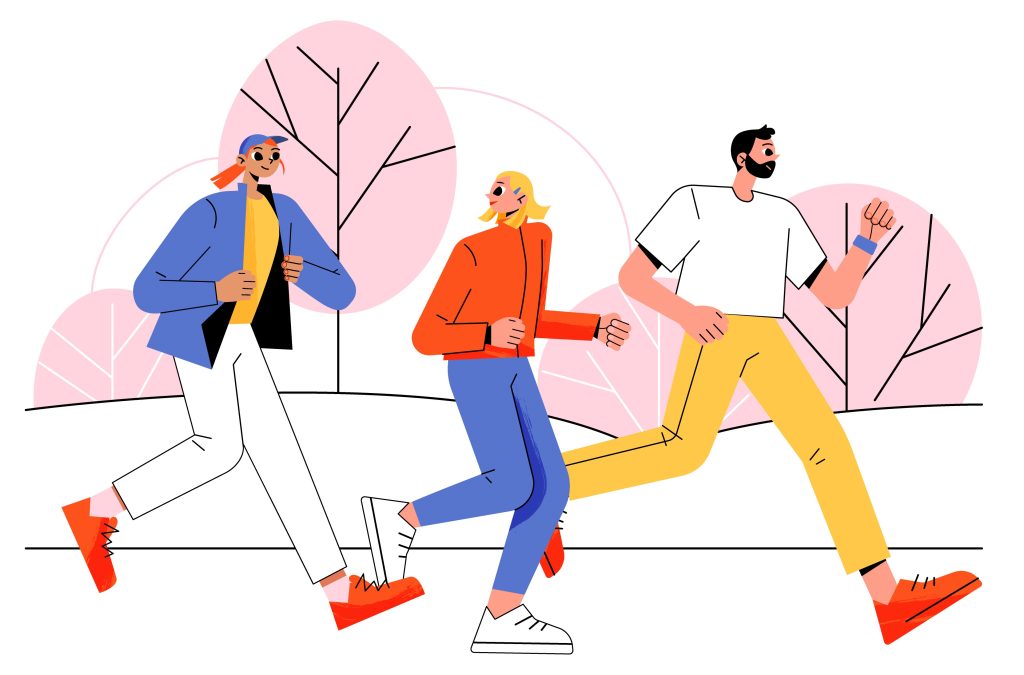
How it works: Organize a company 5K or register teams for an existing local event, with employees choosing to run, jog, or walk the course. For a longer challenge, add an optional four- to six-week training period with weekly distance goals or group practice sessions leading up to race day.
18. Office Olympics
Duration: 1 day
Group size: 10+ people
Works for: In-person
How it works: Divide employees into teams and organize a series of short activities, such as a balance challenge, target toss, speed walk, or relay. Award points at each station and combine scores to crown an overall team champion.
19. Group Cycling Challenge
Duration: 1 day or recurring weekly event
Group size: 5 to 30 people
Works for: In-person | Hybrid
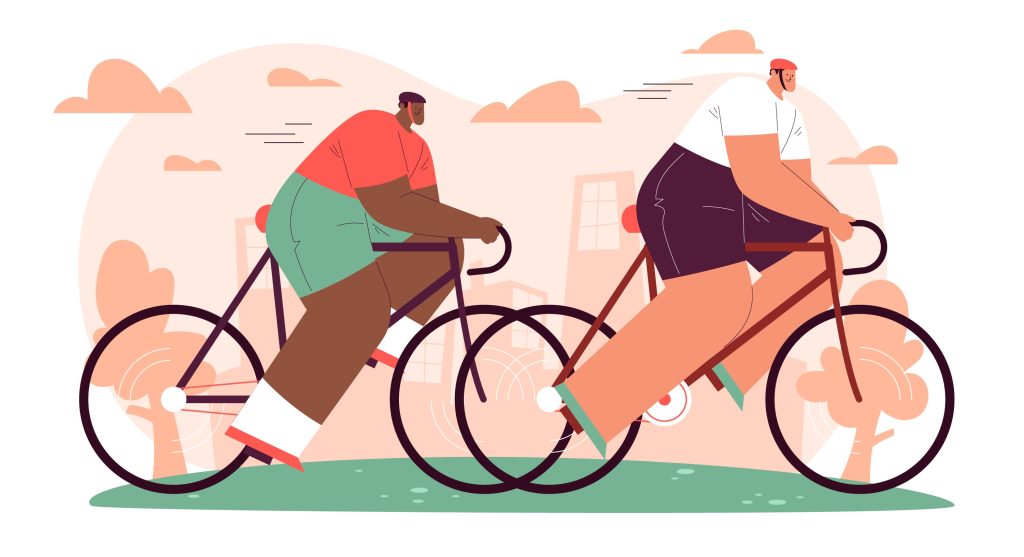
How it works: Organize a group bike ride or indoor cycling session and set a shared goal, such as collectively completing 100 miles. For larger groups, create smaller teams or offer routes and sessions at different intensity levels so more employees can participate comfortably.
20. Team Relay Race
Duration: 1 day
Group size: 4 to 10 people per team
Works for: In-person
How it works: Create teams and set up a relay course where each participant completes one section before passing the baton. Use walking, running, or another accessible movement for each leg, and structure the course so that every teammate contributes to the final result.
21. Obstacle Course Challenge
Duration: 1 day
Group size: 10+ people
Works for: In-person
How it works: Build a course with stations that test different types of movement, such as weaving around cones, stepping over low barriers, carrying lightweight objects, and completing balance activities. Divide employees into teams and have members move through the course relay-style, with each person completing a different station before tagging the next teammate.
22. Sports Tournament
Duration: 1 day or multi-week series
Group size: 12+ people
Works for: In-person
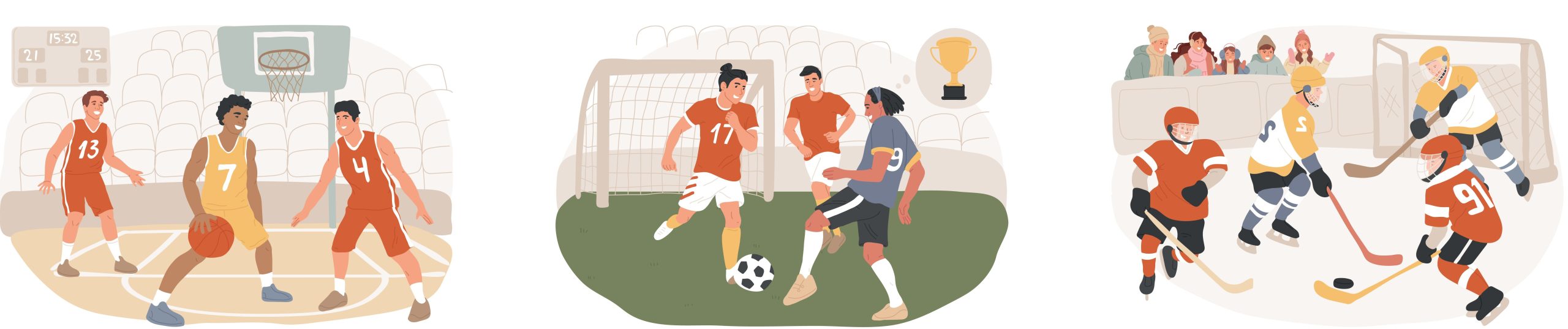
How it works: Organize employees into teams for a basketball, soccer, volleyball, or another recreational sports tournament. Create a bracket or round-robin schedule and consider shorter games or recreational divisions to accommodate different experience levels.
23. Field Day Fitness Challenge
Duration: 1 day
Group size: 20+ people
Works for: In-person
How it works: Set up a field day with a mix of team activities, such as tug-of-war, walking relays, beanbag races, and agility games. Divide employees into teams that rotate through the events, with each activity contributing to an overall team score.
24. Team Fitness Class Challenge
Duration: 1 day or 2 to 4 weeks
Group size: 5+ people
Works for: In-person | Remote | Hybrid
How it works: Offer instructor-led classes across different formats, such as yoga, strength training, cardio, or low-impact movement. For a one-day challenge, teams can complete a class together; for a multi-week challenge, employees can choose from a class schedule and work toward a set number of sessions each week.
Distance and Tracking Challenges
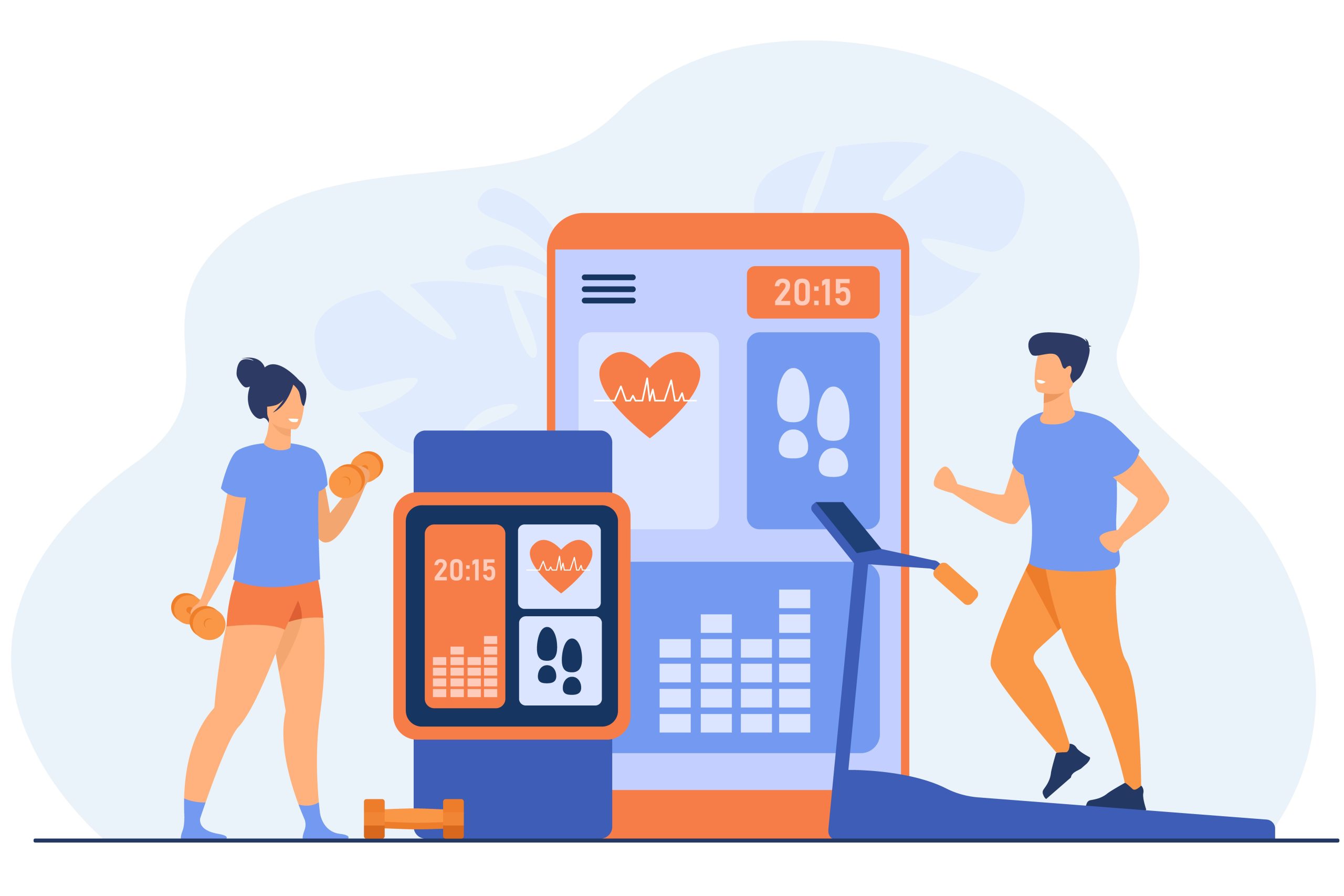
Distance and tracking fitness challenges use activity data to turn individual movement into measurable team progress. Wearable devices, fitness apps, and activity-tracking platforms can simplify participation for distributed teams by tracking metrics, such as distance, active minutes, and completed workouts. Teams can work toward collective goals or compare averages, giving employees different ways to contribute without requiring everyone to complete the same activity. Wellable’s all-in-one platform supports integrations with popular apps and devices, allowing organizations to bring activity data into fitness challenges.
25. Team Mileage Challenge
Duration: 30 days
Group size: Any size
Works for: In-person | Remote | Hybrid
How it works: Divide employees into teams and set a mileage goal for the month, such as collectively traveling 500 miles. Participants contribute miles through eligible activities, such as walking, running, or cycling, with each activity adding to the team’s total distance.
26. Collective Distance Goal
Duration: 2 to 4 weeks
Group size: Any size
Works for: In-person | Remote | Hybrid
How it works: Set one organization-wide distance goal and have every participant contribute walking, running, or cycling miles toward it. Share regular progress updates as the group approaches milestones, making collaboration rather than competition the focus.
27. Active Minutes Challenge
Duration: 2 to 4 weeks
Group size: Any size
Works for: In-person | Remote | Hybrid
How it works: Create an active-minutes goal and let employees contribute time through eligible activities, such as walking, running, cycling, strength training, or fitness classes. Combine each participant’s active minutes toward the team’s total.
28. Workout Streak Challenge
Duration: 2 to 4 weeks
Group size: Any size
Works for: In-person | Remote | Hybrid
How it works: Set a weekly workout goal, such as completing three activity sessions, and challenge employees to maintain it for consecutive weeks. Let participants choose which workouts count, from strength training and fitness classes to running, cycling, or other eligible activities.
29. Workout Variety Challenge
Duration: 4 weeks
Group size: Any size
Works for: In-person | Remote | Hybrid
How it works: Choose a different workout category each week, such as strength, cardio, mobility, or balance, and encourage employees to try an activity from that category. Award team points for completed categories and recognize groups that explore the widest range of movement.
30. Weekly Activity Goal
Duration: 4 weeks
Group size: Any size
Works for: In-person | Remote | Hybrid
How it works: Set a measurable activity target for each week, such as a specific number of active minutes or workouts. Calculate each team’s percentage of members who reach the target and use weekly results to maintain friendly competition throughout the challenge.
31. Workout Points Challenge
Duration: 2 to 4 weeks
Group size: Any size
Works for: In-person | Remote | Hybrid
How it works: Assign point values to different activities, such as one point for a walk, two for a strength workout, and three for a fitness class. Employees choose from the eligible activities and add the corresponding points to their team’s total.
32. Personal Best Team Challenge
Duration: 4 weeks
Group size: 5+ people
Works for: In-person | Remote | Hybrid
How it works: Have each employee record a starting baseline for one metric, such as weekly active minutes, number of workouts, or walking distance. Participants try to improve that same metric each week, such as increasing from 90 to 120 active minutes or from two to three workouts. Each new personal best contributes to the team’s progress.
Mindful Fitness Challenges
Mindful fitness challenges pair physical activity with practices that encourage employees to slow down, reset, and pay attention to how they move. These group fitness challenge ideas offer lower-intensity options that can complement more competitive activities while supporting physical and mental well-being. Keep the focus on participation and consistency rather than flexibility, intensity, or physical performance, and offer modifications when appropriate so employees can participate at their own comfort level.
33. Group Yoga Challenge
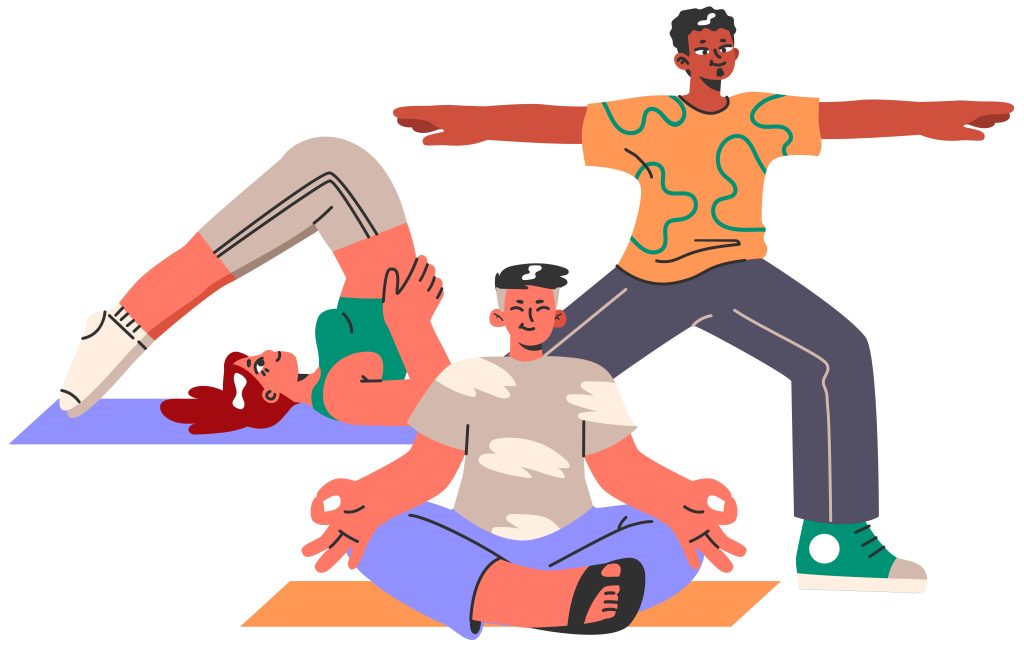
Duration: 2 to 4 weeks
Group size: Any size
Works for: In-person | Remote | Hybrid
How it works: Schedule a weekly yoga session that employees complete together. Vary the focus from week to week with options such as gentle yoga, mobility-focused flows, or restorative sessions.
34. Meditation and Movement Challenge
Duration: 2 weeks
Group size: Any size
Works for: In-person | Remote | Hybrid
How it works: Pair a short meditation with a movement activity each day, such as five minutes of guided meditation followed by a 10-minute walk or mobility routine. Employees complete both activities as a pair, combining mindful and physical activity in one daily practice.
35. Breathe and Stretch Challenge
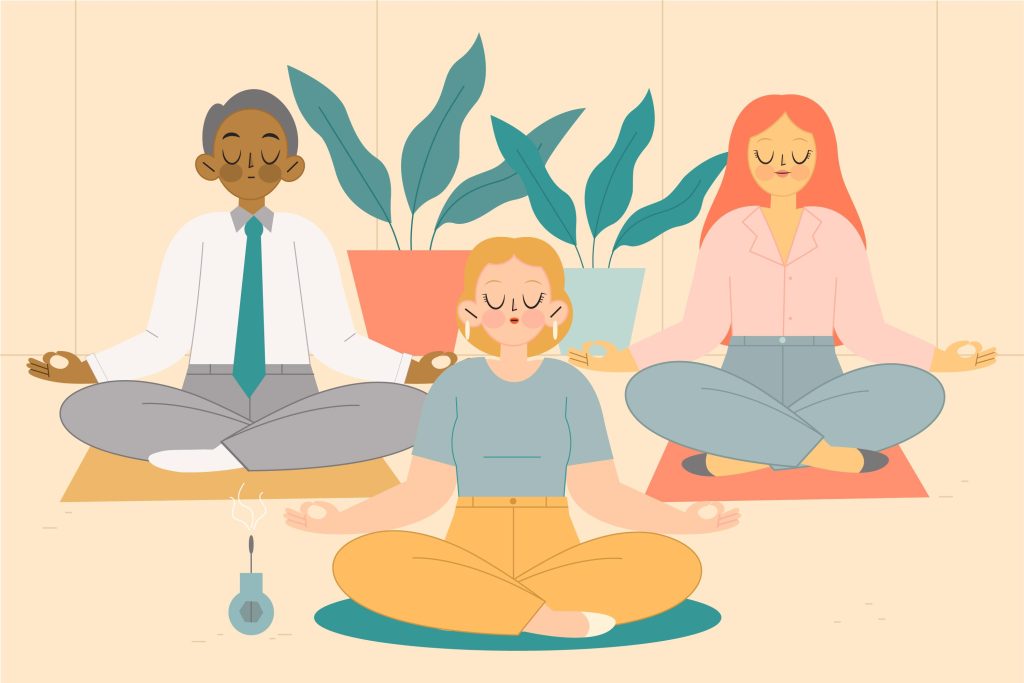
Duration: 2 weeks
Group size: Any size
Works for: In-person | Remote | Hybrid
How it works: Create a short routine that pairs slow, intentional breathing with gentle stretches for areas such as the neck, shoulders, back, and hips. Employees complete the routine several times per week, using each breath to guide the pace of the movements.
36. Nature Walk Challenge
Duration: 2 to 4 weeks
Group size: Any size
Works for: In-person | Remote | Hybrid
How it works: Challenge teams to complete a set number of outdoor walks in parks, neighborhoods, trails, or other suitable spaces. Employees can contribute walks toward a team total and share photos or observations from their surroundings to add a social element.
37. Desk Yoga Challenge
Duration: 2 weeks
Group size: Any size
Works for: In-person | Remote | Hybrid
How it works: Create a short yoga sequence employees can complete at their workstations, with movements such as seated twists, wrist stretches, shoulder rolls, and standing side bends. Encourage employees to fit the routine into natural breaks in the workday, such as between meetings or after long periods of sitting.
38. Digital Detox Walk Challenge
Duration: 2 weeks
Group size: Any size
Works for: In-person | Remote | Hybrid
How it works: Challenge employees to take a 10- to 15-minute screen-free walk several times per week. During each walk, participants put away their phones and avoid work messages, social media, podcasts, and other digital content, using the time to disconnect from screens and focus on their surroundings.
39. Mindful Walking Challenge
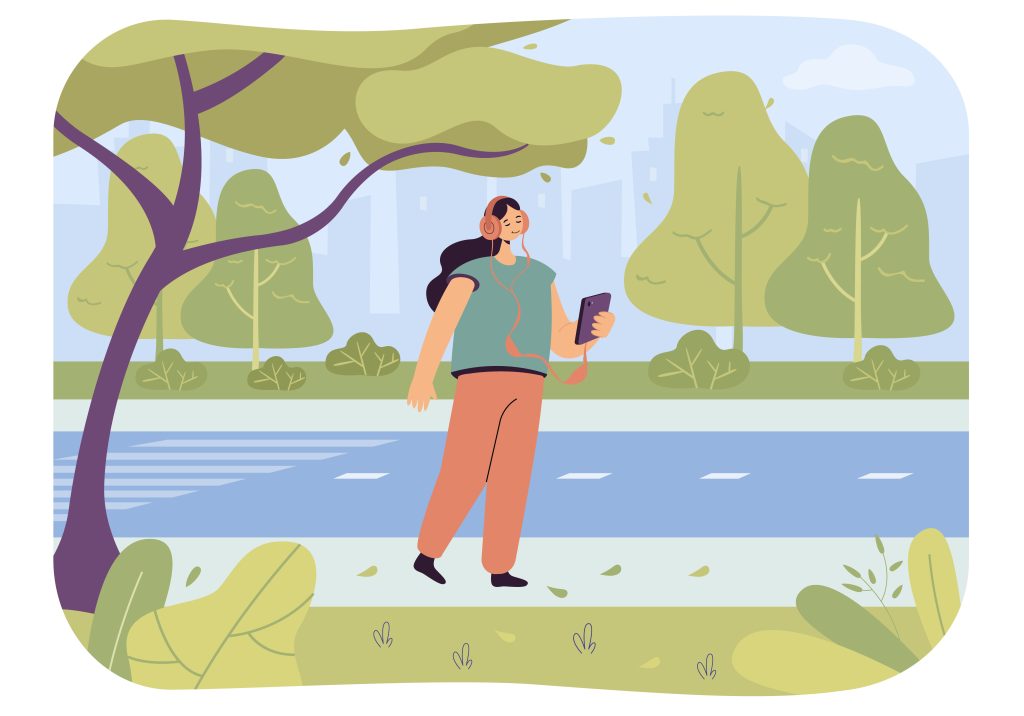
Duration: 2 weeks
Group size: Any size
Works for: In-person | Remote | Hybrid
How it works: Provide a simple prompt for each walk that encourages employees to notice their surroundings, breathing, pace, or physical sensations. Teams earn points for completing mindful walks and can share observations in a group channel afterward.
40. Mobility Reset Challenge
Duration: 2 to 4 weeks
Group size: Any size
Works for: In-person | Remote | Hybrid
How it works: Give employees a selection of short mobility routines for different parts of the body and set a team completion goal each week. Rotate the routines throughout the challenge to add variety while keeping the focus on regular, intentional movement.
41. Screen-Free Movement Break Challenge
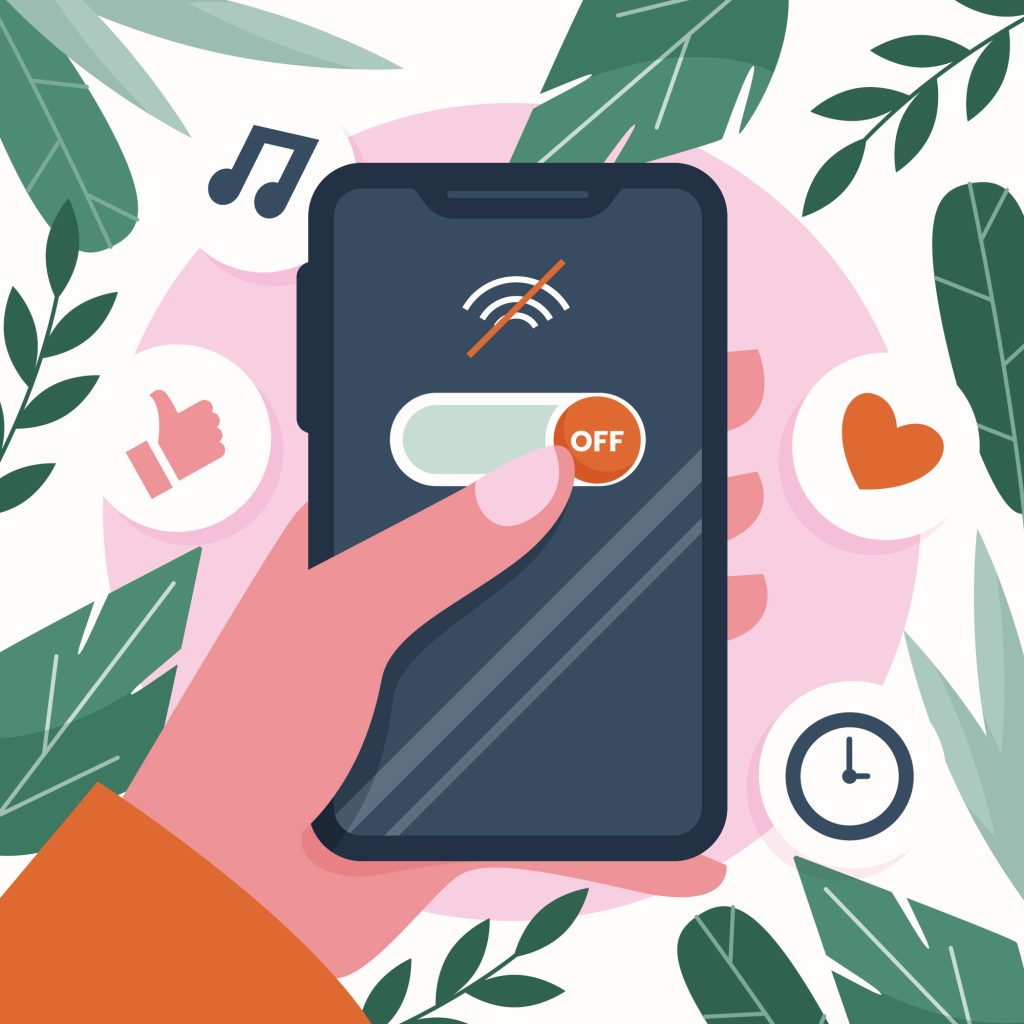
Duration: 1 to 2 weeks
Group size: Any size
Works for: In-person | Remote | Hybrid
How it works: Encourage employees to step away from their screens for a short movement break at least once each workday. Teams earn points when members complete a walk, stretch, or mobility activity without using a phone or computer during the break.
42. Yoga Bingo Challenge
Duration: 2 to 4 weeks
Group size: Any size
Works for: In-person | Remote | Hybrid
How it works: Create bingo cards with accessible yoga and mobility activities, such as attending a group class, completing a short flow, or taking a stretch break. Employees complete squares to earn points for their teams, with bonus recognition for completed rows or cards.
How to Run a Group Fitness Challenge
A successful group fitness challenge needs more than a leaderboard and a start date. A clear structure makes participation easier, keeps motivation high, and gives employees a fair opportunity to take part.
1. Choose Your Challenge Format
Start by considering your workforce’s needs. Keep in mind employees’ fitness levels, available time, and work arrangements, including in-person, remote, and hybrid schedules. Use the quick-pick table above to narrow down the options. For first timers, consider a step or walking challenge. Both require little to no equipment, accommodate different fitness levels, and allow employees to participate from almost anywhere.
2. Set a Clear Duration and Goal
Choose a timeframe that creates momentum without letting enthusiasm fade. Two to four weeks provides a practical starting point for many group fitness challenges. Next, set a measurable goal, such as reaching a daily step target, collectively traveling a certain number of miles, or achieving a target participation rate. Establish the rules and define what success looks like before launching.
3. Choose a Simple Tracking Method
Make progress easy to record. A platform like Wellable can sync activity data from compatible fitness apps and devices, reducing the need for manual updates. Organizations can also use a shared spreadsheet or ask employees to log progress in a dedicated Slack or Teams channel. Whichever method fits best, minimize the steps employees need to take to participate.
4. Add Incentives and Recognition

Give employees multiple reasons to stay involved. Highlight progress through leaderboards, team shoutouts, or recognition during company meetings. For tangible rewards, consider gift cards, extra PTO, or fitness-related perks. Reward more than first place by recognizing consistency, improvement, participation, or team achievements. This approach gives more employees an opportunity to succeed.
5. Communicate Early and Often
Build awareness before the challenge begins, then maintain momentum. Send a launch announcement about one week in advance, follow with a reminder the day before, share progress updates throughout the challenge, and finish with a celebration. Encourage managers and leaders to participate visibly, recognize employee efforts, and reinforce the challenge in team communications.
Fitness Challenge Tips for Remote and Hybrid Teams
Virtual fitness challenges can bring remote and hybrid employees together through shared goals, regardless of where they work. Keep these strategies in mind when planning an inclusive challenge for a distributed team:
- Choose location-flexible activities: Focus on activities employees can complete anywhere, such as walking, step tracking, stretching, bodyweight exercises, or active minutes.
- Make participation flexible: Give employees enough time to complete activities around different schedules, time zones, caregiving responsibilities, and working hours.
- Create opportunities for connection: Use Slack, Microsoft Teams, or another shared channel for progress updates, encouragement, photos, and friendly competition.
- Simplify activity tracking: Choose a method that makes logging progress easy across locations. Fitness platforms that integrate with compatible apps and wearable devices can help employees track activity without relying on manual updates.
- Celebrate participation virtually: Share team milestones, recognize consistent participation, and announce achievements through company-wide messages or virtual meetings so remote employees receive the same recognition as on-site participants.
Turn Fitness Challenge Ideas into Action
The best group fitness challenges make movement accessible, social, and engaging while giving employees different ways to participate. Whether teams compete for steps, complete workouts together, or work toward a shared activity goal, the right format can help build consistent movement and stronger connections at work. Wellable helps organizations bring these ideas to life through customizable fitness challenges, activity tracking, and bookable fitness events for in-person, remote, and hybrid teams.
Frequently Asked Questions
Good fitness challenge ideas for groups include a Team Step Sprint for an inclusive option, a Corporate 5K or Fun Run for a high-energy event, and a Plank-a-Day Challenge for an equipment-free activity. A Walking Meeting Challenge requires minimal setup and integrates movement directly into the workday. Use the quick-pick table above to match a challenge with specific team goals.
Most group fitness challenges work well over two to four weeks, giving employees time to build momentum without letting interest fade. A one-week challenge can provide an approachable introduction for first-time participants, while a 30-day challenge gives teams more time to establish consistent activity habits. Set the duration and goal before launching the challenge.
Choose virtual fitness challenge ideas that employees can complete from any location, such as step challenges, collective distance goals, active minutes challenges, or workout streaks. Use a fitness app, wearable device, or tracking platform to simplify progress tracking, and create a shared digital space where teams can celebrate milestones and encourage one another.
Equipment-free fitness challenges for work include step challenges, walking meetings, stair climbing, desk stretches, planks, and morning stretching routines. Employees can complete these activities with little setup, while a smartphone or wearable can help track activity when the challenge requires measurable progress.
Keep participation voluntary, make the rules simple, and give employees multiple ways to contribute. Manager participation, regular progress updates, team leaderboards, and employee shoutouts can keep the challenge visible, while inclusive incentives can recognize consistency and participation alongside top performance. Gamification and social incentives can also encourage employees to increase their physical activity.
A fitness challenge focuses specifically on physical activity and movement, such as walking, strength exercises, active minutes, or group workouts. A wellness challenge can address a broader range of well-being topics, including nutrition, sleep, mental health, financial well-being, and physical activity. Organizations can use group fitness challenges as one component of a broader employee wellness program.
-
Share
-

-

-

-